Bumberet · Weaving

November

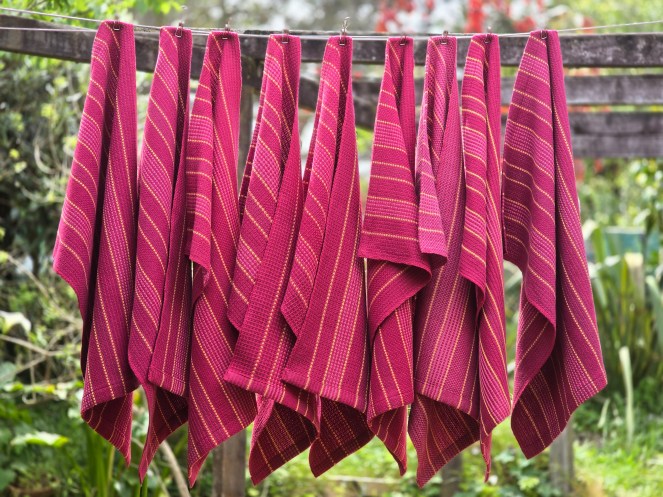
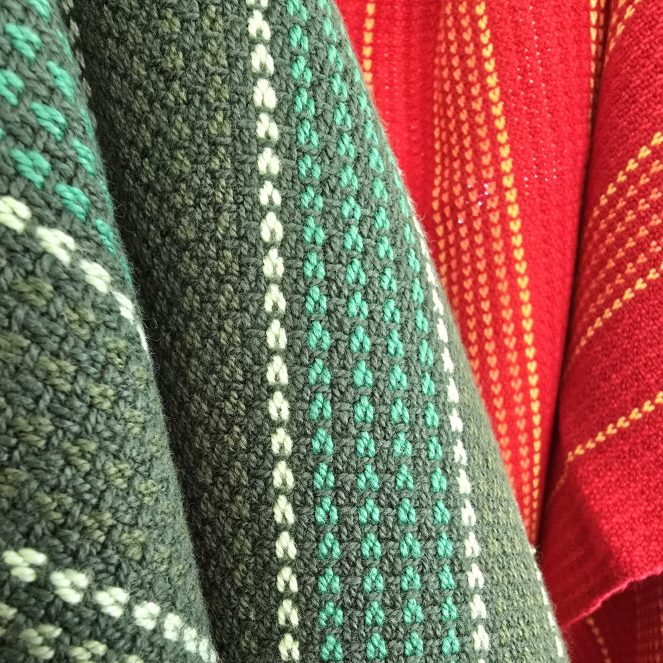
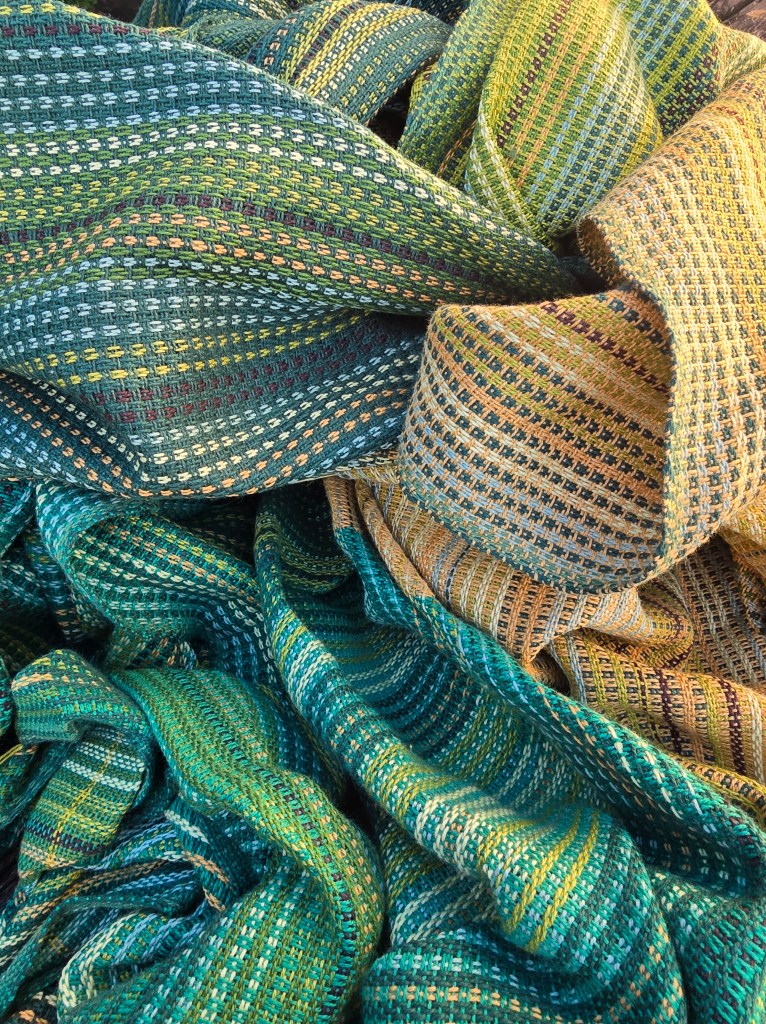
I’ve been weaving, more tea towels. I really like the variations possible on one warp with the Bumberet weave structure, though I have tended to only use three treadling variations for the tea towels.
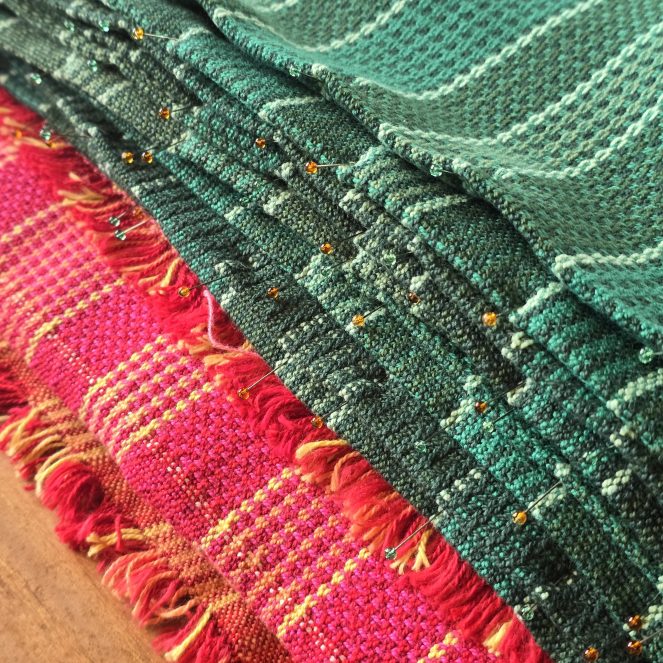
At the end of each warp I have played with other treadlings and weft colours, and I’ve made some of that fabric up into Christmas tree decorations. I also made the hanging cords from thrums from the warps.

That’s enough tea towels for a while, I’m planning some new projects. I may return to Bumberet as I also wove a sample warp with wool and it produced a few samples that I want to investigate further.

Spinning

Franklin Arts Trail 2025

Dyeing

A Dyeing Diversion

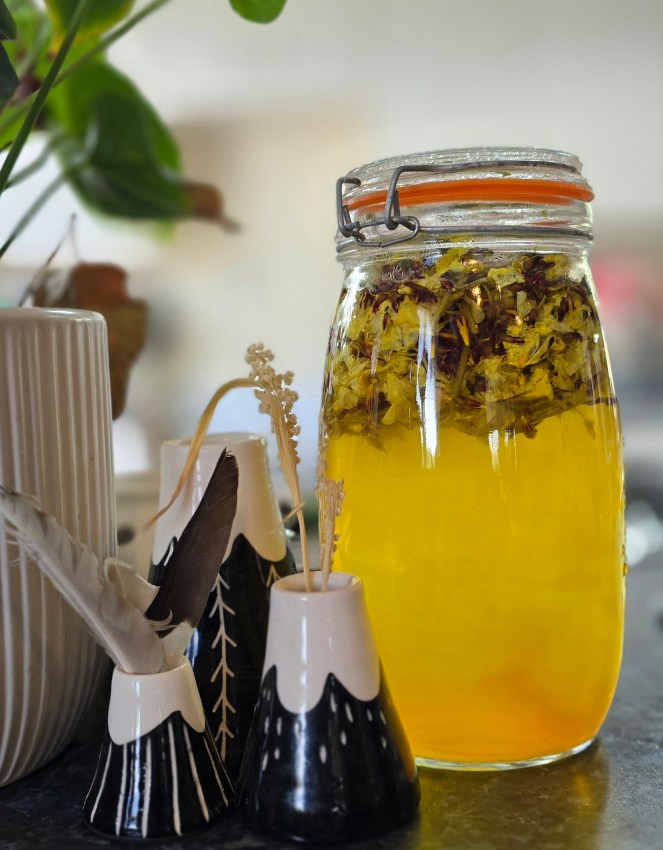
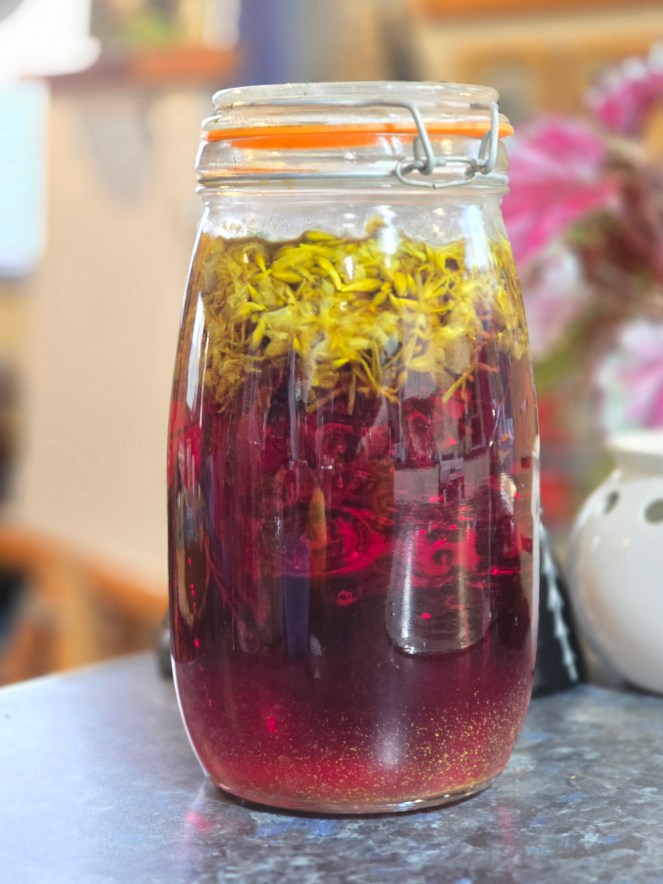
I noticed that yellow oxalis (oxalis pes-caprae) flowers were popping up around the place, along with all the other weeds that are taking advantage of the slightly warmer weather and thought I had read that you could dye with them. Of course when I tried to find some information I could only find a few mentions online with not a lot of detail so I decided to just go ahead and play. I picked a bunch of flowers while out walking my dog, put them in a jar and poured hot water from the tap on them. At first the colour of the solution was a very bright yellow but it changed over time to a red colour.

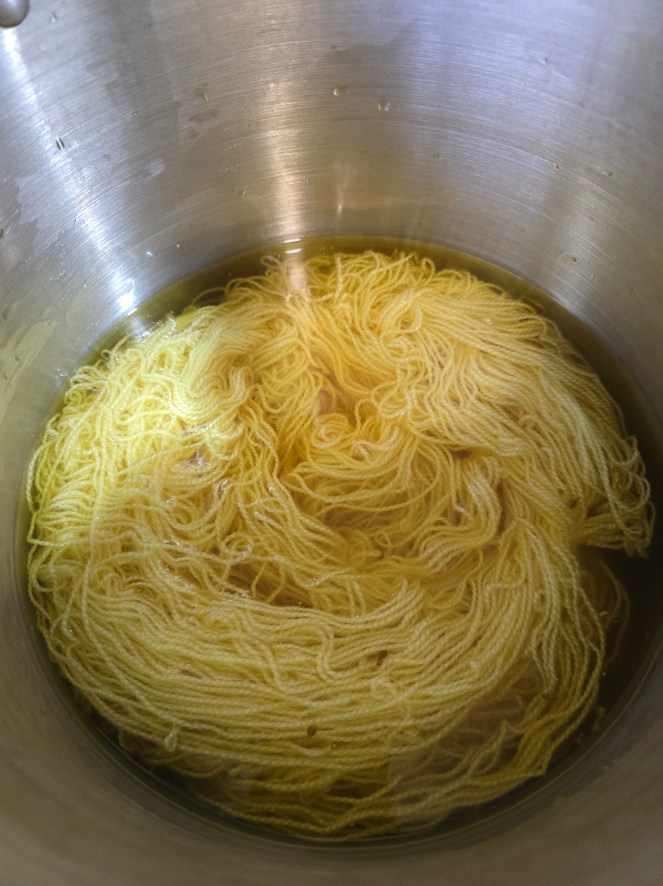
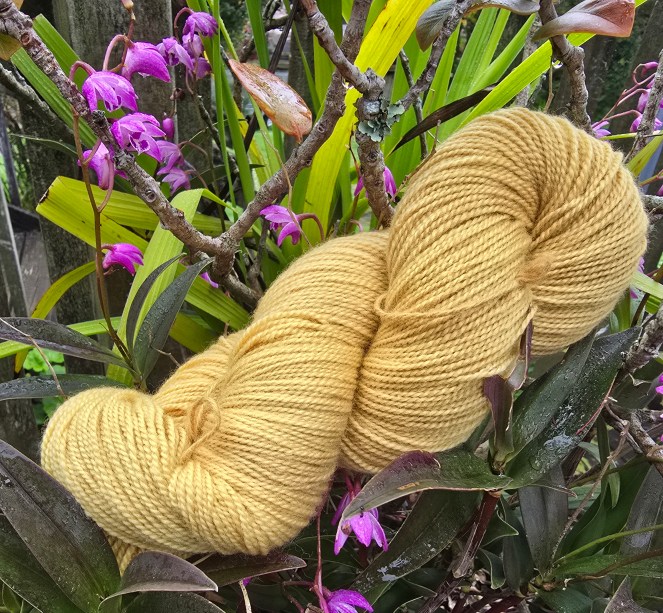
The jar sat on the kitchen bench for 8 days and mould had started to grow on top so I strained the solution and poured it into a dye pot. I added some more water and then 100g of merino yarn. I didn’t find any information about whether to mordant or not so I decided to just go ahead and not bother, thinking that the worst case is that the yarn wouldn’t take up any colour. In the dye pot the colour of the yarn appeared as a light, bright yellow that I quite liked. I simmered the yarn for a while, then removed it and hung the yarn up outside to dry a little while I did some other jobs. Later in the day I washed the yarn in warm water with a little detergent. Not much colour rinsed off during washing but the yarn colour deepened/darkened which was a surprise.

Is the dye colourfast? I’ll have to wait and see.

Spinning

Spinning a gradient


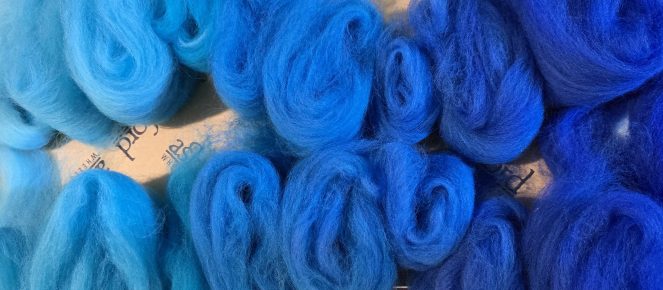
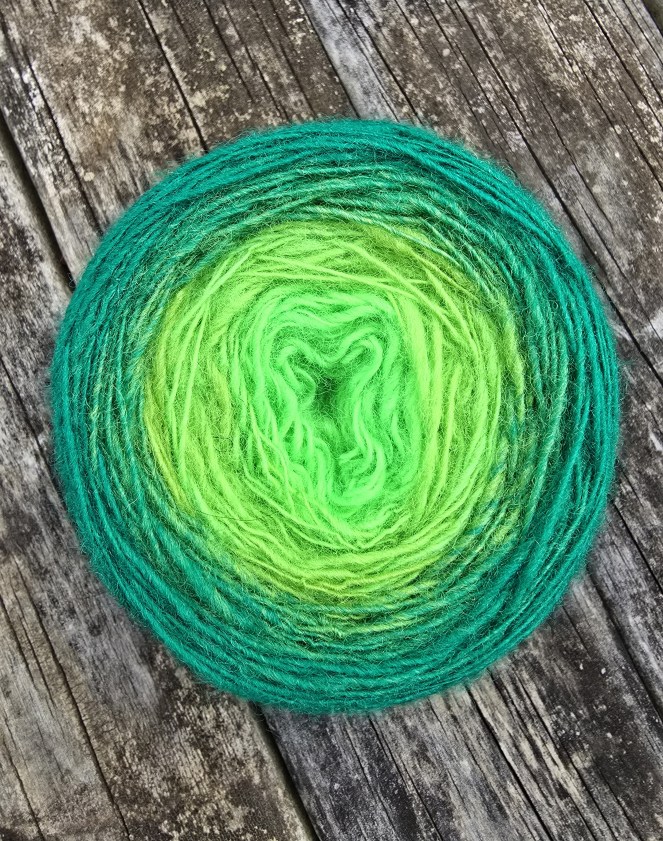
Creative Fibre Auckland had its annual retreat last weekend at St Francis Retreat Centre in Mt Roskill. It’s a very relaxed weekend, you bring any projects you want to work on and there are also a few informal classes offered. One of the classes was on blending a gradient for spinning. One of my Christmas presents last year was an Ashford Corriedale sliver bright colours sampler pack which I hadn’t used yet so I decided to take it along to the class. Cher Lyall was the tutor, you can find her on Instagram at @waihipi . Cher is always inspiring, I did a slow stitching class with her at the previous retreat.

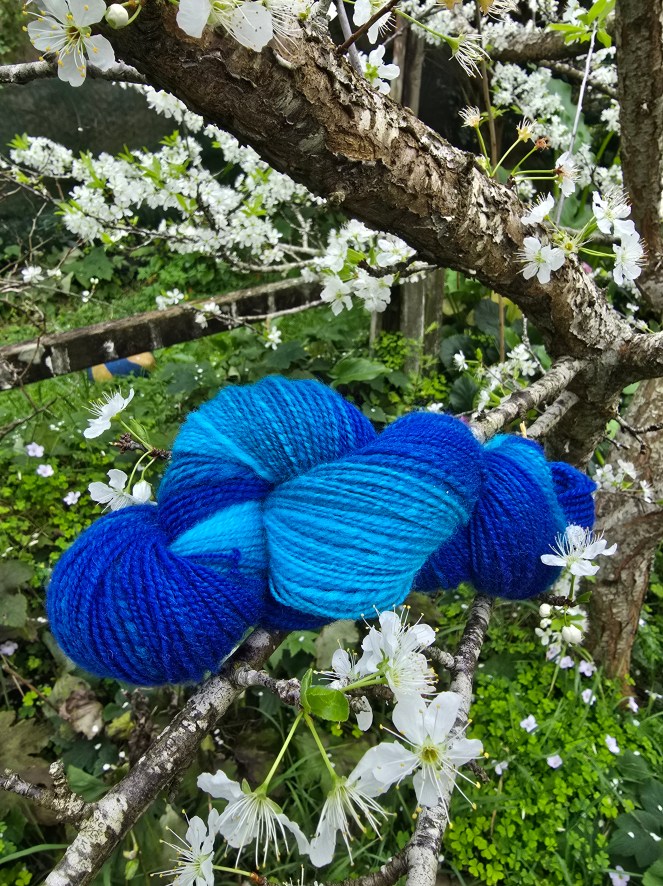
I blended my fibres using a drum carder, spun them up and washed the yarn to make a felted single. I love the result and am now trying to work out what I can do with it. I’m thinking of weaving with it, using it in the weft.

Bumberet · Weaving

Bumberet Tea Towels

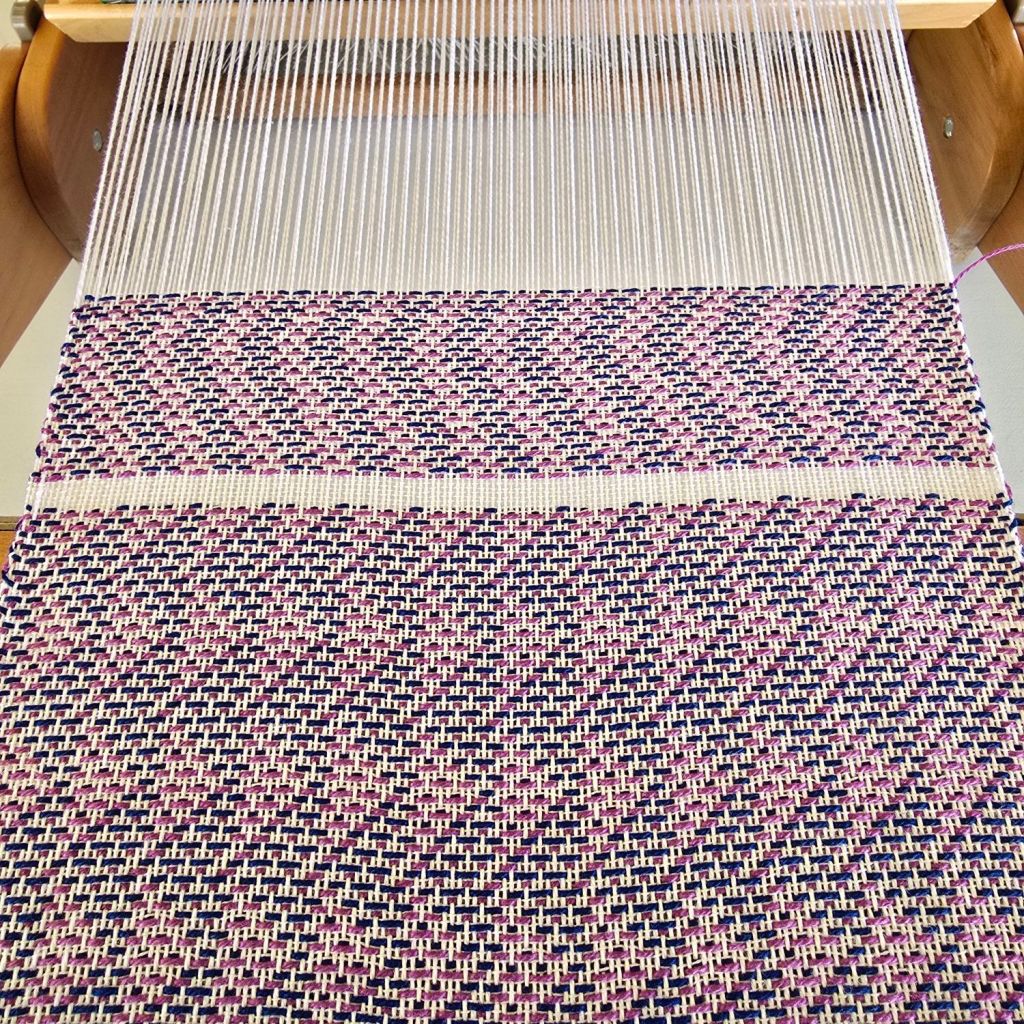
I decided to use up some cones of 8/2 cotton, predominantly shades of green, and weave some tea towels using bumberet weave. I didn’t bother to work out a colour sequence before winding the warp other than winding groups of three to work with the threading. However I was forced to ignore this plan and change colours part way through a group of three in a few places when I ran out of a colour. I was a bit worried when weaving the towels that this was a bad mistake and I should have planned the colours a bit better but once the towels were all finished I’m quite happy with the results.

On the loom
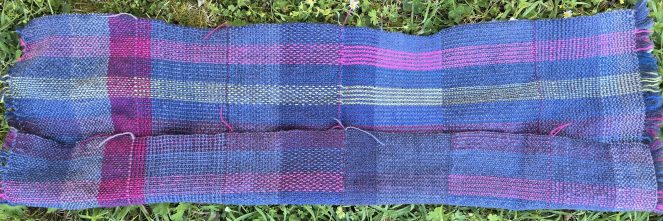
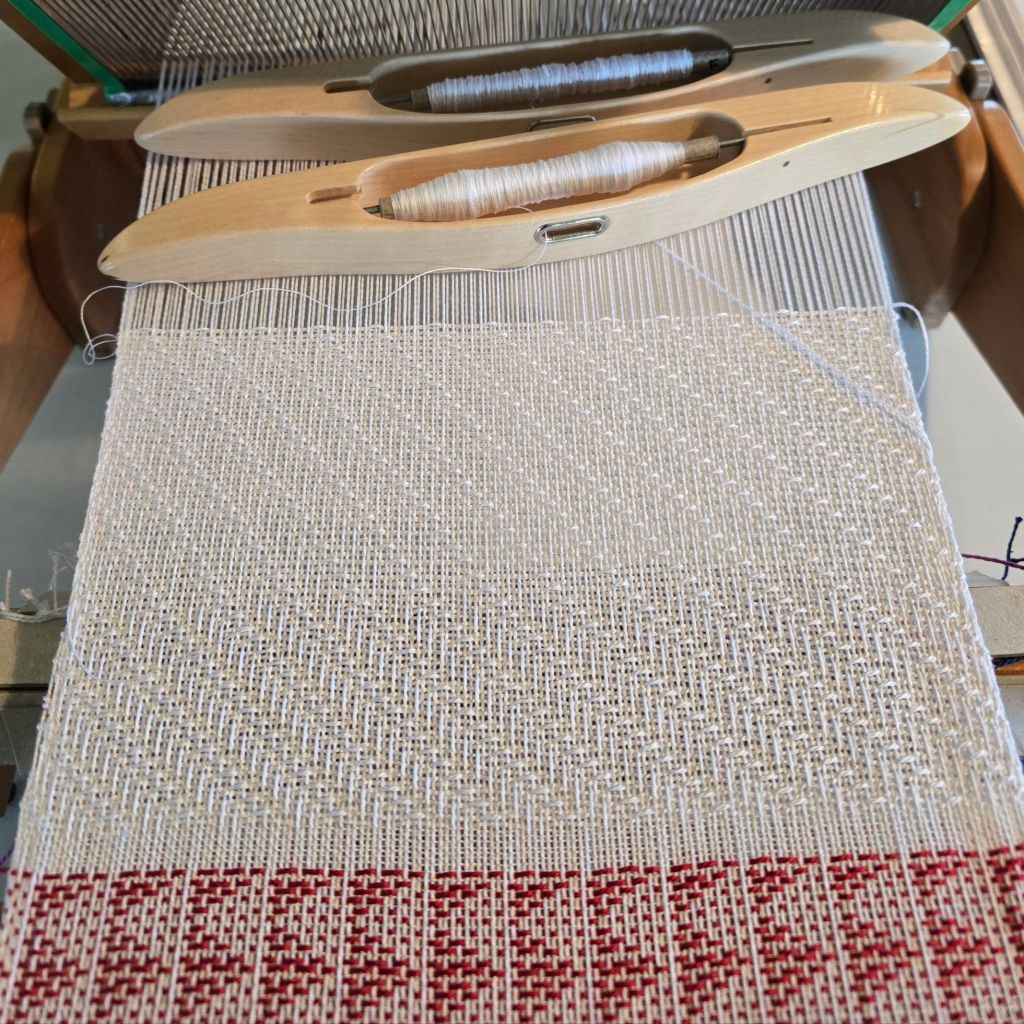
Off the loom, before wet finishing

Threading: point twill on 4 shafts Warp sett: 22 epi

References:

Handwoven March/April 2015

Weavers’ Issue 31

Heddlecraft Vol 6 Issue 1 Jan/Feb 2021

Weaving

Double Two-tie Samples & Weaving Mistakes

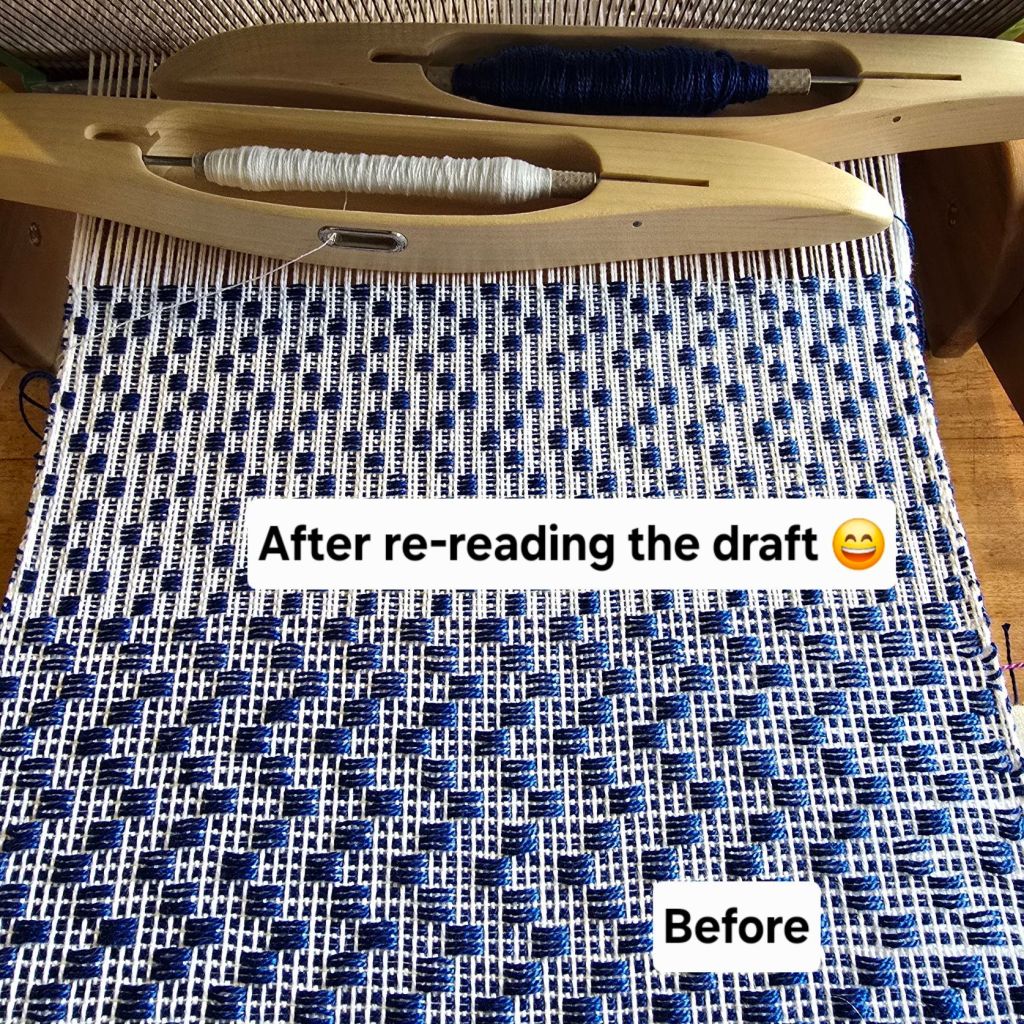
I’m weaving double two-tie samples, working my way through some of the drafts in Heddlecraft vol 4 issue 4. The warp is on an Ashford Katie loom that I bought secondhand a few months ago. It’s such an easy loom to take to weaving group meetings, compact when folded up and easy to carry in its bag, no more folding down the back seat of the car to fit my loom in.

Even though I am just following a draft, I have managed to make silly mistakes twice so far. Does anyone else keep weaving even though the sample does not look like the photo by convincing yourself that somehow it will look alright once it’s washed? It wasn’t until I left my weaving and then came back and reread the draft that I realised my mistake.

Fingers crossed I have learnt my lesson and will pay more attention in the future.

Uncategorized

Paper Basket

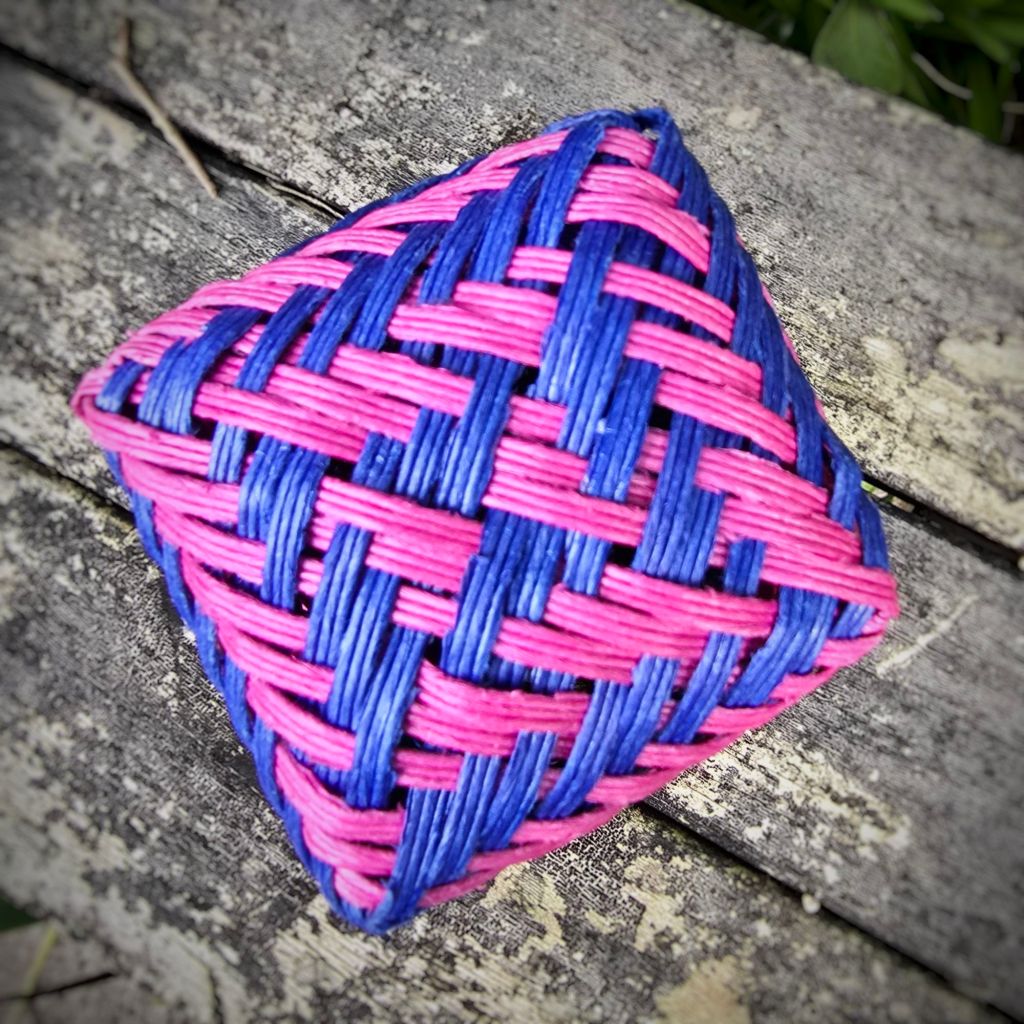
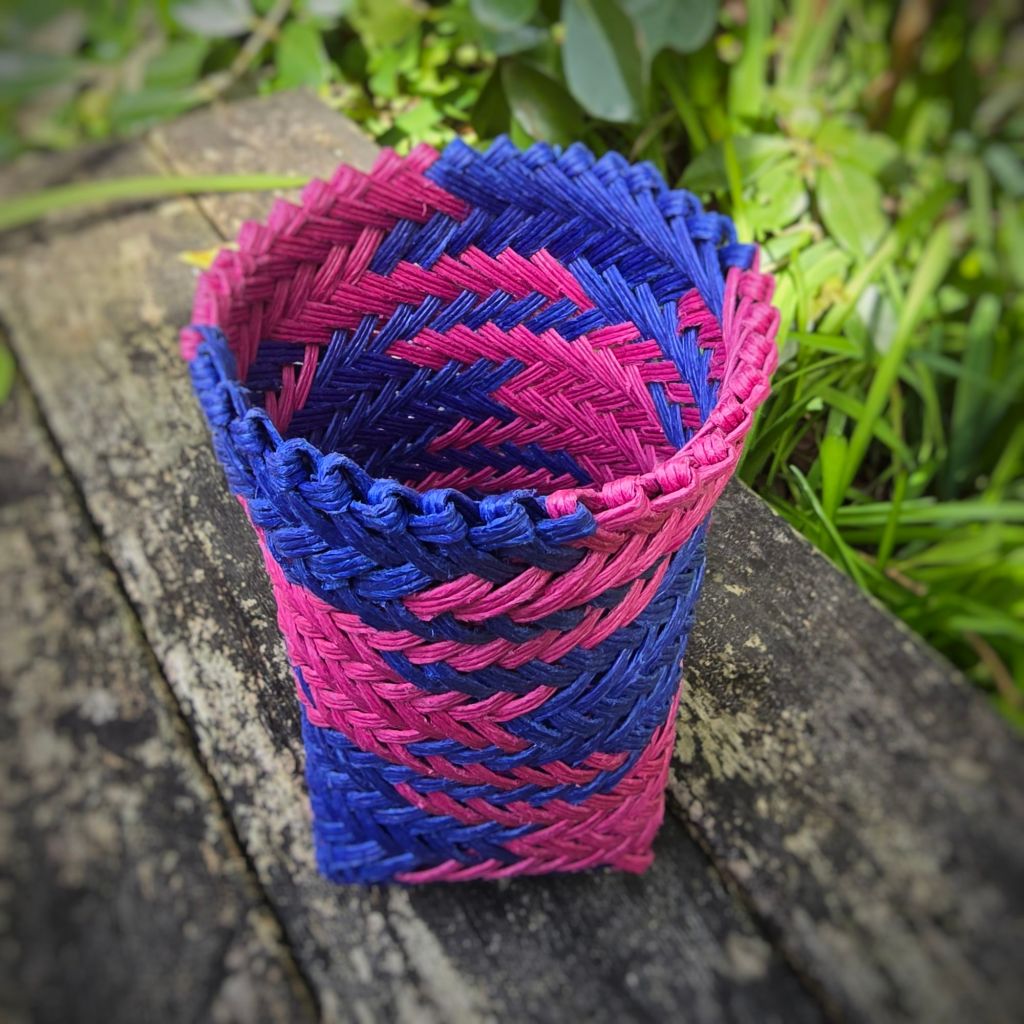
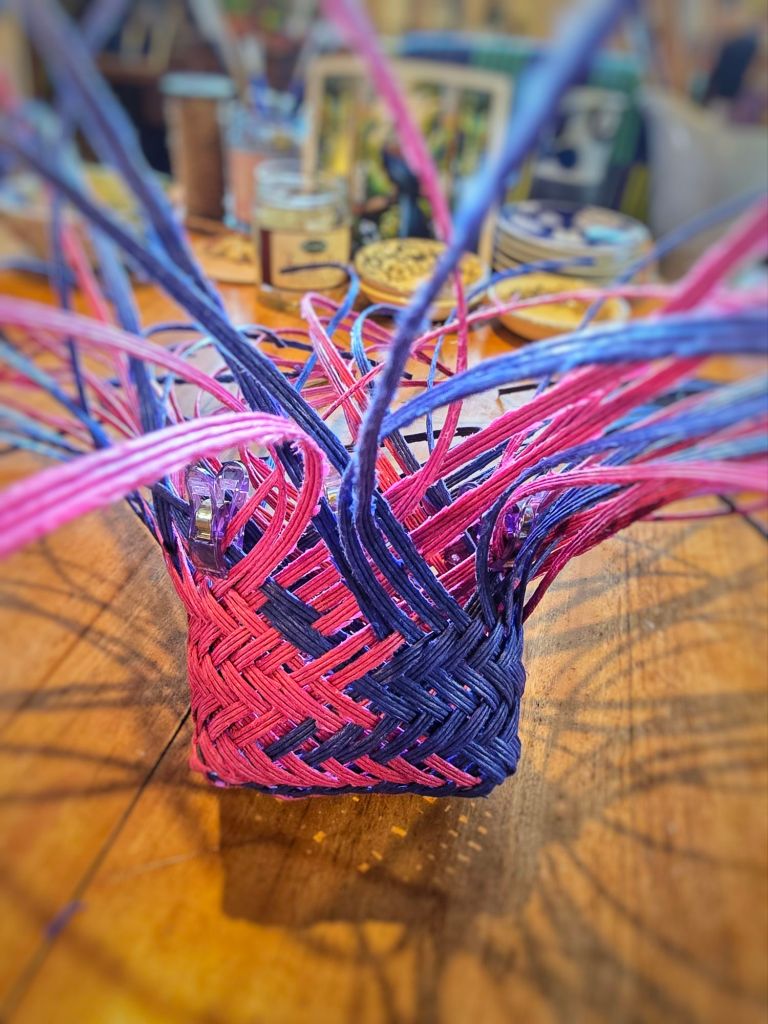
I bought some rolls of paper tape at one of my favourite shops, Daiso in Queen St, Auckland. It’s a dangerous shop to go to, because the prices don’t seem too expensive and there’s always new things to discover. But then you get to the counter with all your goodies and suddenly you’ve spent too much.

The tape is made so you can split it easily, I split it into four strips and then followed the instructions in The Art of Contemporary Woven Paper Basketry by Dorothy McGuiness to make a four-cornered square-base basket.

It’s a little wonky but quite sturdy. And I have some more rolls to practice with so more baskets are in my future.

Doubleweave · Multilayer Weaving · Weaving

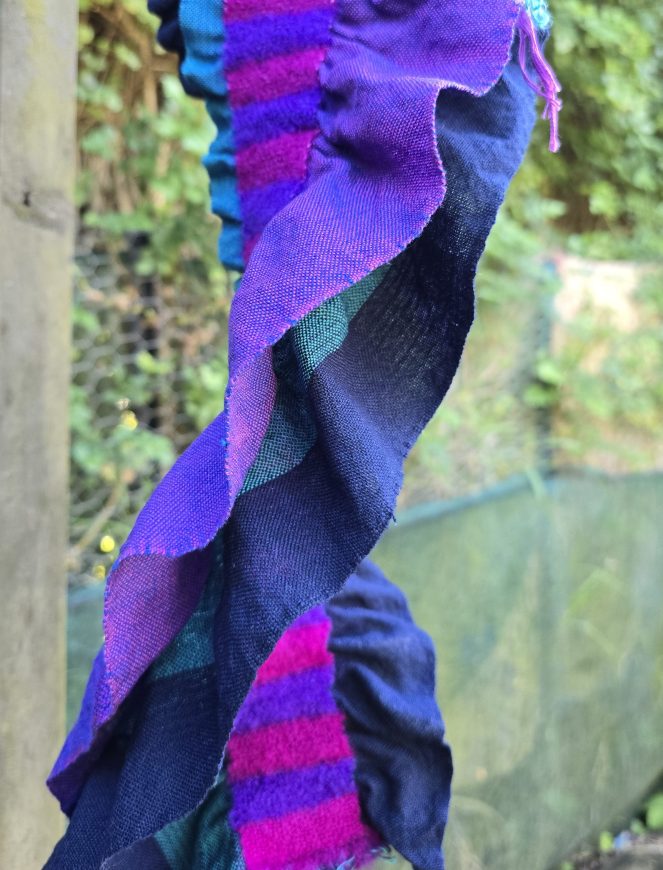
Ruffles

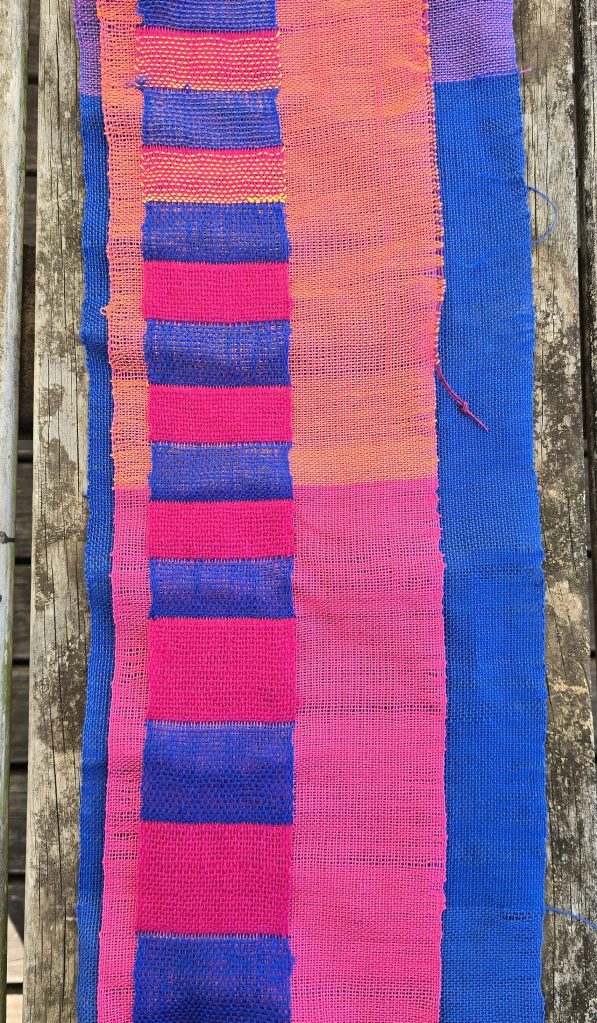
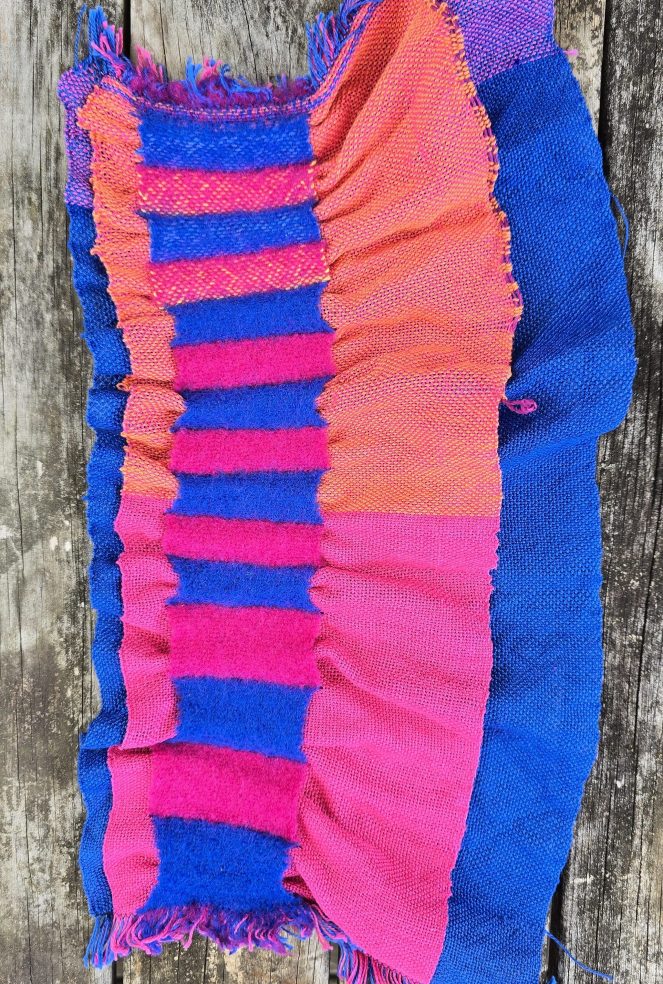
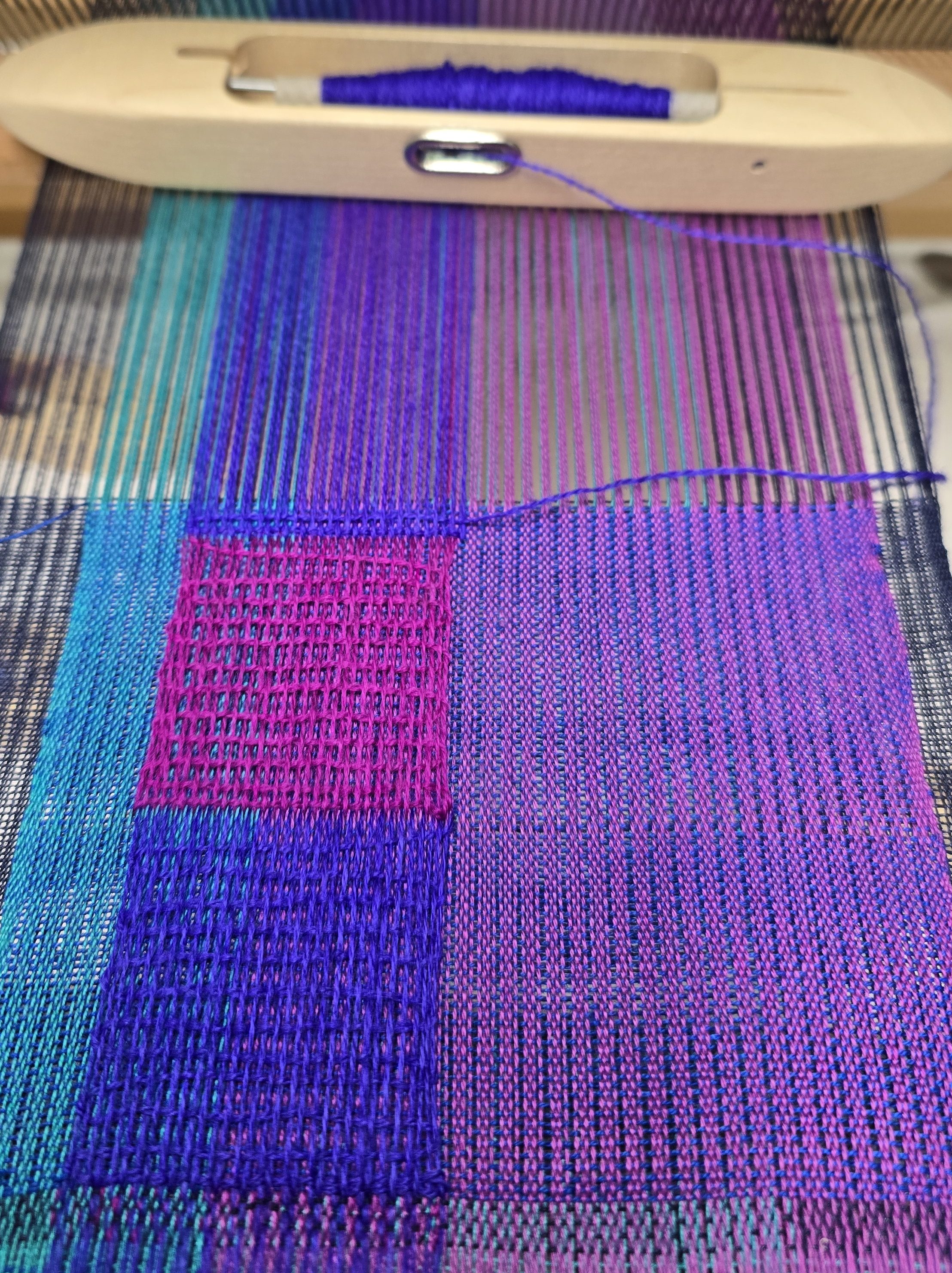
Some photos of samples I’ve been working on, I’m part of the Complex Weavers Dimensional Texture study group and our topic of study this year is Layer Interchange.

My first warp was 2 layers 10/2 cotton and 2 layers of R110/2 Tex corriedale. The wool layers are the only layers that interchange. The weft yarns were the same as the warp, and I also tried the cotton as a weft yarn on the wool layers to reduce the weft-wise shrinkage of those layers.I washed the samples in hot soapy water with agitation to cause shrinkage in the wool layers. After finishing the first sample I removed some warp threads from the left hand side, effectively moving the wool warp threads off centre

I wound a second warp using 20/2 cotton instead of 10/2.

Now I just need to decide on the final design and weave my samples to send to the other members of the study group.

Weaving

Exploring Passementerie

I’ve been exploring weaving passementerie as it is the set topic for the group I’m in as part of Cross Country Weavers, a Creative Fibre group. The first step was creating some cords, mostly using 20/2 cottons.

Then it was on to the weaving, some of the braids I wove on my table loom and some on my floor loom. It was a lot of fun trying out different designs

Resources:

Passementerie by Elizabeth Ashdown

Handwoven Decorative Trim – An introduction to weaving passementerie trim by Robyn Spady