Dyeing · Weaving

June

Weaving

June has flown by and I’m not quite sure where all my time went. At the beginning of the month I took part in a Pop-Up Artists in Residence event at the Franklin Arts Centre which was good fun. I took a couple of looms, a rigid heddle for visitors to play on and my table loom, and some of my work. I worked on one of the doubleweave samplers from Jennifer Moore’s book in between chatting to visitors and another local artist Eric Braks popped in and drew a lovely sketch of me weaving (masked up of course). The colourful works on the gallery walls were painted by some local high school students who were also part of the event.
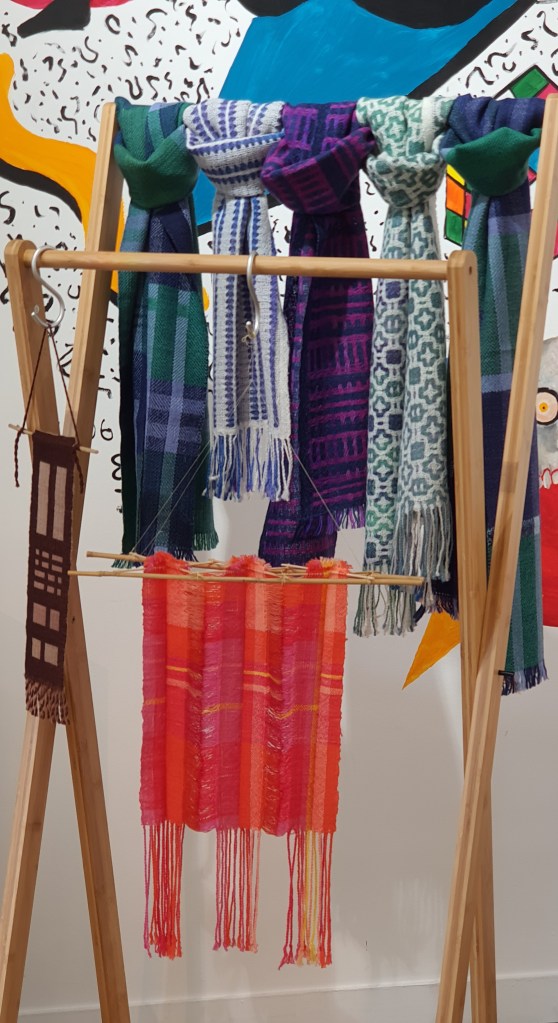
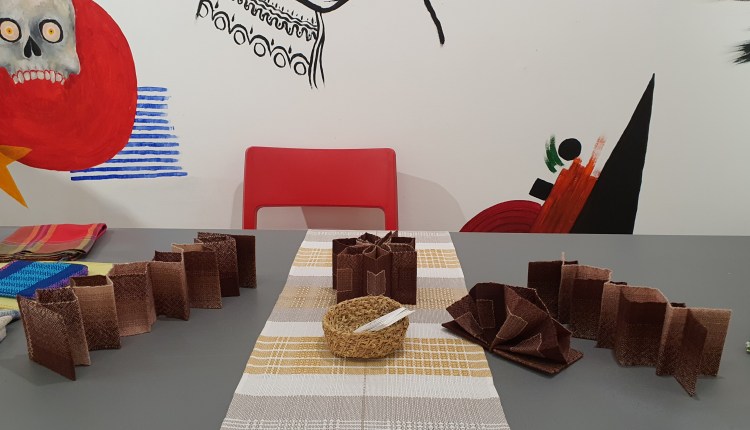
Handwoven scarves on a rack

I completed the doubleweave sampler and continued working on the Monk’s Belt placemats from this season of Jane Stafford’s School of Weaving. After a few months of setting up my new to me Mecchia dobby loom (it’s around 40 years old I think) I finally put the first warp on and started weaving. One of the wires leading to the dobby unit came loose soon after I started weaving and had to be reclamped but I have now managed a few hours weaving on the loom, with not too many issues (i.e. flying shuttles flying off the loom ). There’s a bit for me to learn, I’ve never used a dobby loom, flying shuttle or sectional beam before but I’m enjoying it so far.

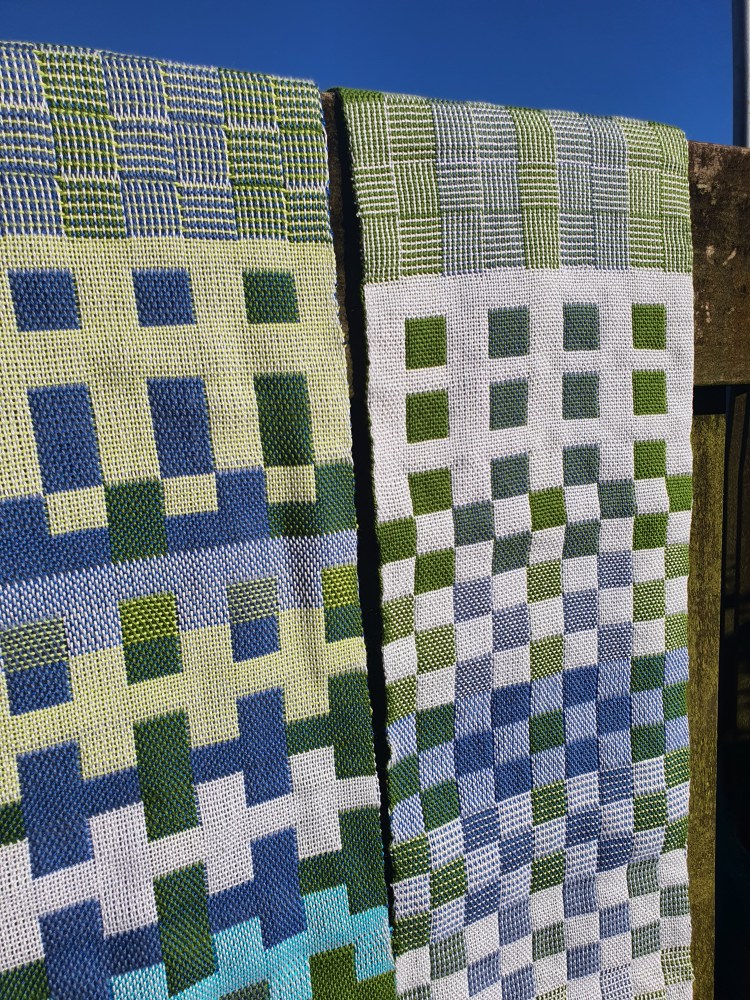
Green, blue and white cotton tea towels being woven on a Mecchia dobby loom.
First steps on the Mecchia dobby loom
Doubleweave sampler

Dog Tales

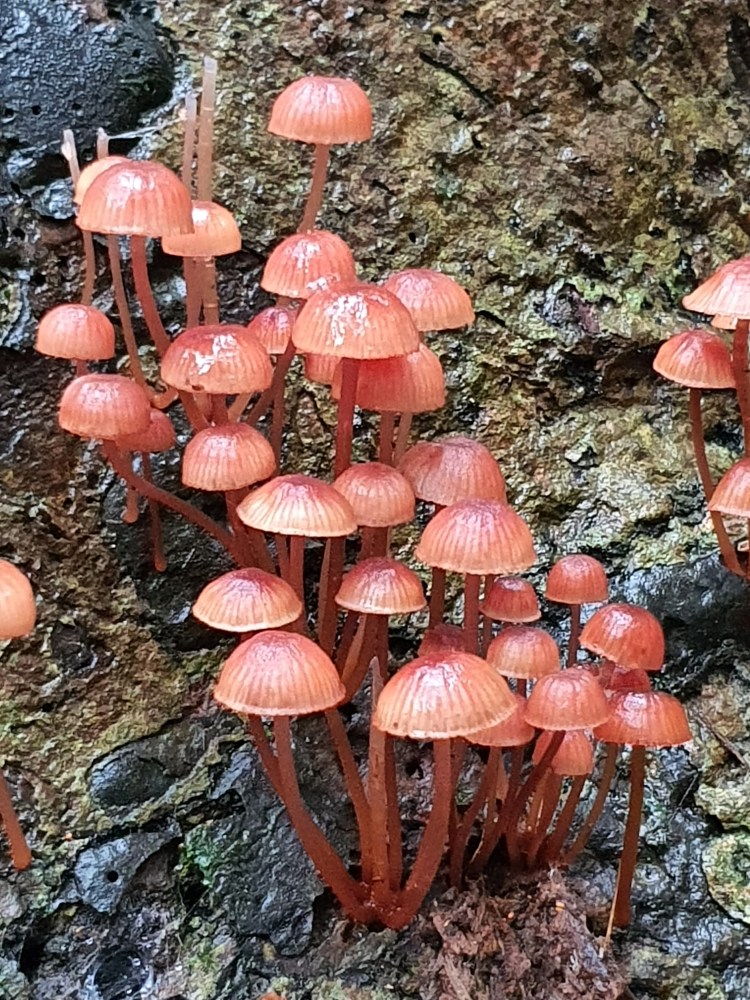
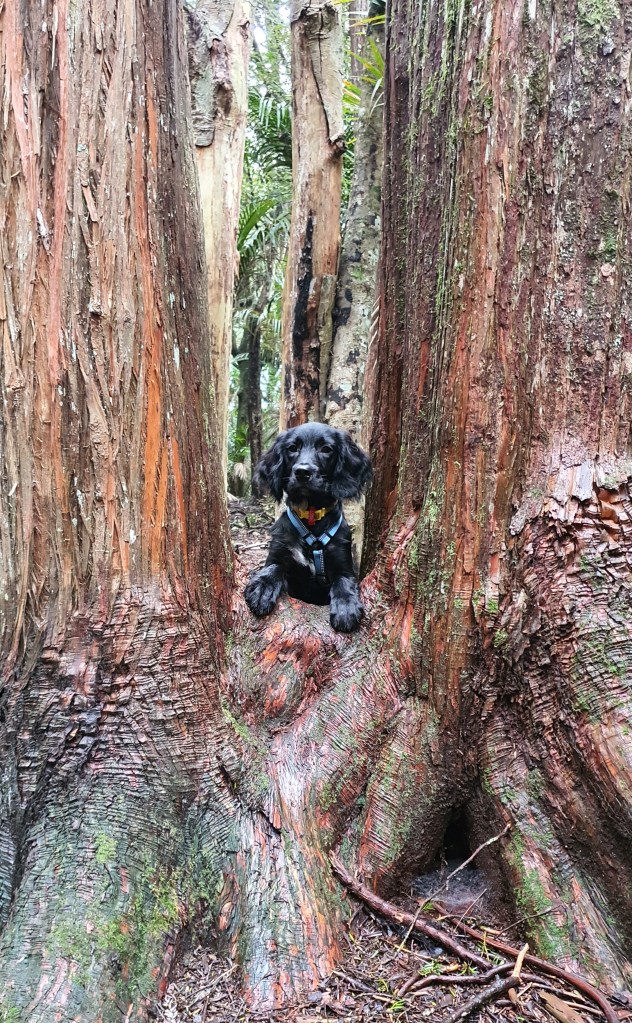
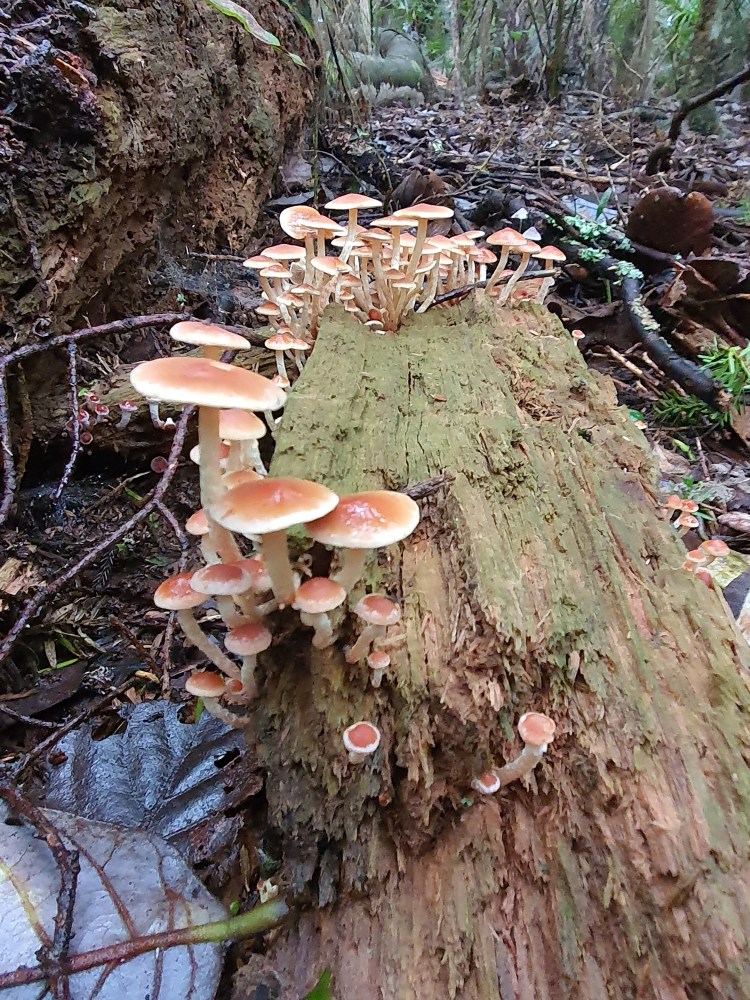
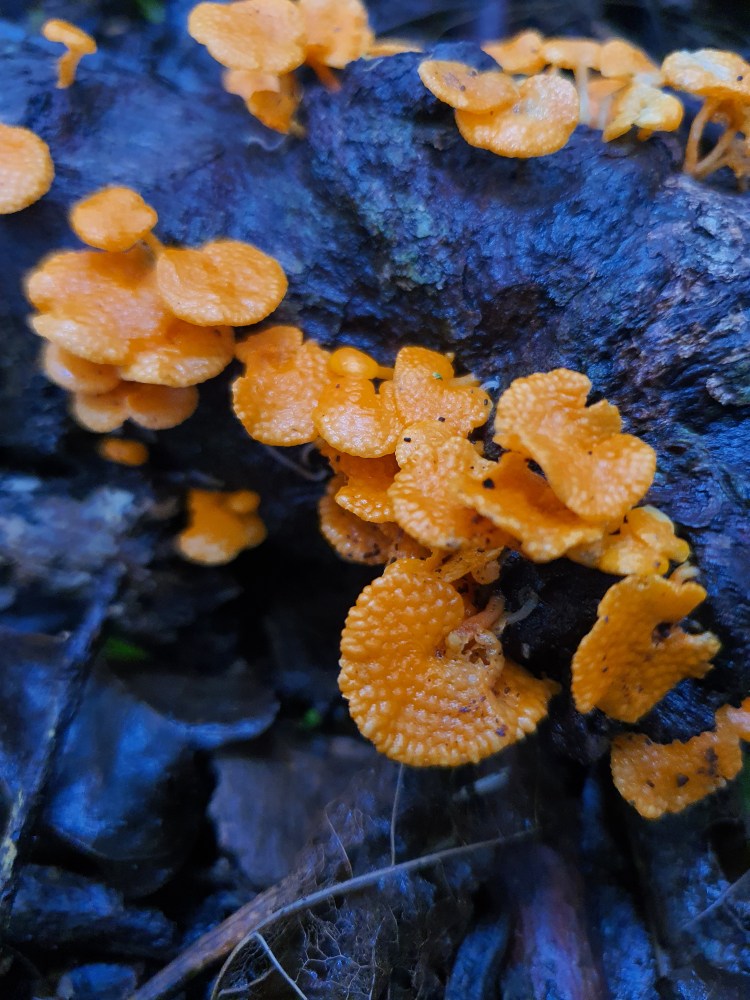
We visited dog-friendly Rooseville Park in Pukekohe after being told about it by a friend and it lived up to the recommendation. The wet weather met that there were lots of great fungi to see as well as all the native trees. We only explored a small part of the park but we’ll be going back again to see more of it.
Dyeing · Weaving

The rest of May

Weaving

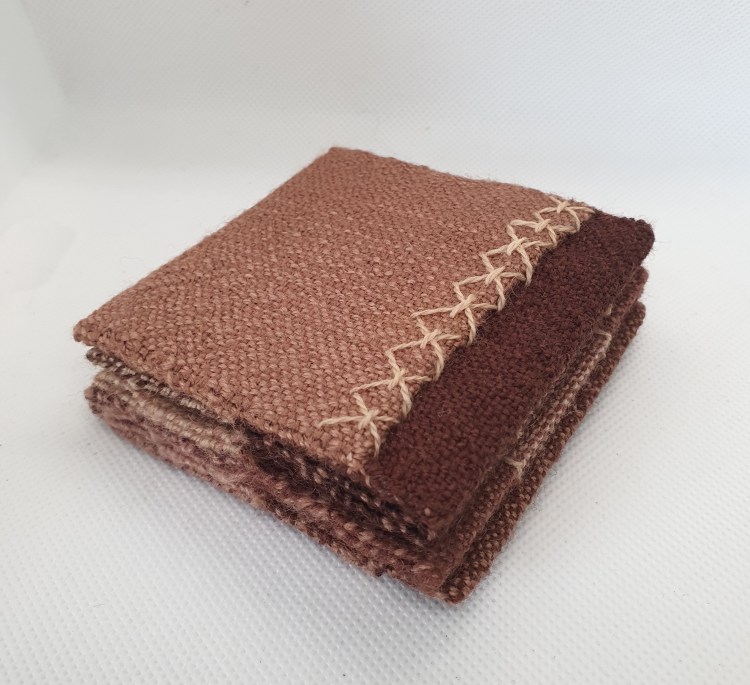
I have finished weaving a couple more of the double weave accordion books, one with four sections and one with six. Handwoven using 2 ply corriedale yarn dyed with harakeke seedpods, the books are fun to play with and rearrange into new shapes.

Handwoven sculpture

Rufus

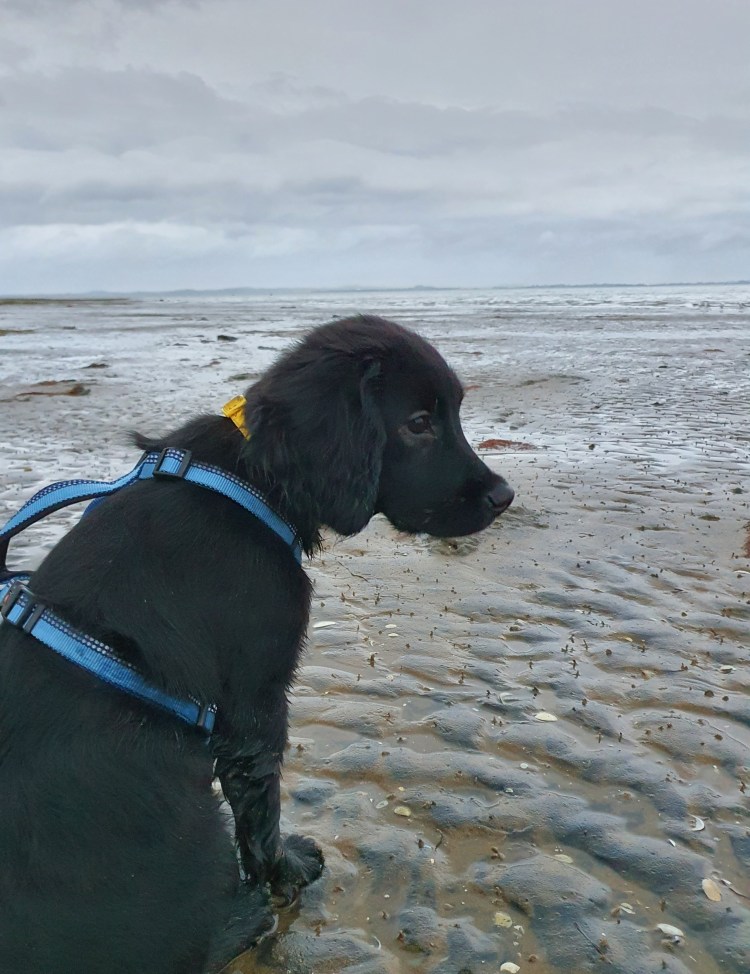
We have gone to the beach at low tide a few times with Rufus while we waited for him to be fully immunised for parvo. This week we are finally able to go walking in public with him which is great and will hopefully help burn off some of his energy.

Dyeing · Weaving

May 2022 so far

Weaving

The tea towels in the last post have been washed but still need to be hemmed. There has been much moving of stuff and rearranging looms in my studio so not much actual weaving. I have finished the double weave projects on my table loom and have a few ideas on what to do differently next time.

On my jack loom I’ve started weaving the Monk’s Belt placemats from Season 6, episode 3 of the Jane Stafford School of Weaving.

Dyeing

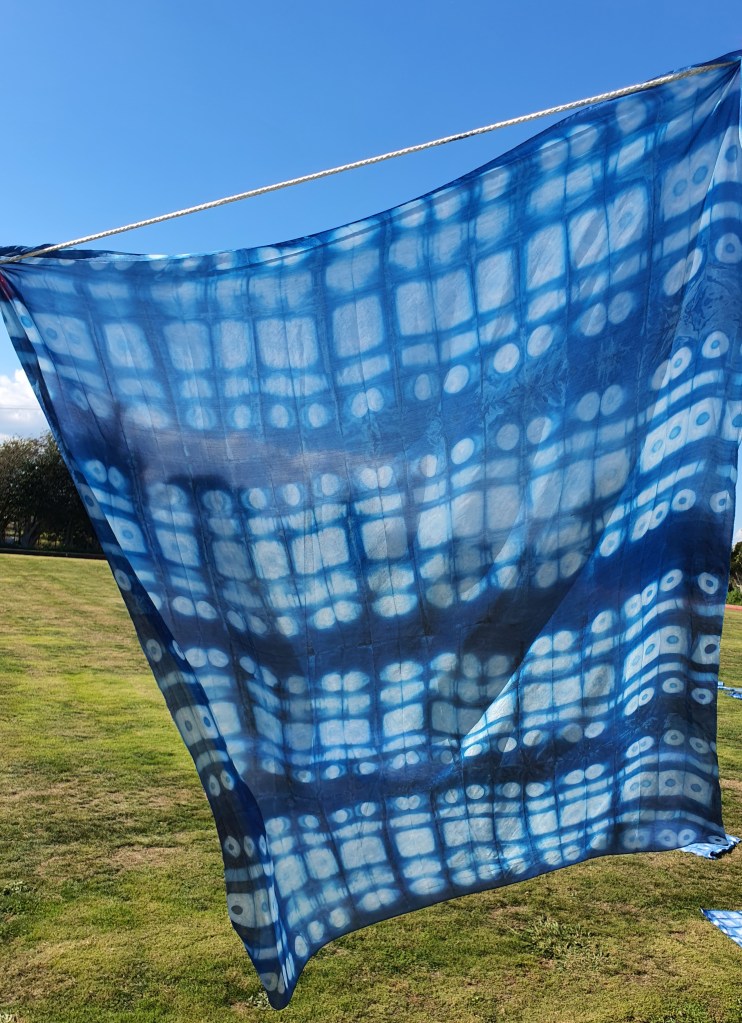
We had a fun day trying indigo dyeing at the weaving group I belong to, here’s one of the silk pieces I dyed using resists.

Reading

The latest instalment in the Rivers of London / Peter Grant series.

Dyeing · Weaving

April Part 2

Weaving

I have finished weaving the warp from Season 6 Episode 2 of Jane Stafford’s School of Weaving. I love the colours and patterns and once I get around the hemming them all I’m looking forward to using some of these tea towels in my kitchen.

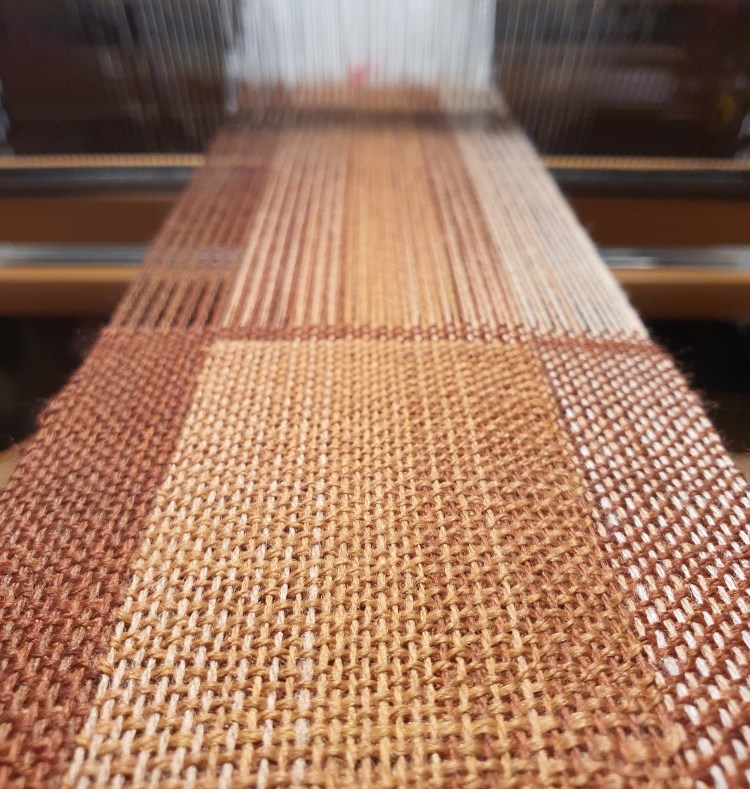
Weaving continues on the double weave warp on my table loom. The warp and weft is corriedale dyed with harakeke (NZ flax) seed pods.

Reading

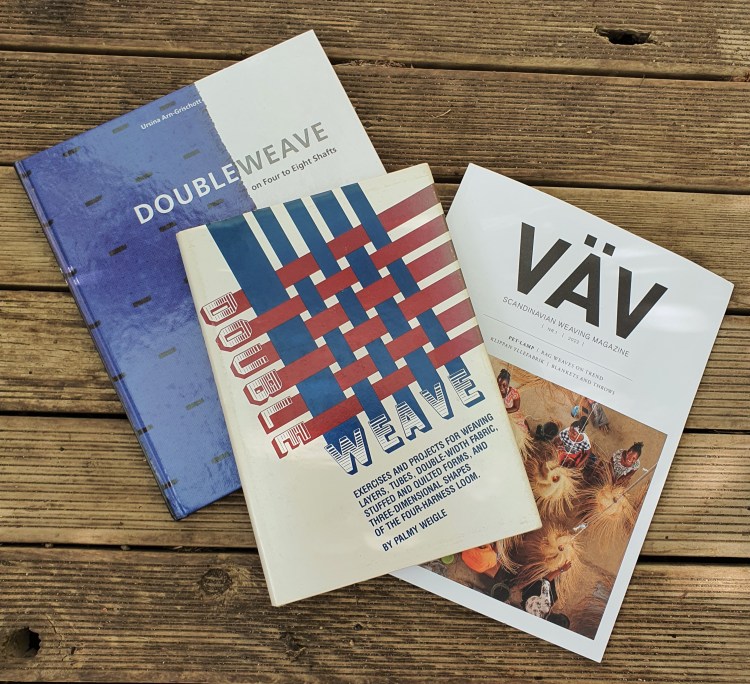
I purchased second hand copies of a couple of books about double weave that were offered for sale in a NZ weavers facebook group: Doubleweave on Four to Eight Shafts by Ursina Arn-Grischott and Double Weave by Palmy Weigle. They both look very interesting and am working my way through them. The latest issue of VÄV magazine arrived, I particularly liked the article “Twisted Colors”. I’m also reading Miss Pinkerton by Mary Roberts Rinehart as part of the Shedunnit book club.

Rufus

Still growing and exploring, he likes playing with the hose but doesn’t enjoy baths quite so much. He had his first puppy preschool class and now we’re working on the takoto/lie down command. He is pretty good at e noho/sit especially when food is involved.

Dyeing · Weaving

April – Part 1

The big news this month is that we have a new member of our whānau. Rufus is a Spangold Retriever, also known as an English Springer Spaniel – Golden Retriever cross. He is 10 weeks old and full of beans when he’s awake.

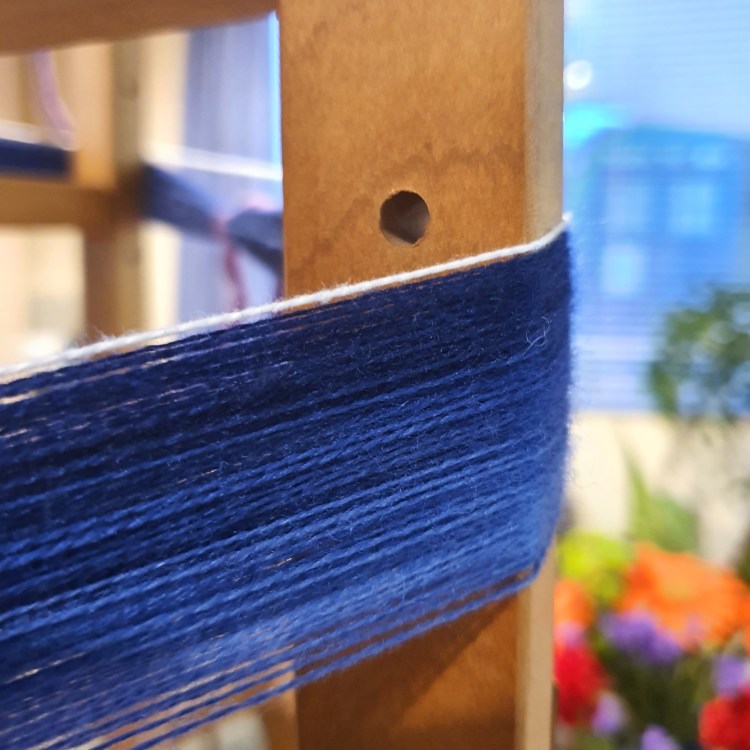
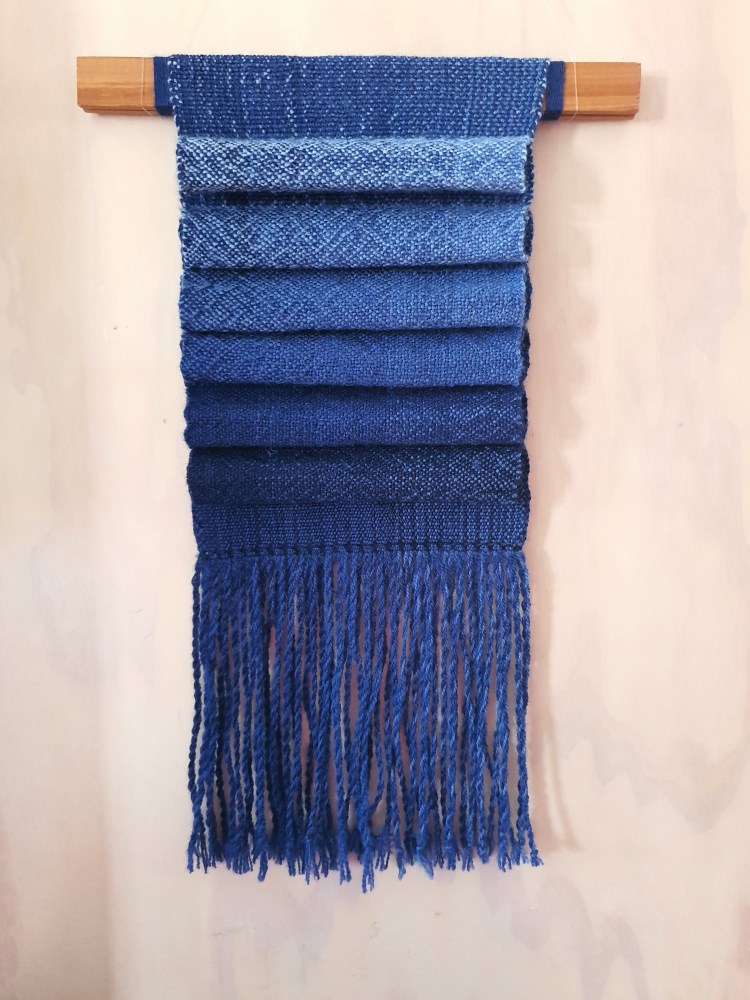
Consequently weaving has taken a bit of a back seat since Rufus’ arrival. Prior to that I did some dyeing for a piece I wanted to weave to enter in a local arts show at Easter. The theme of the show was Light and Shade, and while I initially toyed with weaving something in shades of grey I decided that blues appealed to me more. These skeins are 2-ply corriedale wool dyed with varying concentrations of the same dye.

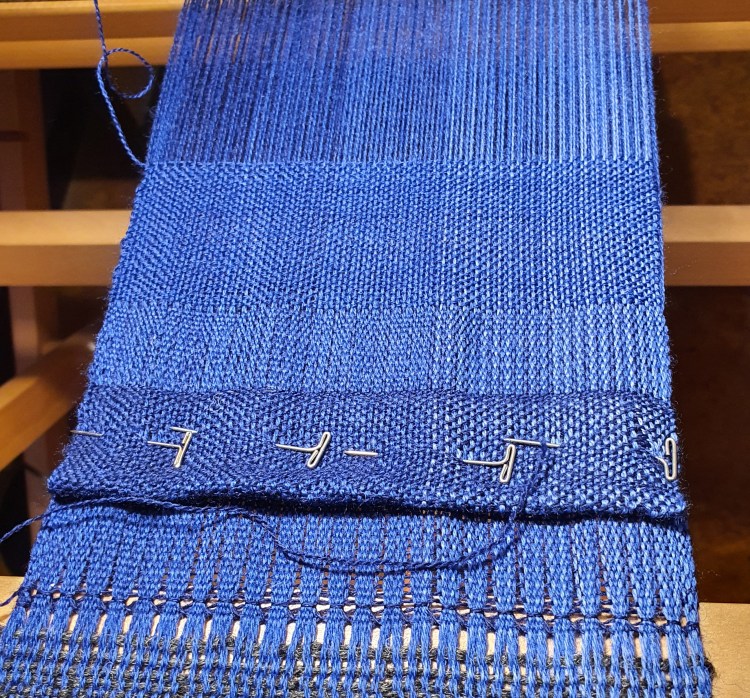
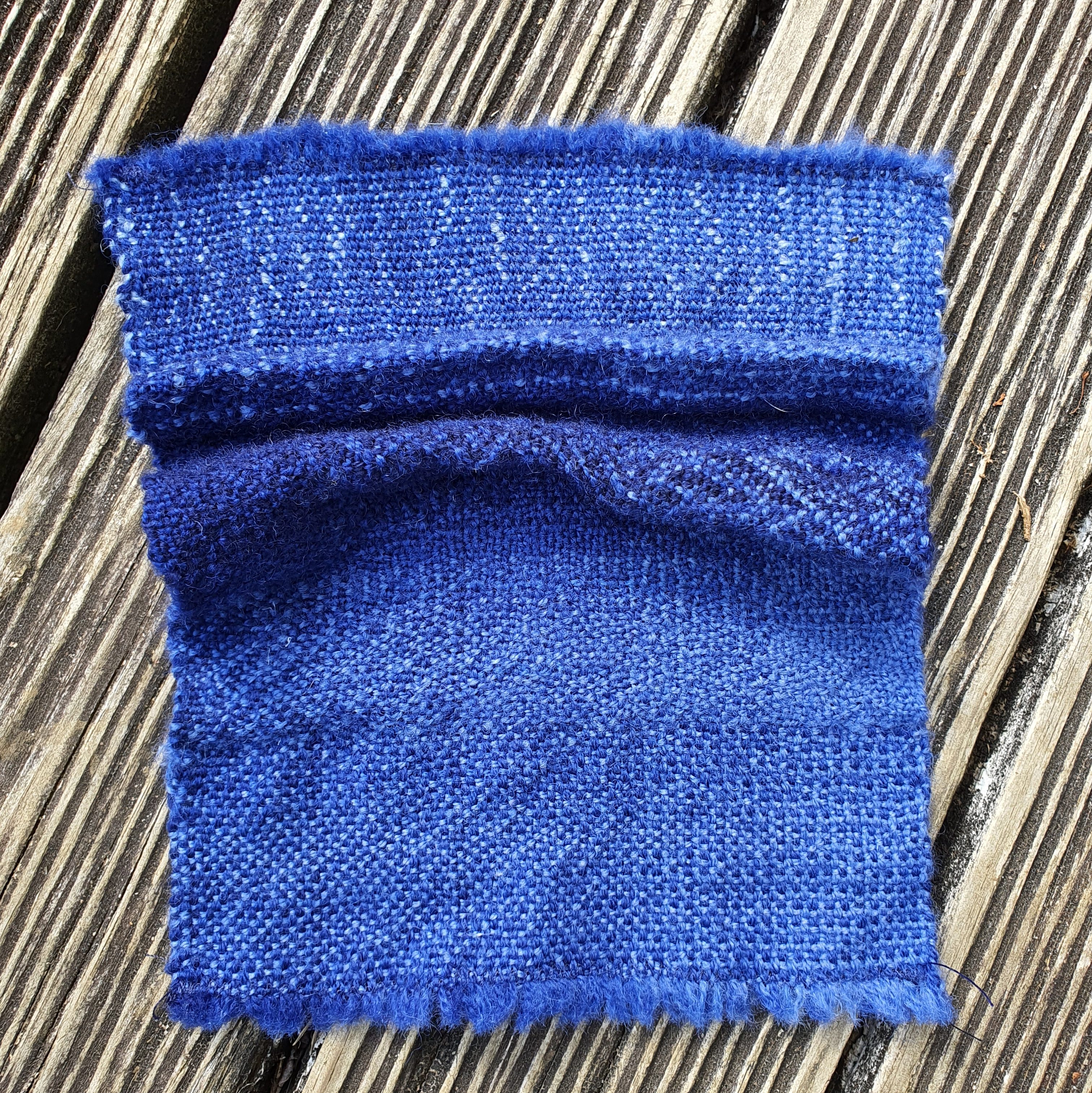
Using the techniques from the 3D double weave samples I wove in February I wound a warp, put it on my loom and started experimenting. You can see my first sample below, I needed to check how it would wash up as my previous samples were woven in cotton.

The finished piece, “The Blues” can be seen below or you can see it for the next 3 weeks at the Pollok Co-op.

I was delighted and surprised to receive an email on Thursday saying I had awarded Second-equal in the show and I’m looking forward to visiting the show this weekend.

Dyeing · Weaving

The rest of March

This month I finished weaving a cotton warp that I started weaving in February. I dyed the warp after I had wound and chained it, which produced a tie-dye effect. The weft in the photo was a 20/2 cotton from DEA yarns. Now to decide what to make with it.

I have also been continuing to explore double weave, this time using some of my harakeke-dyed yarns. I wanted to try making an accordion book, inspired by these paper ones by Byopia Press and this woven one by Kaye Sekimachi. Even though I did make a little paper model and thought I had calculated the maths correctly I did get the proportions of this one how I wanted them to be but I’m pleased with it for a first try.

Dyeing

More Dyeing With Plants

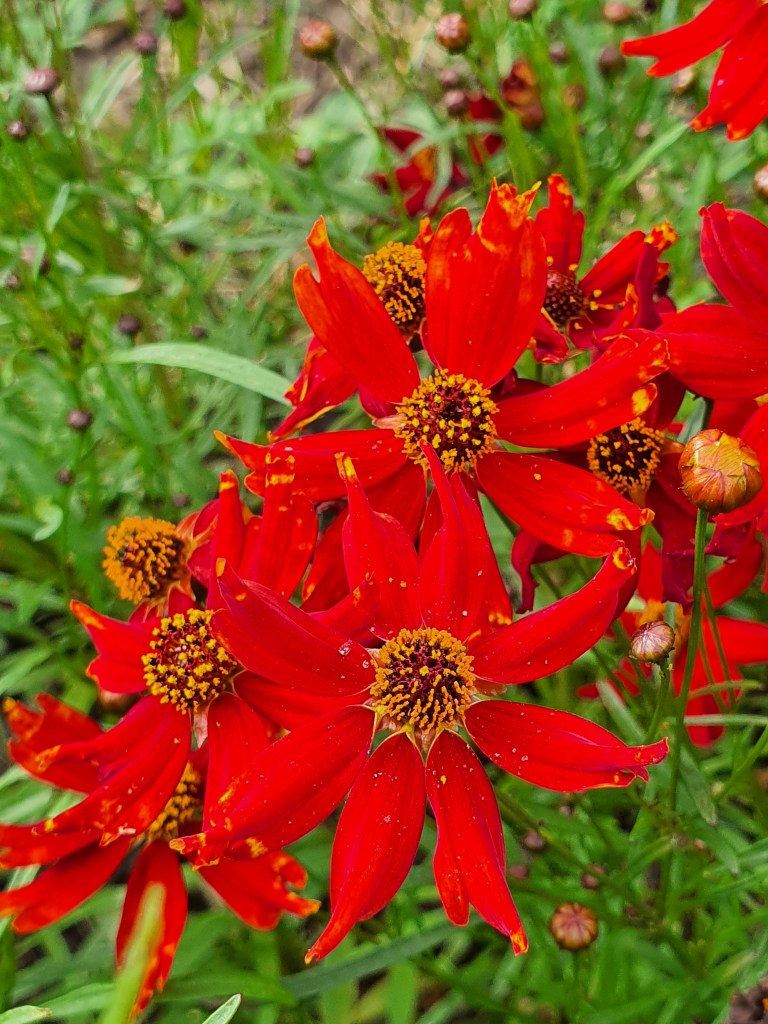
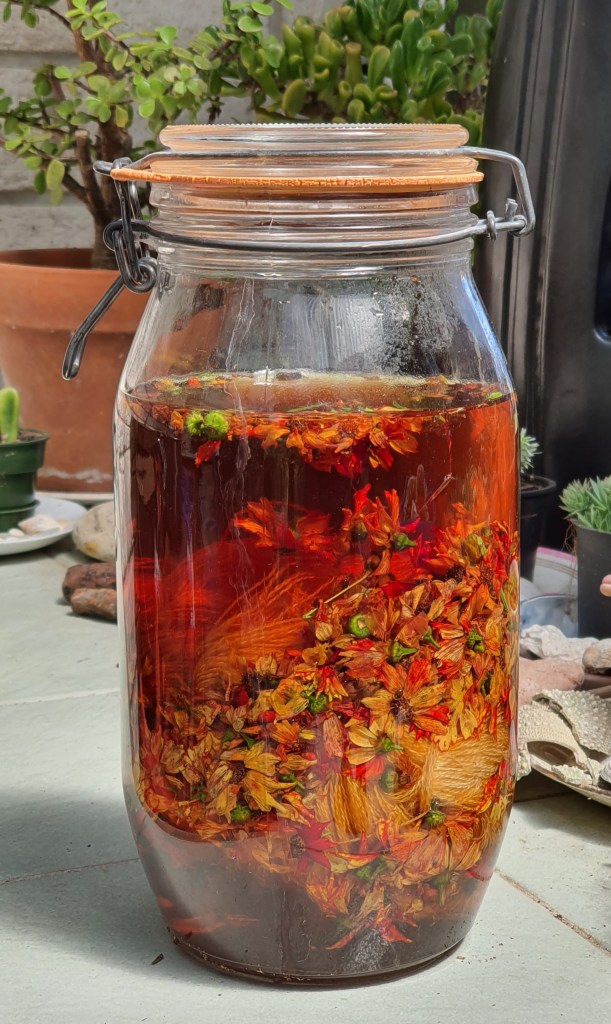
This summer I bought some Coreopsis Amulet seeds from Kings Seeds and grew a couple of dozen plants to dye with. I decided to try solar dyeing with some of the flowers as I haven’t used that method before. I mordanted some corriedale wool with alum and placed in a jar with water and some fresh flowers. It was surprising to see the colour start to come out of the flowers within a few hours, though I wasn’t sure that would mean the colour would go into the wool.

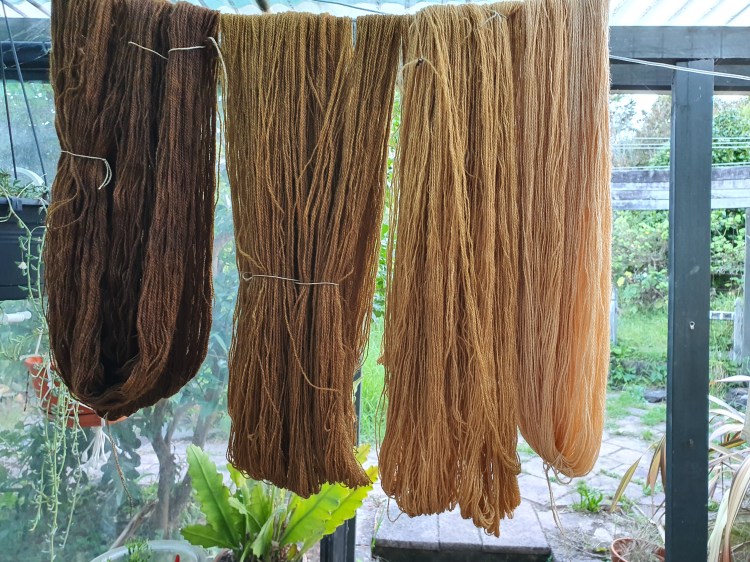
I left the wool brewing for just over a week, during that time I added a few more flowers and moved the wool around as there were bits that looked like they hadn’t taken much dye. I removed the yarn from the jar, shook off as much plant matter as I could, let it dry overnight and then gave it a warm hand wash. As you can see in the photo below the colour is mainly a bright rusty orange, though the colour is a bit patchy. Overall I’m happy with the results, solar dyeing seems a great low fuss dyeing process but I will have to wait until next summer to try it again.

Dyeing · Uncategorized

Dyeing with Harakeke seed pods

One dye bath – many colours

I have several harakeke (phormium tenax / New Zealand flax) bushes in my garden so I was excited to find out a few years ago that you could make a dye from the seed-pods and it is a fairly simple dye to make and use. Obviously the first step is to wait until the flower stalks appear. Then you watch all the birds, especially the tui, come to feed on the flowers. Slowly the flowers disappear and the seedpods appear. The stalks are quite tall and heavy and often fall over.

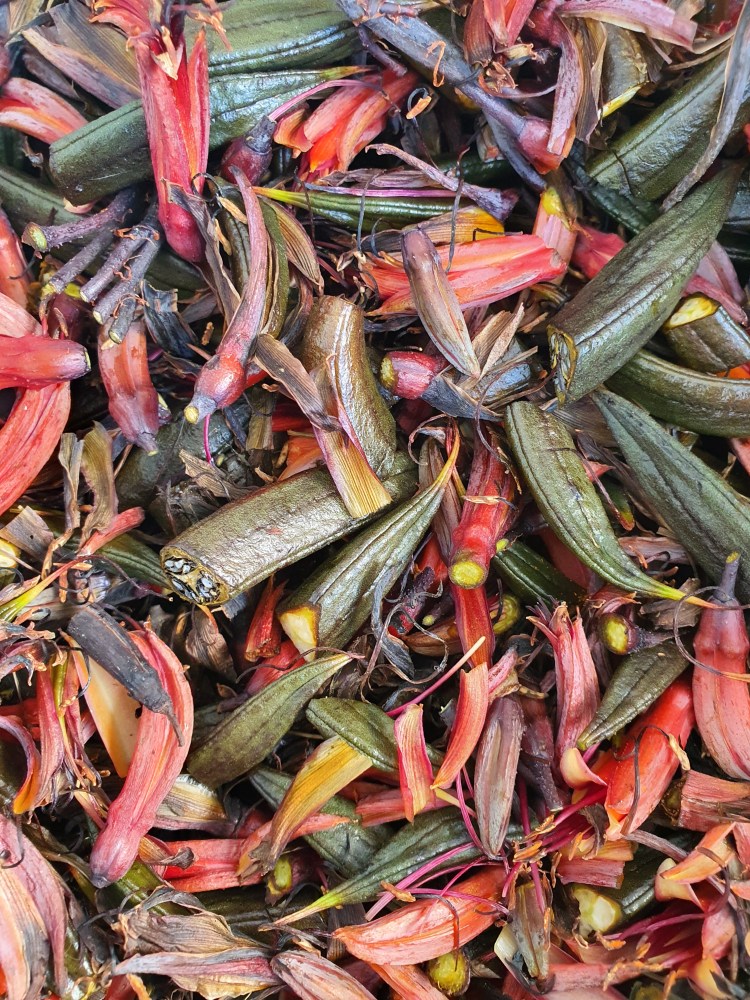
You can harvest the seed-pods when they still fresh or even when they are looking quite old and dry. I have used them at various stages and you still get colour from them. I cut the seed-pods into 2 or pieces and put them in a dye bath with water and then leave them for a couple of days (or longer if I get busy) until the dye bath is starting to bubble. The dye solution does smell but I do my dyeing outside and I think it is an OK smell.

Freshly cut seed-pods and a few flowers
The dye bath after a couple of days

Originally I would leave the seed-pods loose in the water but recently I realised it would be a lot easier if I actually put them all in an old pillowcase, instead of picking out bits out of my yarn afterwards. Once I’m ready to dye, I soak the skeins of wool in some warm water with a squirt of detergent, then place them in the dye bath and gently heat it. You don’t need to mordant the yarn but you can if you want, I haven’t noticed any difference in depth of colour between mordanted and un-mordanted yarn but I also haven’t carried out any rigorous investigation. As the dye bath increases in temperature the colour obtained darkens, you can see this in the photo below on the right. The skeins of yarn were taken out at different stages of heating the dye bath, the darkest was left in the dye bath after it came to the boil.
In the dye bath
Skeins before washing

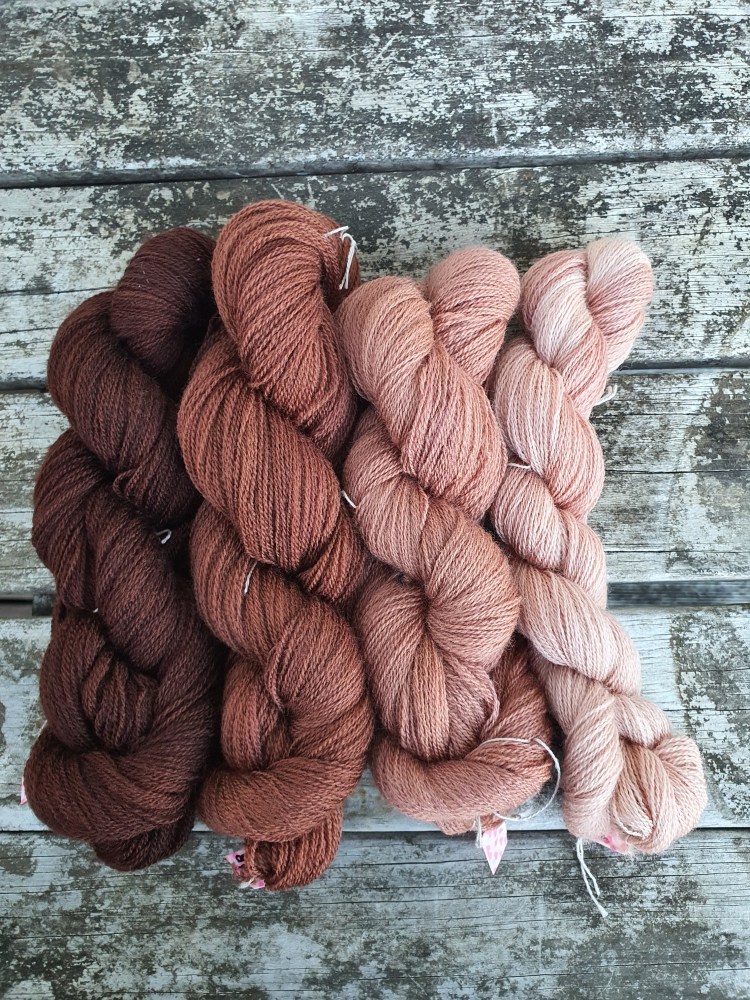
Once I’ve finished dyeing the skeins, I leave them to dry overnight before washing them in hot water with laundry detergent and then rinse until the water is clear. The dye bath can be used a few times but the colours seem to change as well as the depth. In warm weather the dye bath can grow mold but I just take scrape that off. The photo at the top of this post shows all the colours I obtained from one dye bath heated three times. Below you can see the results from each individual heating. All of these skeins are corriedale wool.

First use of dye bath
Second heating of dye bath
Final reheat

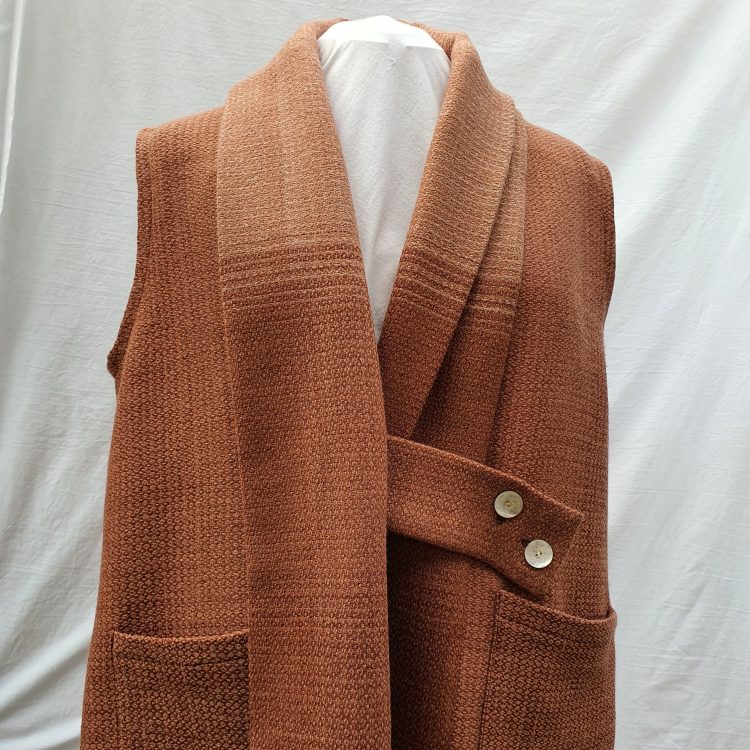
If you have access to some harakeke seed pods I recommend giving dyeing with them a go. You can dye other materials, not just wool, I have tried silk and cotton. Finally here’s photo of a vest I made from fabric woven with wool dyed with harakeke seed pods.