I bought some rolls of paper tape at one of my favourite shops, Daiso in Queen St, Auckland. It’s a dangerous shop to go to, because the prices don’t seem too expensive and there’s always new things to discover. But then you get to the counter with all your goodies and suddenly you’ve spent too much.
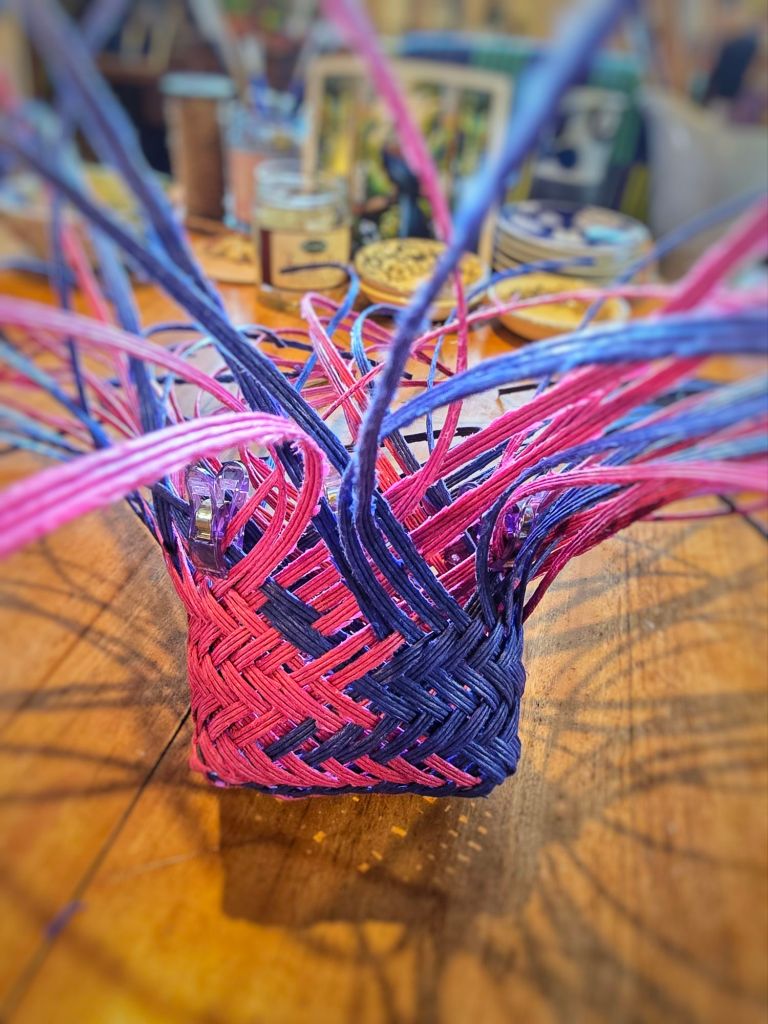
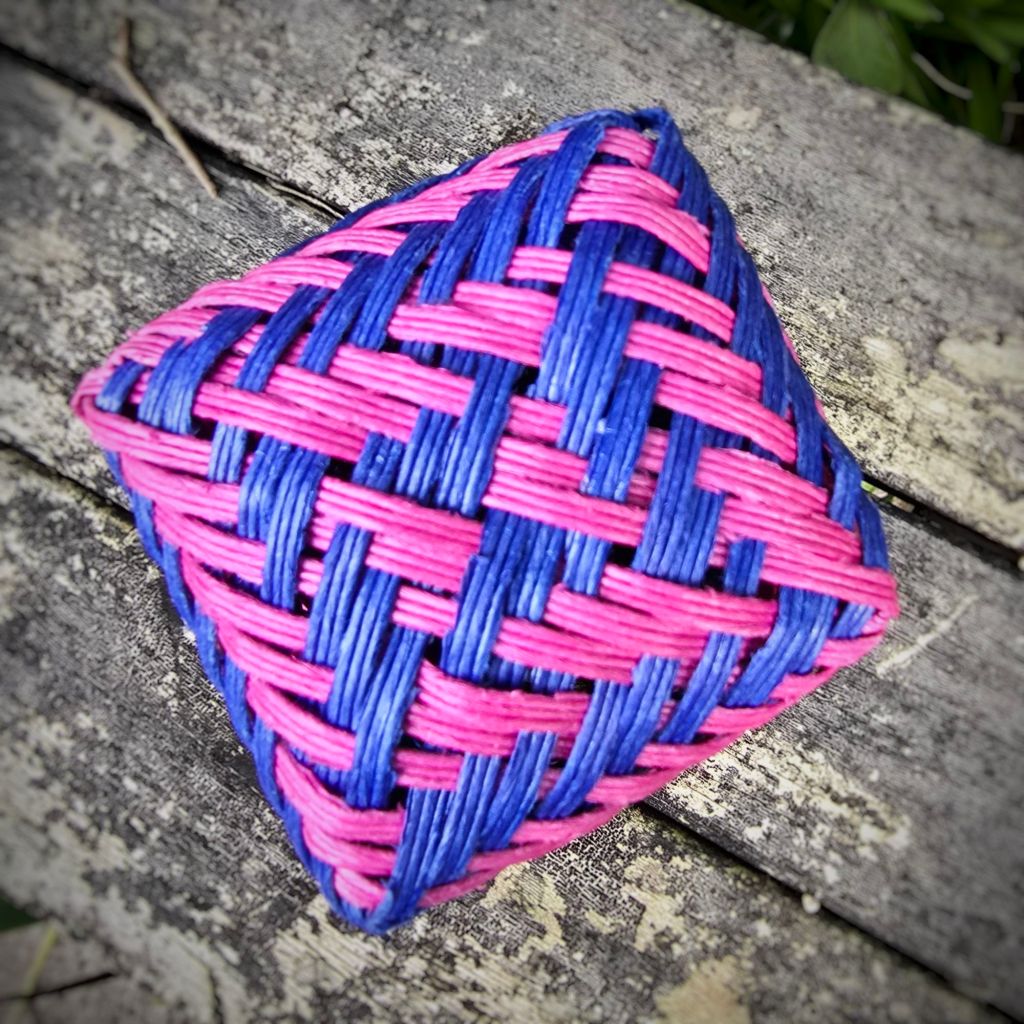
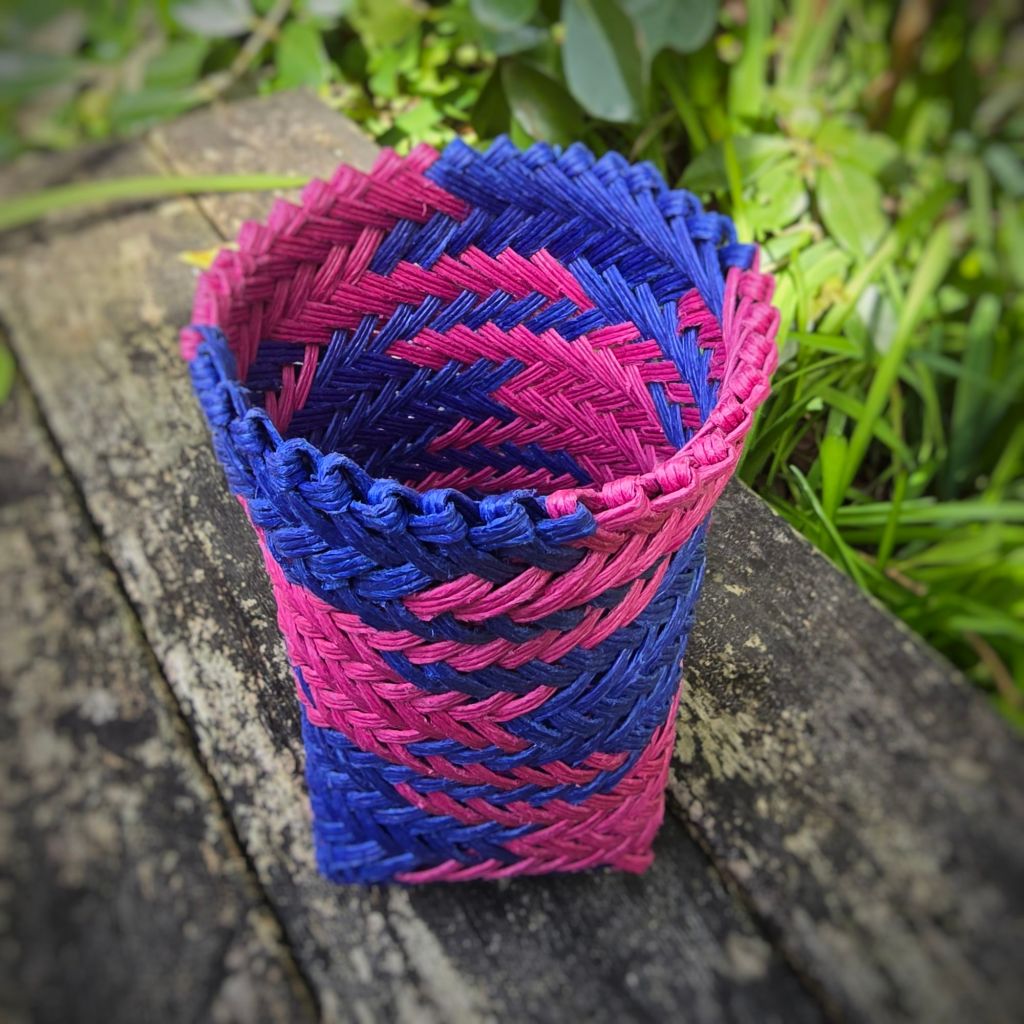
The tape is made so you can split it easily, I split it into four strips and then followed the instructions in The Art of Contemporary Woven Paper Basketry by Dorothy McGuiness to make a four-cornered square-base basket.
It’s a little wonky but quite sturdy. And I have some more rolls to practice with so more baskets are in my future.
March is the start of feijoa season, and also time for Easter eggs.
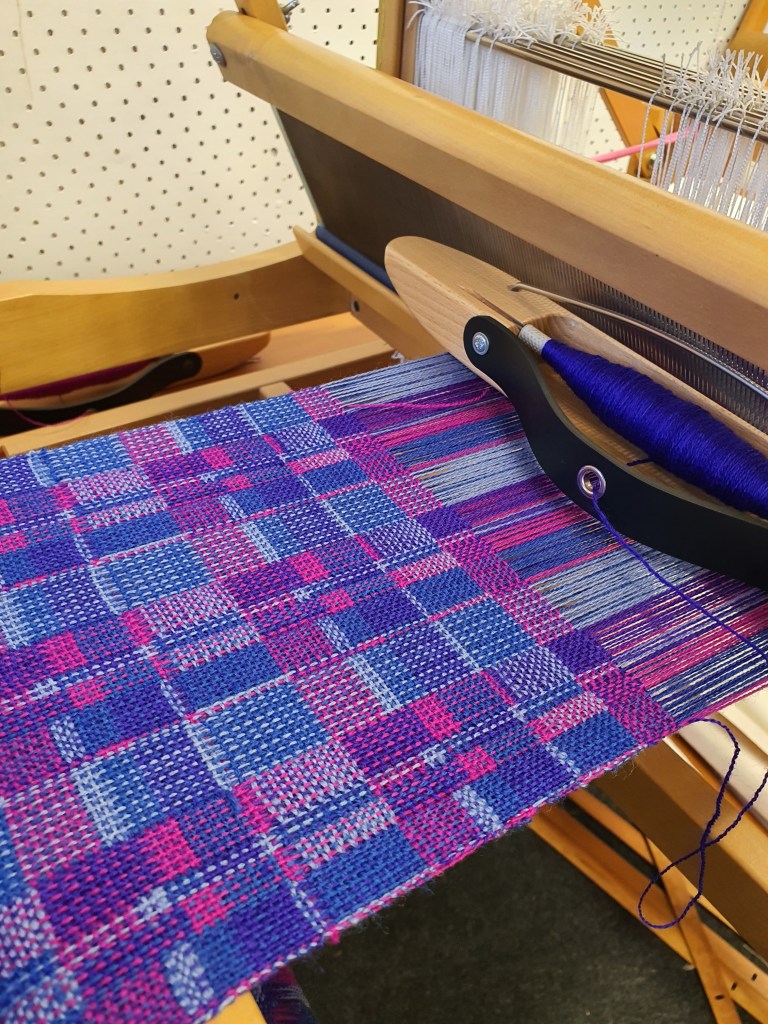
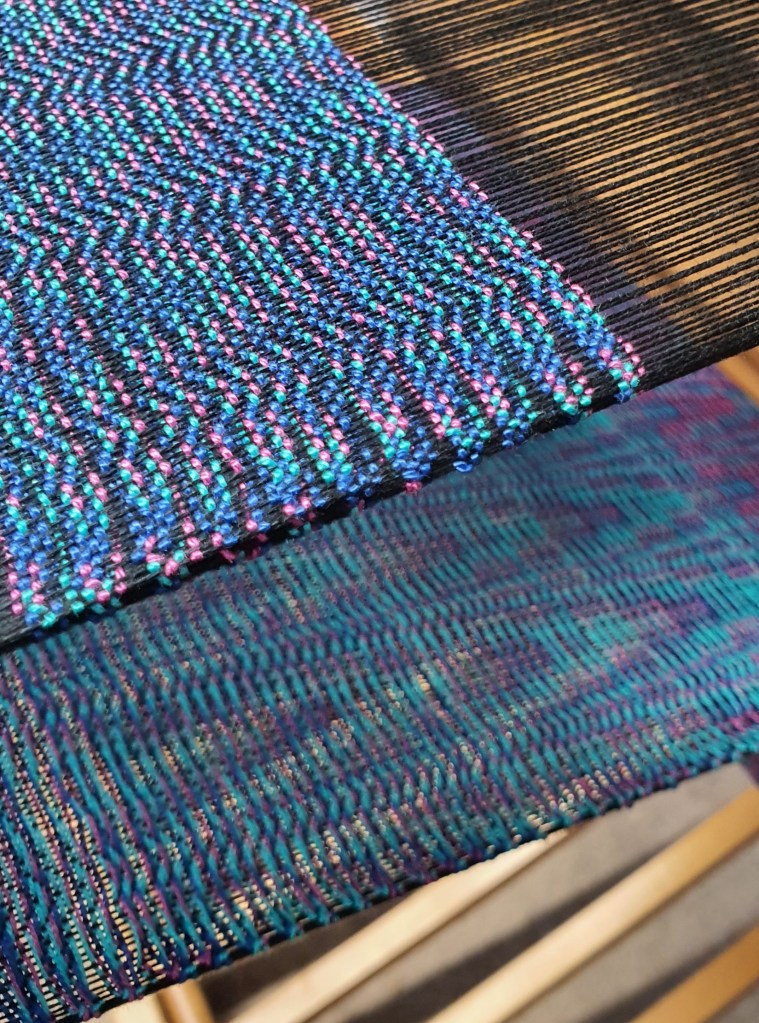
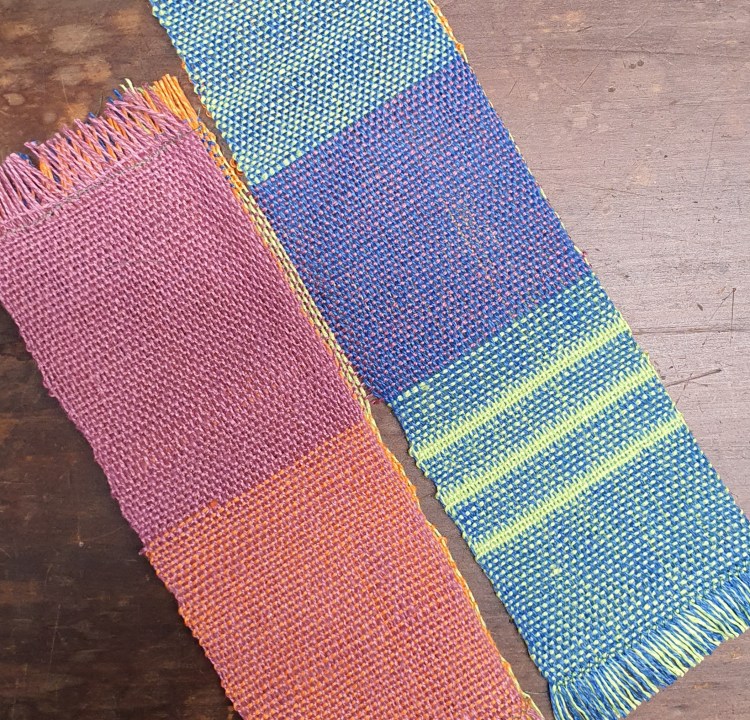
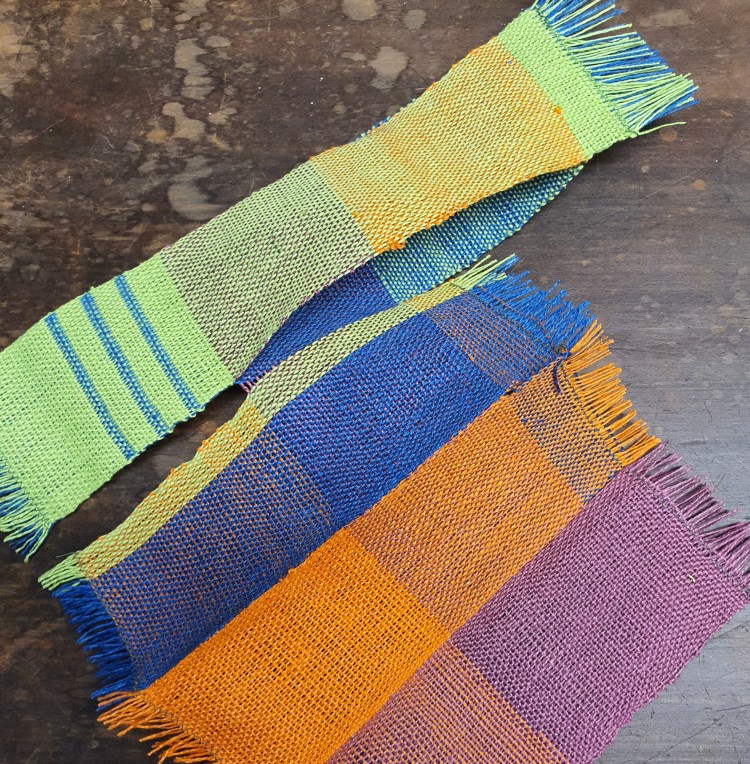
On my table loom I have been weaving a colour with double weave sampler from an article in an old Weavers’ magazine. On my floor loom I have been weaving some pieces using upholstery weave from The Weaving Book by Helene Bress. The piece under the Easter egg basket above, and in the middle photo below used 3 weft colours, and the piece on the right used 4 weft colours.
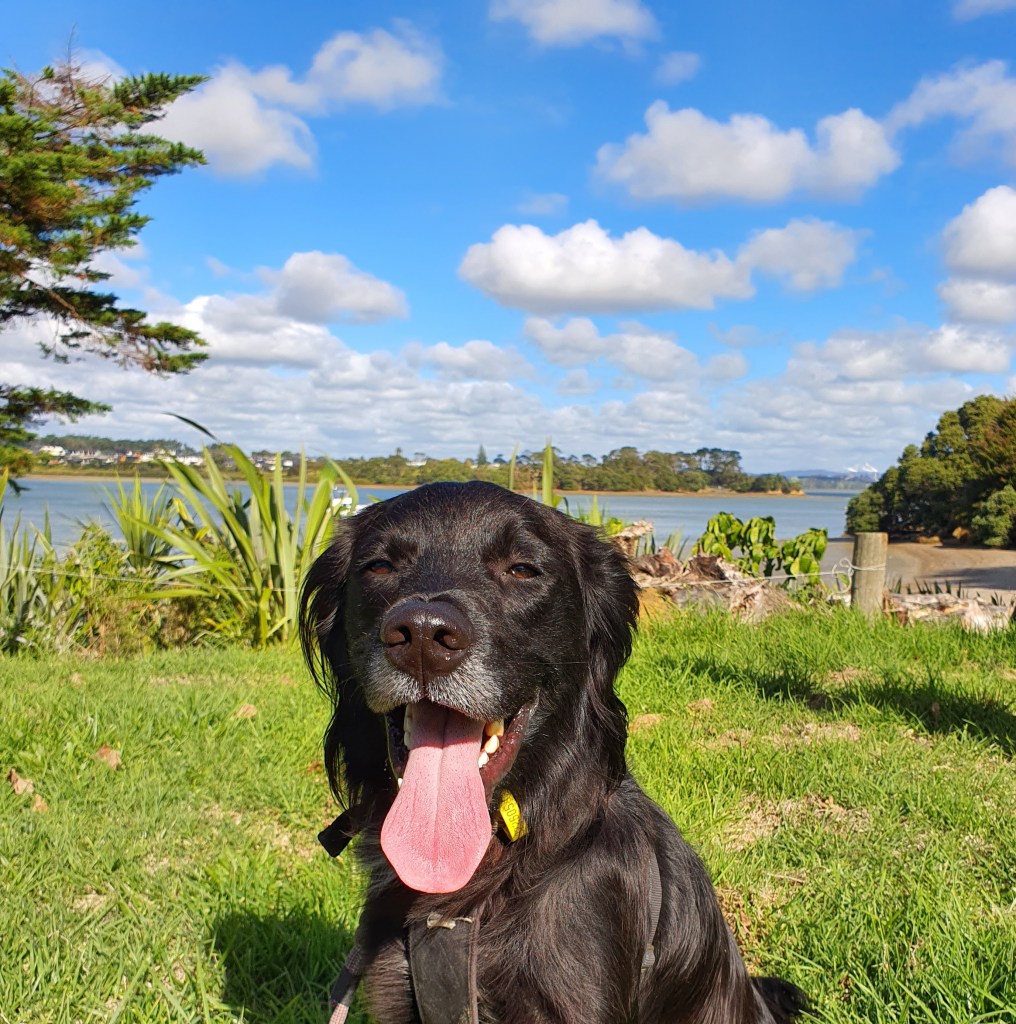
Rufus enjoyed a trip to Te Toro beach, with many things to sniff, though he was rather disappointed that he wasn’t allowed to fully investigate the dead gull he found.
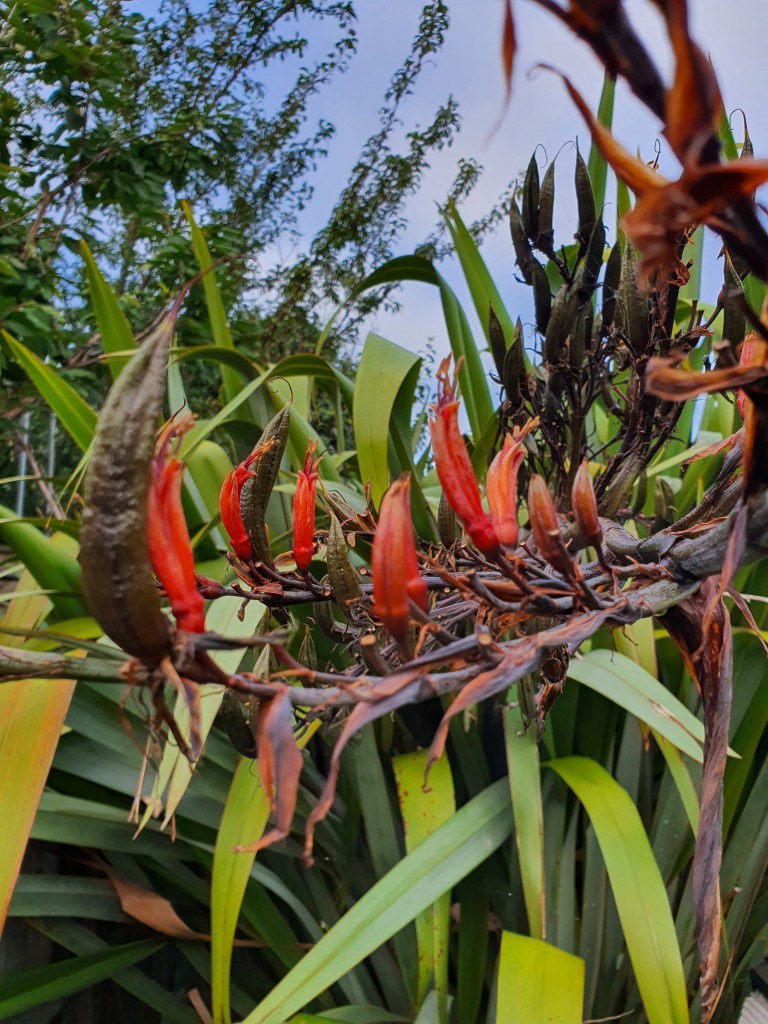
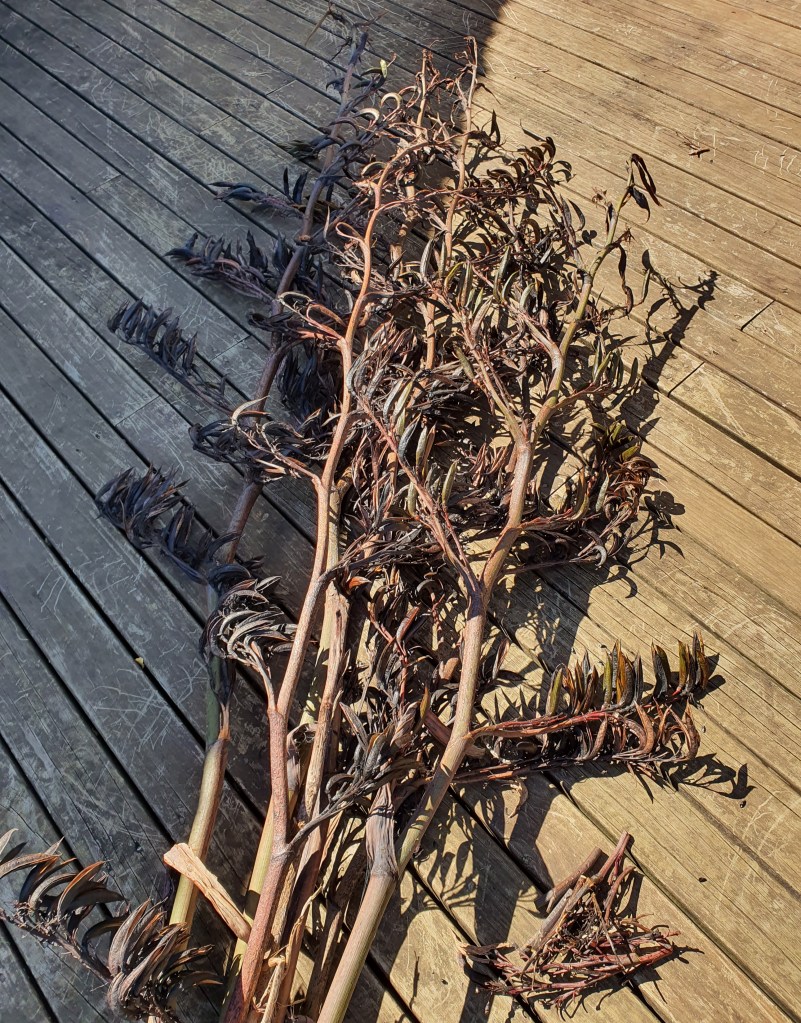
And today, I finally got around to cutting the kōrari (flower stalks) from the harakeke (NZ flax) plants in the garden and harvested the seedpods for a dyebath. The first photo below show the flowers and seedpods last month, the birds love feasting on the flowers. Once the flowers have died off the seedpods fully develop and usually I harvest them when they are still fresh but I left it later this year so most of the seedpods have dried off and split open to distribute their seed.
Some yellow yarn and flowers to brighten up another rainy day. The flowers were a gift from a friend to celebrate that I have been awarded the Creative Fibre Mason Charitable Trust scholarship for 2023. The objective of the scholarship is to give a member of Creative Fibre NZ the ability to extend their knowledge and push the boundaries of their capabilities and their design skills by studying overseas with a recognised international practitioner. So in June 2024 I am off to France for a workshop with Stacey Harvey-Brown at The Loom Room France. It’s very exciting and I’m honoured to receive the scholarship.
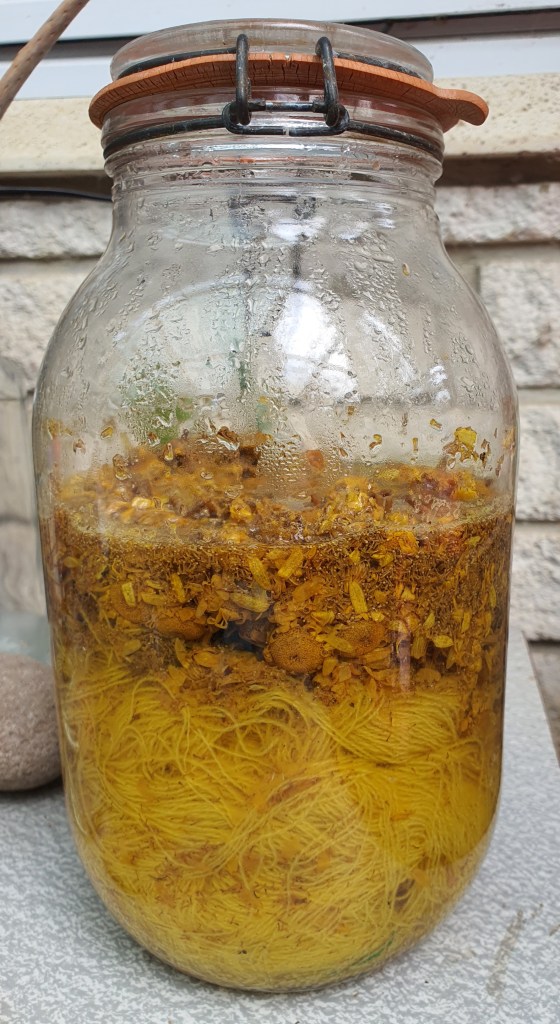
The yellow corridale wool yarn was solar-dyed with Dyer’s Chamomile flowers. I was not expecting such a bright yellow but it is very cheery. I picked and dried the flowers months ago, and then kept moving the container with them in it around the place until I decided that I really should use them. I used alum as a mordant and left the yarn in the dye for about a week. There weren’t many sunny days in that time but obviously there was enough sunshine to do the trick.
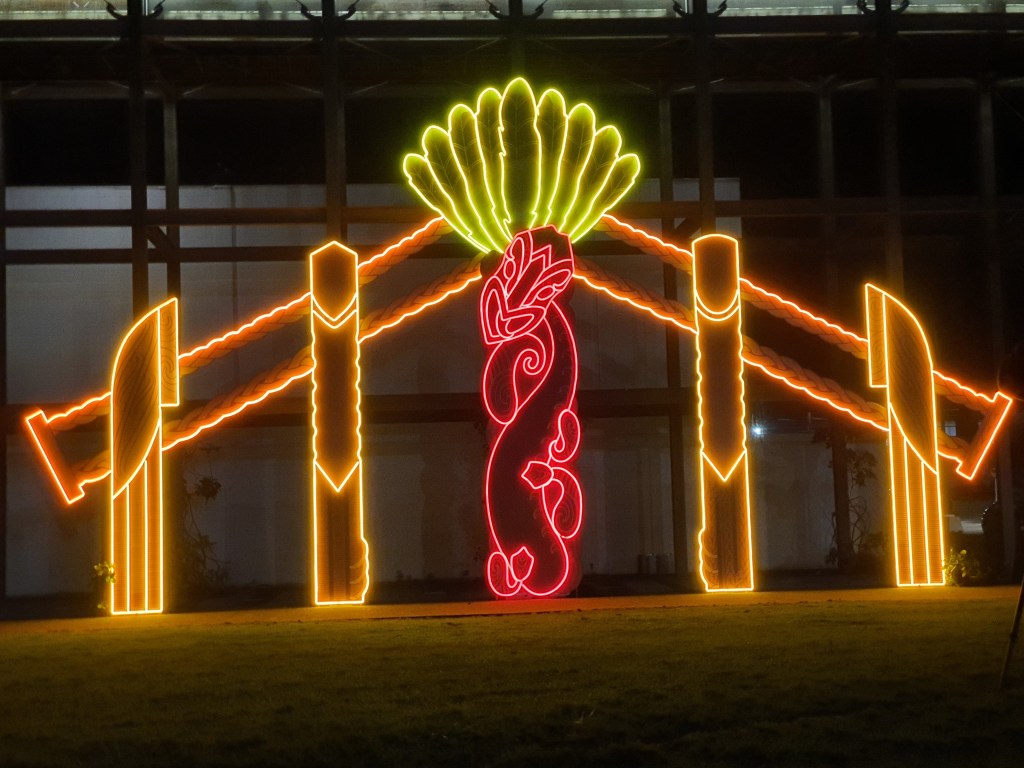
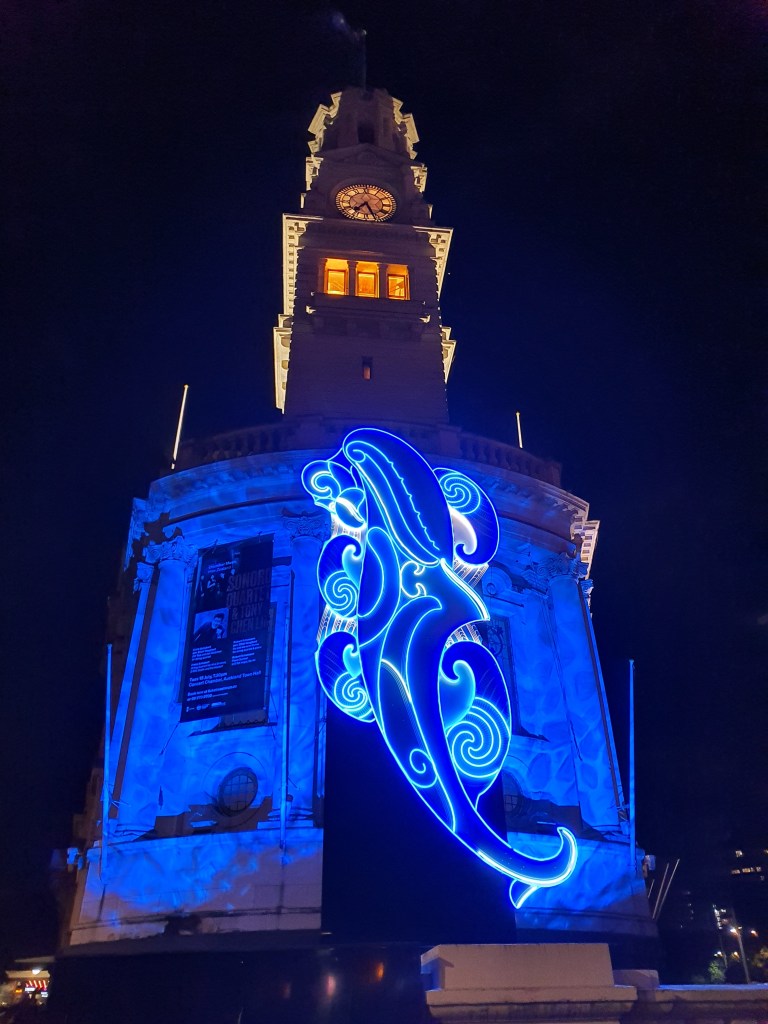
I can’t believe it’s been two months since I posted here. At the beginning of July we went into down town Auckland to see the Matariki light displays. We managed to pick an evening when it wasn’t raining which was a bonus and we had an enjoyable time wandering around Queen Street and the waterfront.
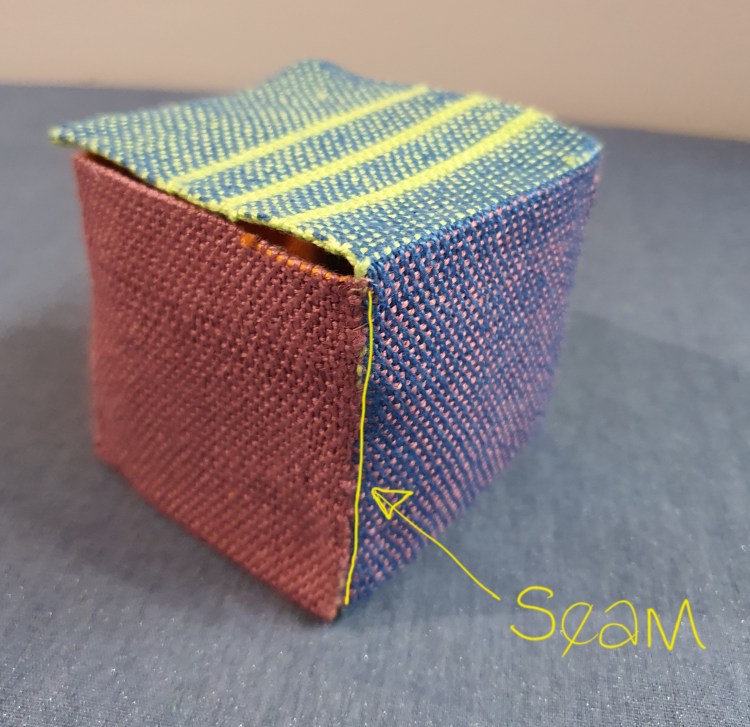
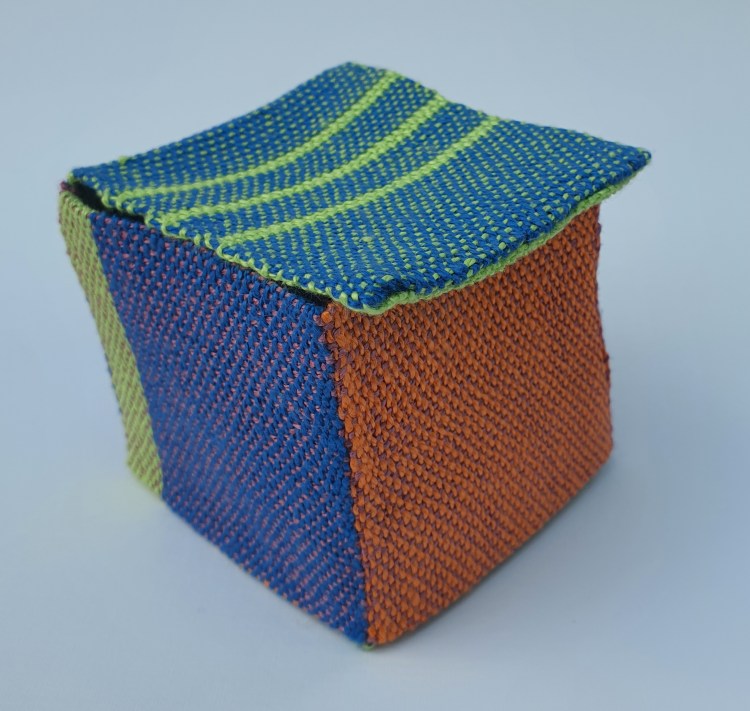
On the weaving front I made my first prototype of a lidded box. I’ve been trying to work out how to make one after reading a post on Peggy Osterkamp’s website about Kay Sekimachi’s woven boxes. Peggy wrote a post about creating one herself but I couldn’t really understand how she did it but after the workshop with Melanie Olde I had another go. It’s not by any means perfect but I’m pretty happy that I managed to get to this stage. It has two seams, one on the lid edge and one side edge. You can see a reel I made on my instagram feed.
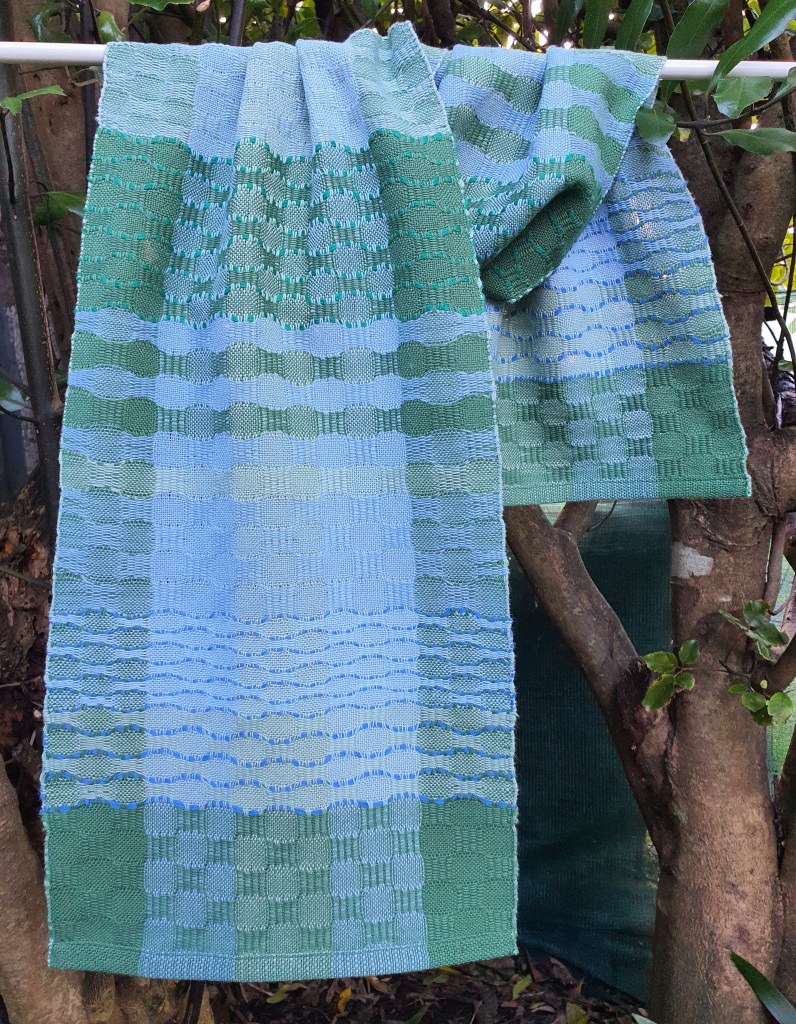
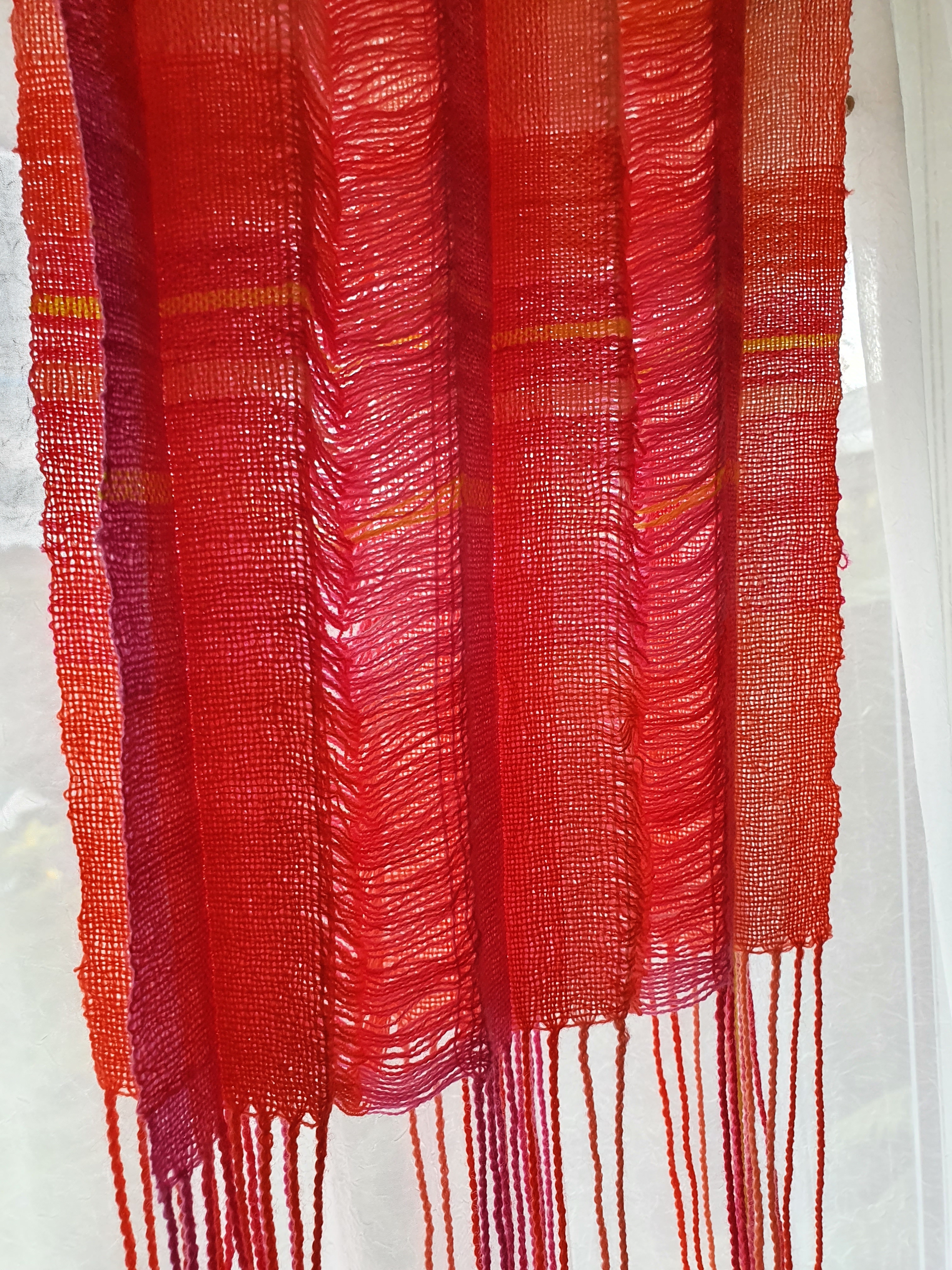
I have also woven three new cotton scarves in Ms& Os.
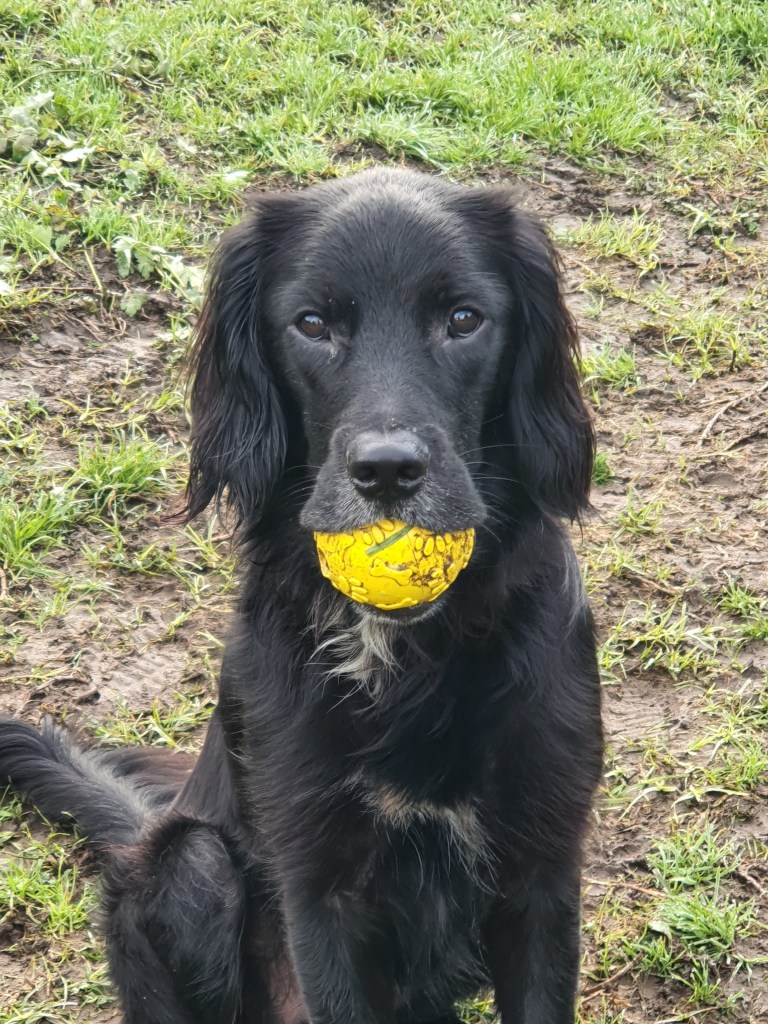
It has been quite wet and our lawn has turned to mud, it is amazing how much mess one dog who loves to run and play ball can make.
I have several harakeke (phormium tenax / New Zealand flax) bushes in my garden so I was excited to find out a few years ago that you could make a dye from the seed-pods and it is a fairly simple dye to make and use. Obviously the first step is to wait until the flower stalks appear. Then you watch all the birds, especially the tui, come to feed on the flowers. Slowly the flowers disappear and the seedpods appear. The stalks are quite tall and heavy and often fall over.
You can harvest the seed-pods when they still fresh or even when they are looking quite old and dry. I have used them at various stages and you still get colour from them. I cut the seed-pods into 2 or pieces and put them in a dye bath with water and then leave them for a couple of days (or longer if I get busy) until the dye bath is starting to bubble. The dye solution does smell but I do my dyeing outside and I think it is an OK smell.
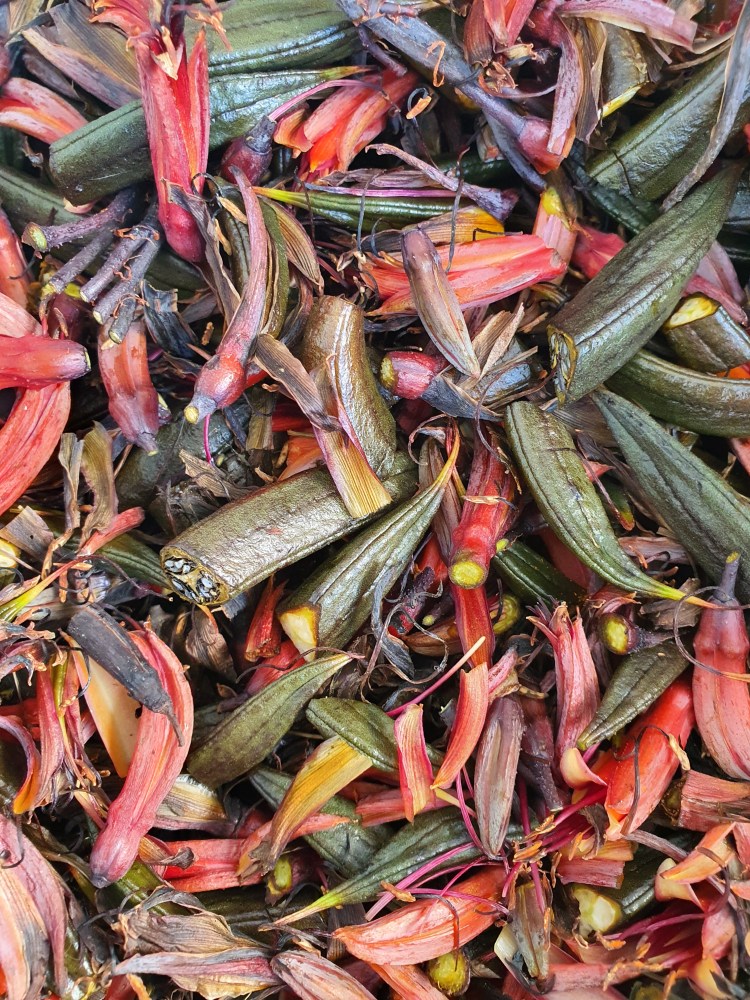
Freshly cut seed-pods and a few flowers
The dye bath after a couple of days
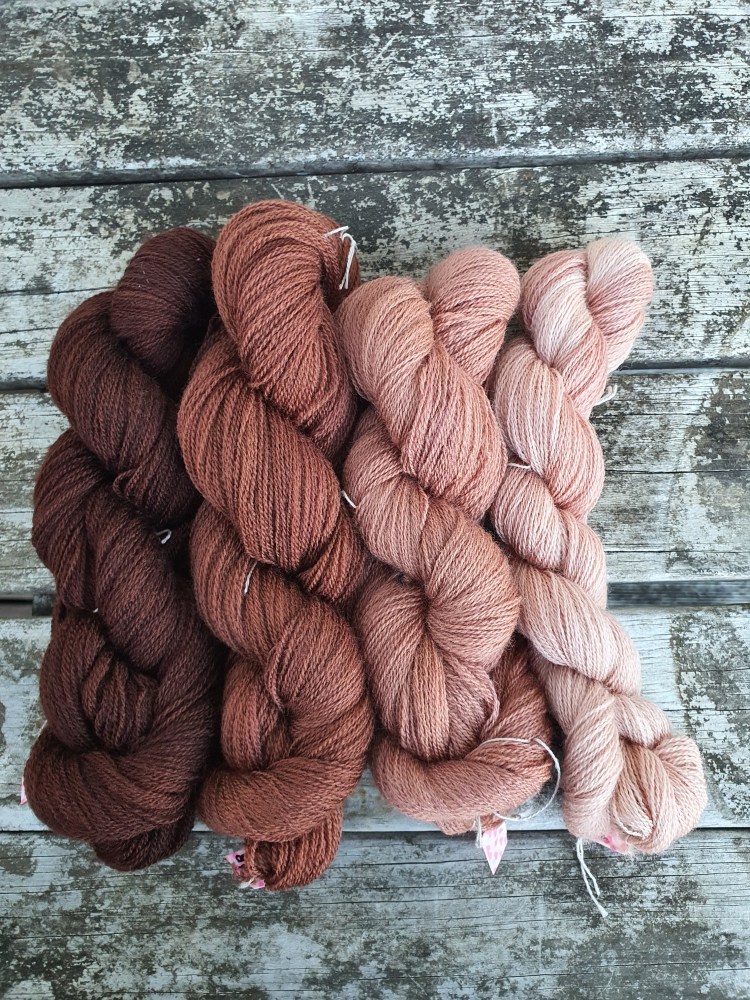
Originally I would leave the seed-pods loose in the water but recently I realised it would be a lot easier if I actually put them all in an old pillowcase, instead of picking out bits out of my yarn afterwards. Once I’m ready to dye, I soak the skeins of wool in some warm water with a squirt of detergent, then place them in the dye bath and gently heat it. You don’t need to mordant the yarn but you can if you want, I haven’t noticed any difference in depth of colour between mordanted and un-mordanted yarn but I also haven’t carried out any rigorous investigation. As the dye bath increases in temperature the colour obtained darkens, you can see this in the photo below on the right. The skeins of yarn were taken out at different stages of heating the dye bath, the darkest was left in the dye bath after it came to the boil.
In the dye bath
Skeins before washing
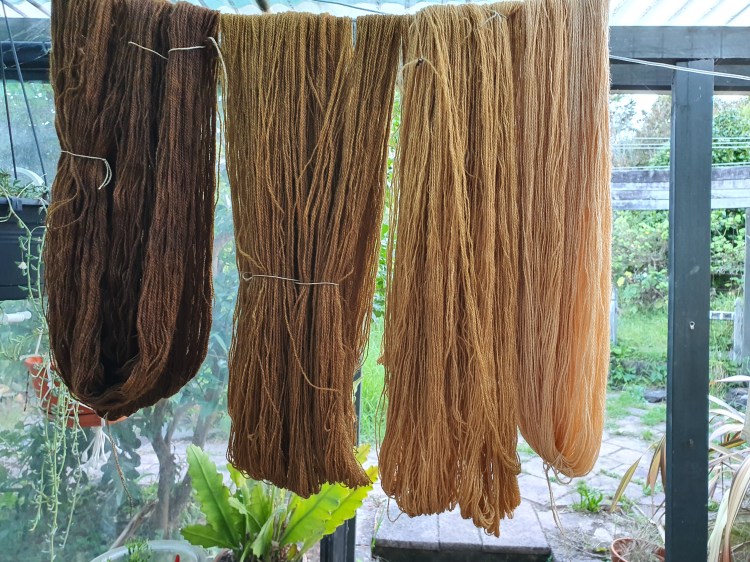
Once I’ve finished dyeing the skeins, I leave them to dry overnight before washing them in hot water with laundry detergent and then rinse until the water is clear. The dye bath can be used a few times but the colours seem to change as well as the depth. In warm weather the dye bath can grow mold but I just take scrape that off. The photo at the top of this post shows all the colours I obtained from one dye bath heated three times. Below you can see the results from each individual heating. All of these skeins are corriedale wool.
First use of dye bath
Second heating of dye bath
Final reheat
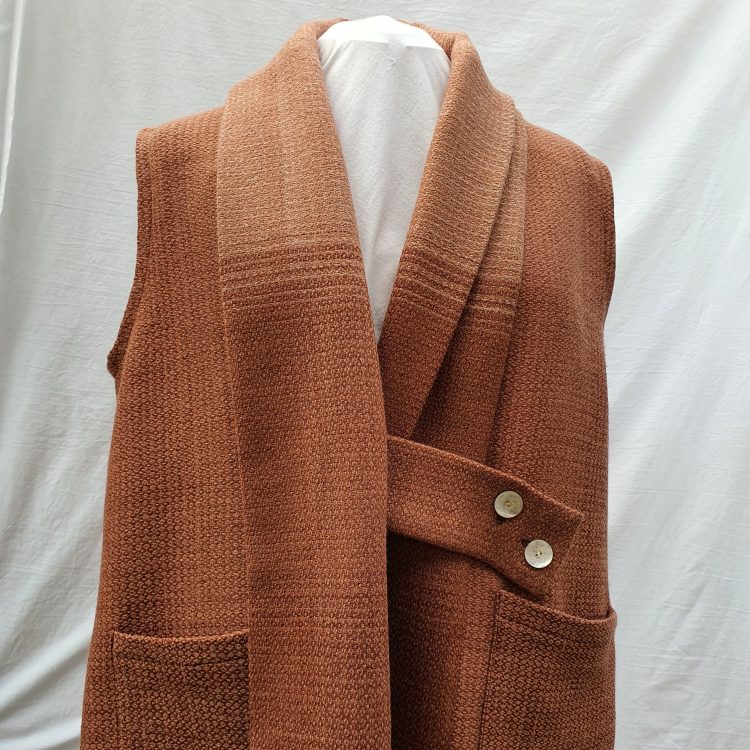
If you have access to some harakeke seed pods I recommend giving dyeing with them a go. You can dye other materials, not just wool, I have tried silk and cotton. Finally here’s photo of a vest I made from fabric woven with wool dyed with harakeke seed pods.
I’m a bit wary about setting weaving goals for 2022 as the last few years have taught me that plans can go pear-shaped at any time (thanks world-wide covid epidemic). However a plan and goals do help to motivate and focus me. Nothing like writing down all the things I want to do and realising that there aren’t enough hours to do them all even with my optimistic time estimates, and then there’s the excitement of ticking off an item on my list as complete. So I have written out a plan for the year and set my goals for the month ahead, and now we’ll see how it goes.
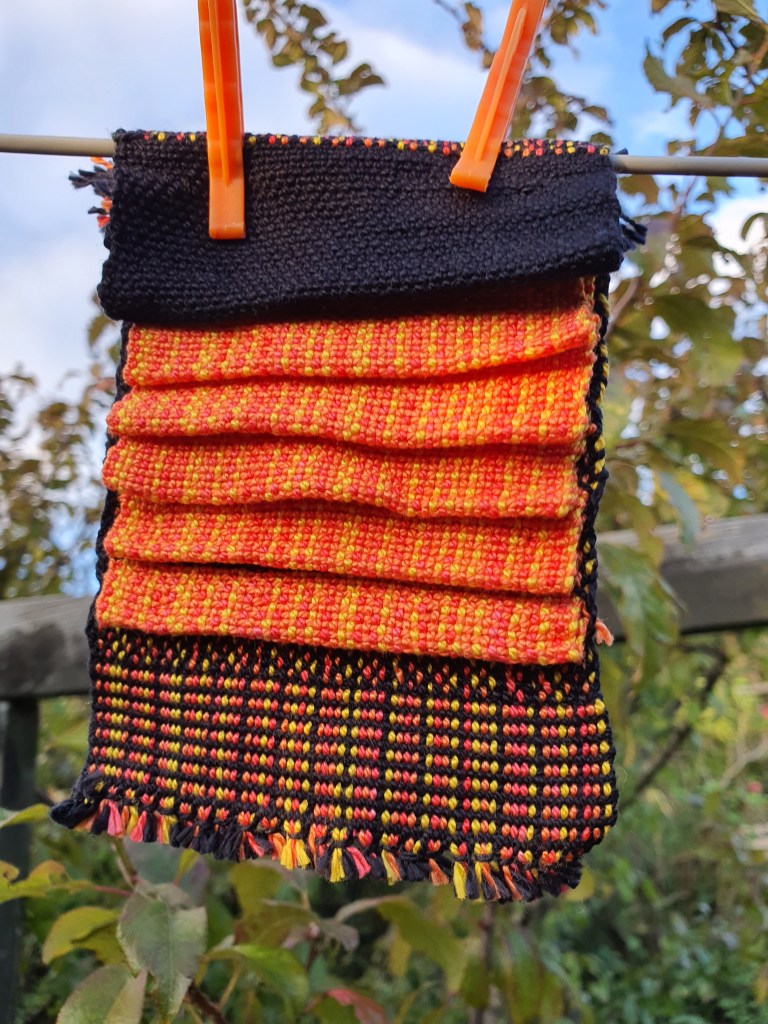
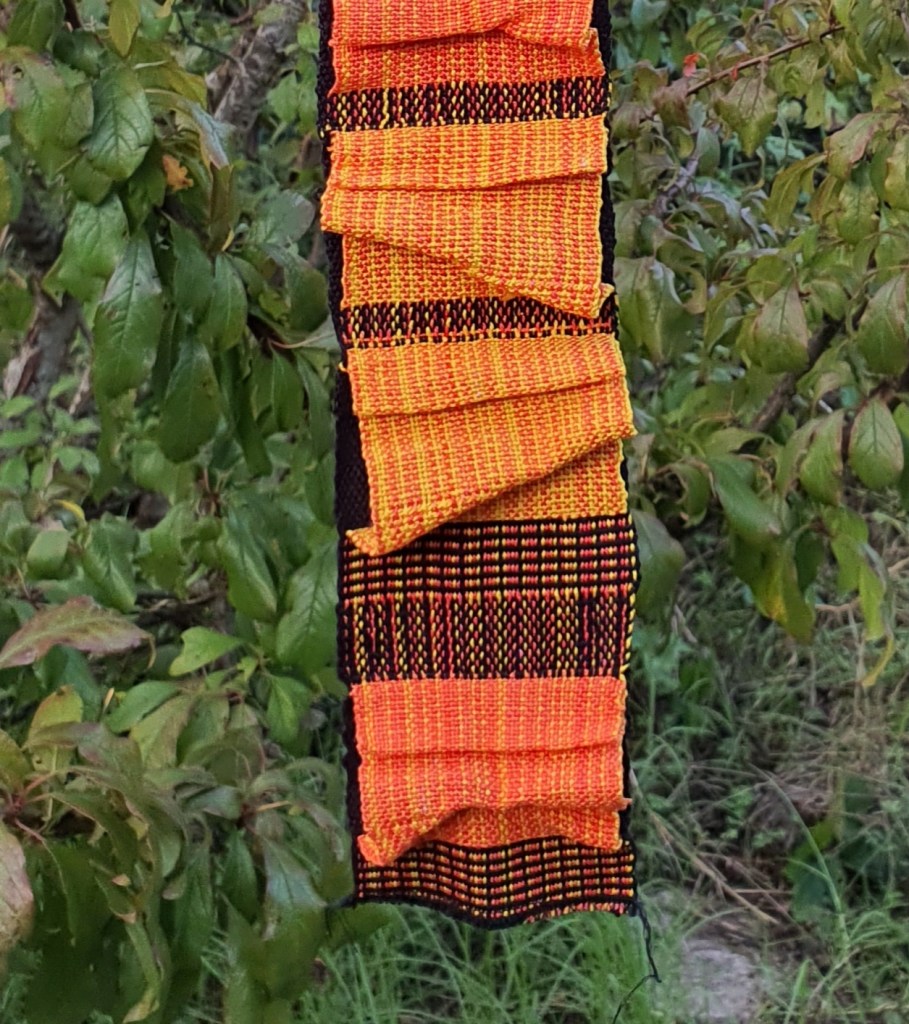
First up is further exploration of double weave and weaving more than 2 layers. I experimented a bit with double weave last year and this year I want to dive into this more. You can see some of my 2021 weaving experiments below.
2018 marked the 125th anniversary of women’s suffrage in New Zealand. On 19 September 1893 the Electoral Act 1893 was passed, giving all women in New Zealand the right to vote. As a result of this landmark legislation, New Zealand became the first self-governing country in the world in which all women had the right to vote in parliamentary elections.
Suffrage in Stitches was one of the activities and events that celebrated this anniversary. The 300 metre textile work matches the length of the original petition and consists of 546 individually designed fabric panels – the same number of pages in the original petition – and tells the stories of 546 women. It was a collective effort with each person being assigned a page/sheet from the petition and they could create their panel to honour one or more of the signatories on that page or a woman who influenced them. My panel honoured my great-great-great grandmother Fanny Worsdell who signed the petition along with her daughters, Kate Alberta Worsdell, Charlotte (Lottie) Worsdell and Frances (Fanny) Alice Stevens nee Worsdell ( my great-great grandmother)
My panel for Suffrage In Stitches exhibition
Fanny Worsdell (nee Simkins), born on 16 March 1831 in Andover, Hampshire, England. She married George Worsdell in 1852 and they had ten children. In January 1875, Fanny arrived in Otago with their children; Agnes, Bess, Anne, Katie, Fanny, Edward and Lottie aboard the Wild Deer. They joined George who was a ‘Fellmonger and Dealer’. Fanny died at her North East Valley home on 8 March 1898. Her Trust Estate, of several houses and property, was later auctioned. George died at Oamaru in 1905.
Lottie, born on 11 October 1870 attended school in Dunedin and Oamaru. She joined the Salvation Army and in 1915 married Joseph McFadden, a Blenheim widower with four children. Joseph died in 1946 and Lottie died on 24 November 1960.
Frances (Fanny) Alice Stevens nee Worsdell and Arthur Ernest Stevens
Petition sheet 512 with Frances Alice (Fanny) Stevens’ and Kate Alberta Worsdell’s signatures. Fanny signed as Mrs A Stevens.
Frances Alice (Fanny) Worsdell was born on 26 March 1865. In 1886, she married Arthur Ernest Stevens and they had two children, Arthur and Rena. They served in the Salvation Army around New Zealand. Arthur died in 1937 and Fanny moved to Nelson where she died on 12 April 1958. In 1951 Fanny was awarded a Plunket Society Certificate of Merit, for Outstanding Voluntary Service.
Kate Alberta (Katie) Worsdell,was born on 28 April, 1863. She was schooled in Dunedin and never married. She was a dressmaker and music teacher. Katie lived in various towns and signed the Petition while staying with her sister Fanny in Marton. Katie died in the Wairau Hospital, Blenheim on 28 May 1947.
























 Kate Alberta Weaving