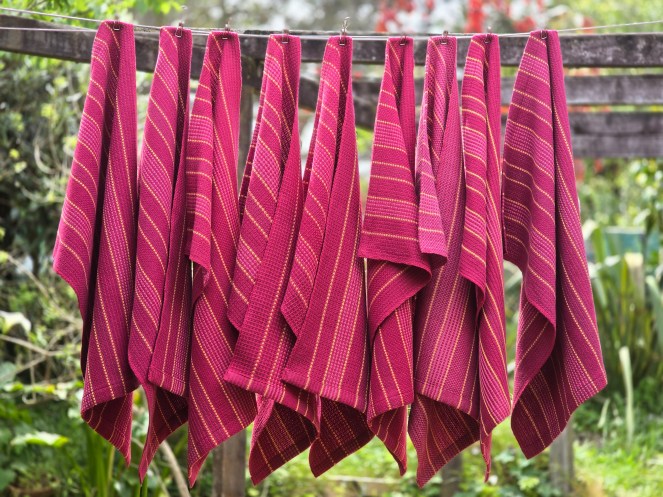
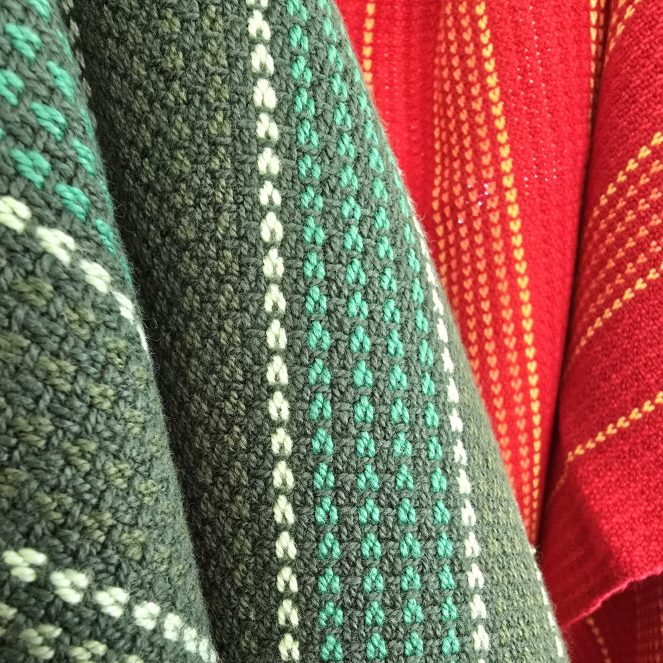
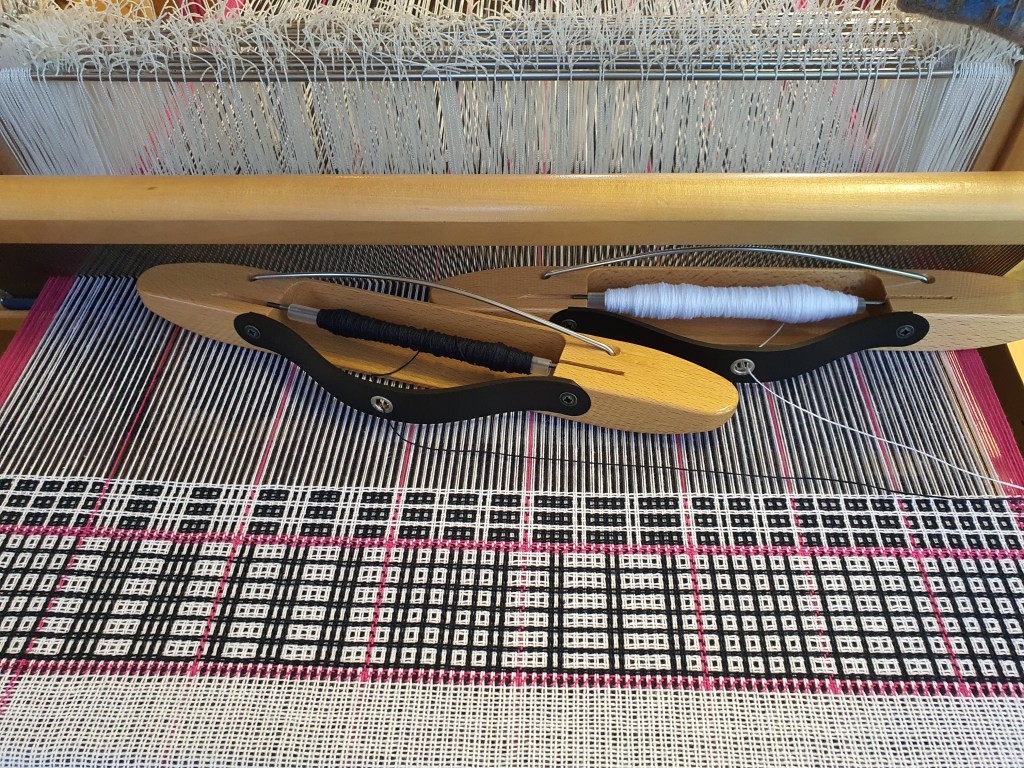
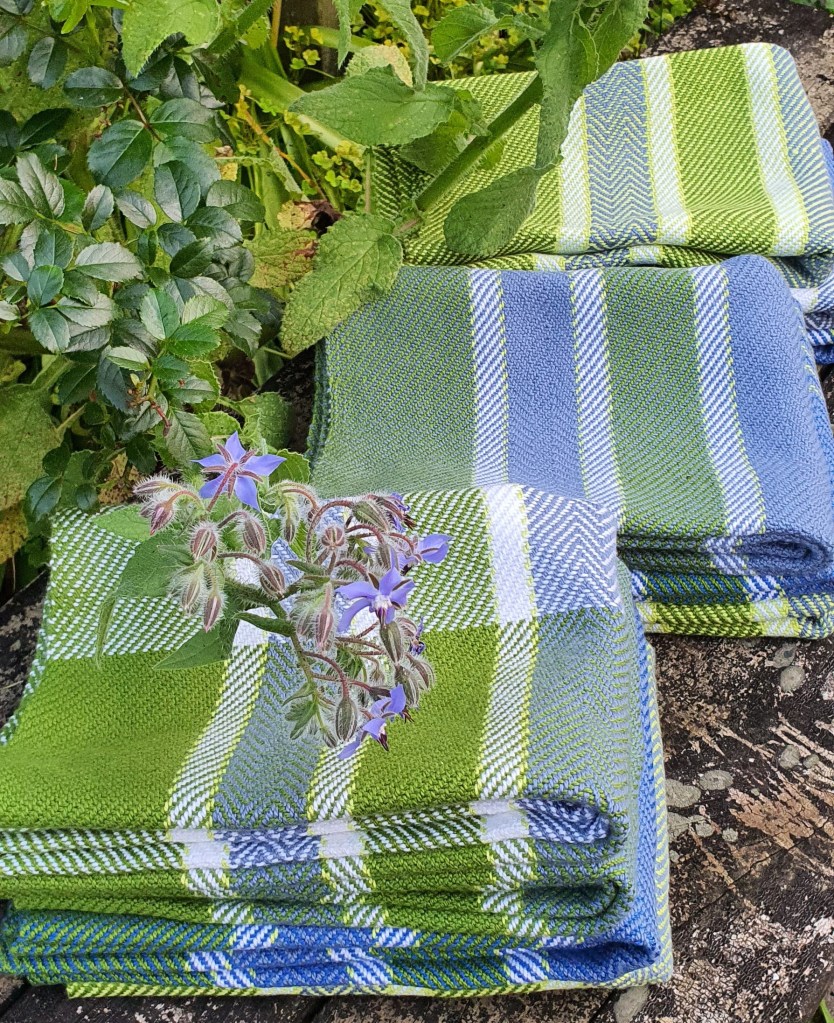
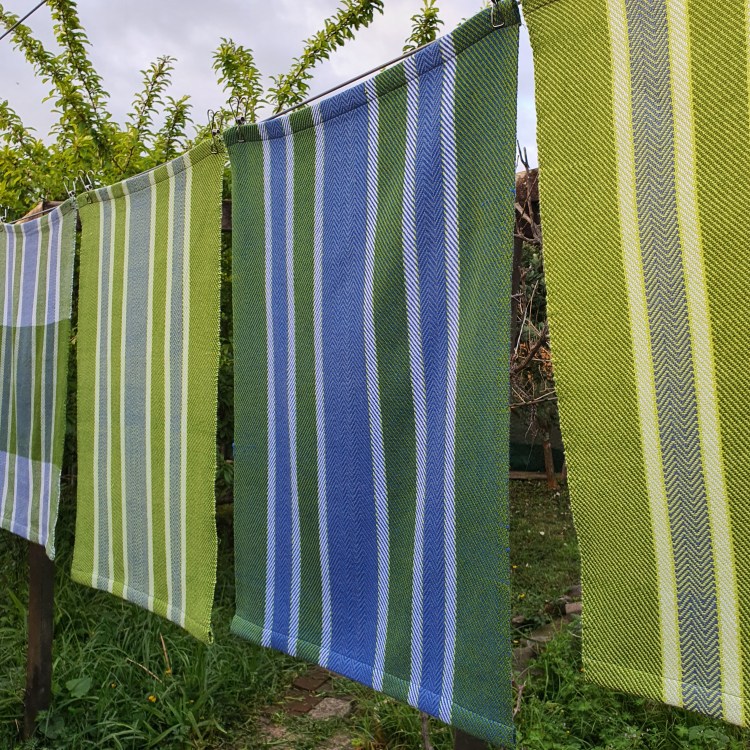
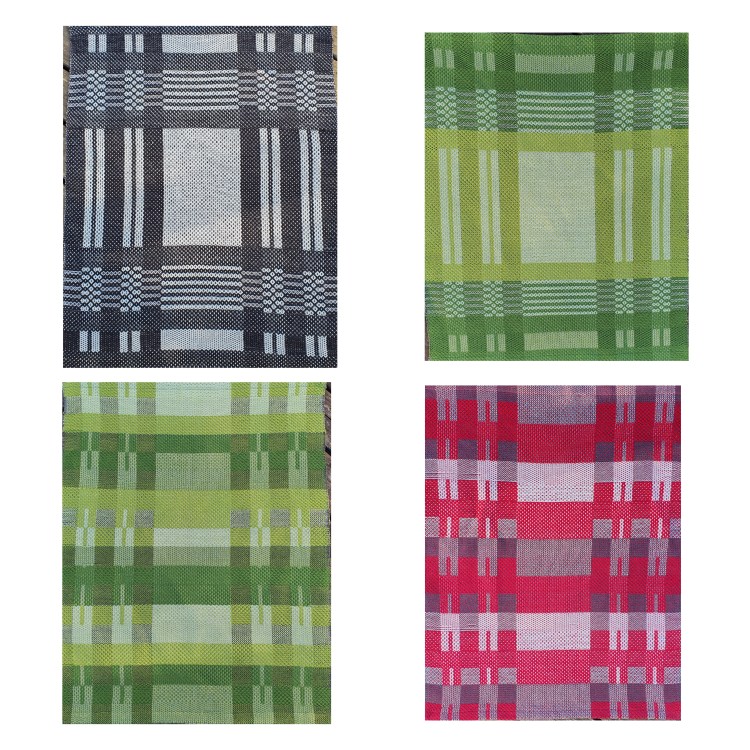
I’ve been weaving, more tea towels. I really like the variations possible on one warp with the Bumberet weave structure, though I have tended to only use three treadling variations for the tea towels.
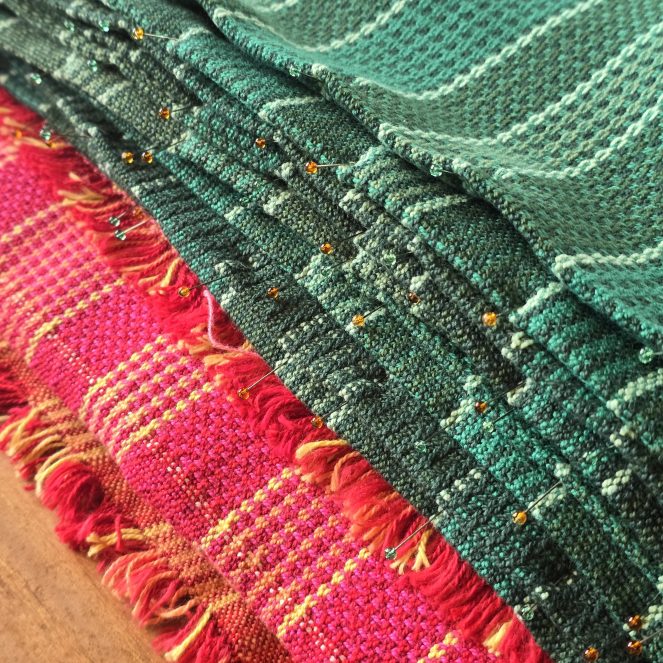
At the end of each warp I have played with other treadlings and weft colours, and I’ve made some of that fabric up into Christmas tree decorations. I also made the hanging cords from thrums from the warps.
That’s enough tea towels for a while, I’m planning some new projects. I may return to Bumberet as I also wove a sample warp with wool and it produced a few samples that I want to investigate further.
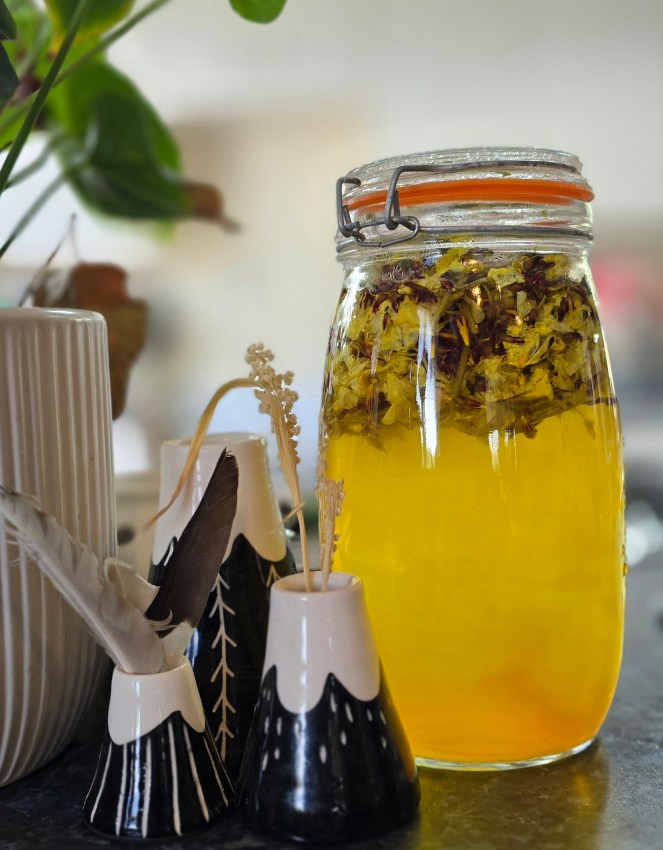
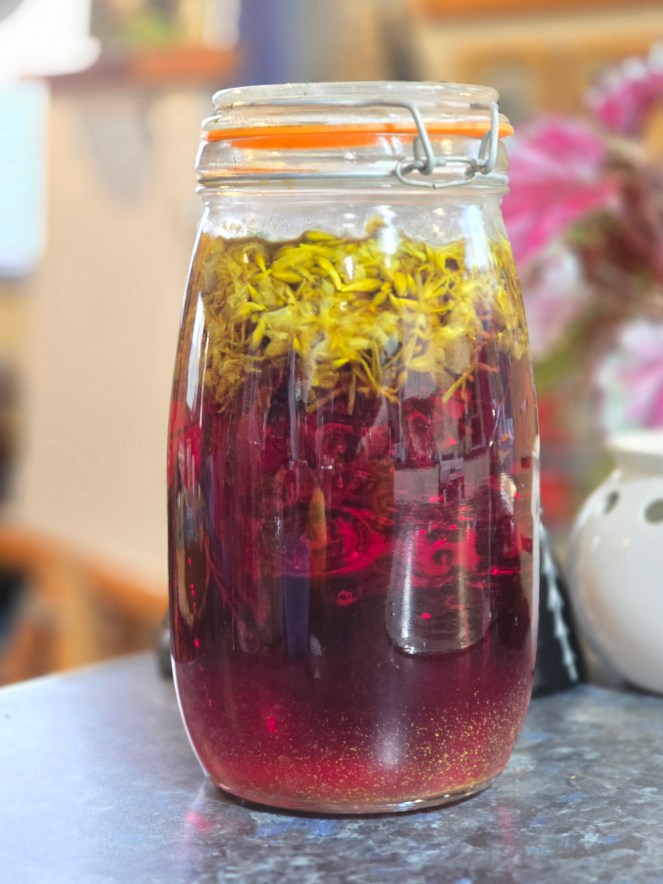
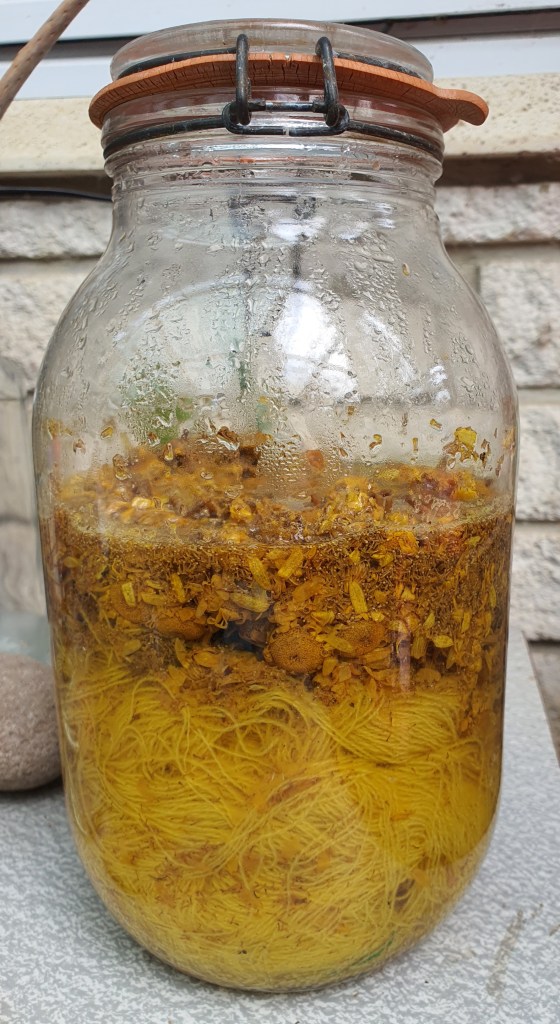
I noticed that yellow oxalis (oxalis pes-caprae) flowers were popping up around the place, along with all the other weeds that are taking advantage of the slightly warmer weather and thought I had read that you could dye with them. Of course when I tried to find some information I could only find a few mentions online with not a lot of detail so I decided to just go ahead and play. I picked a bunch of flowers while out walking my dog, put them in a jar and poured hot water from the tap on them. At first the colour of the solution was a very bright yellow but it changed over time to a red colour.
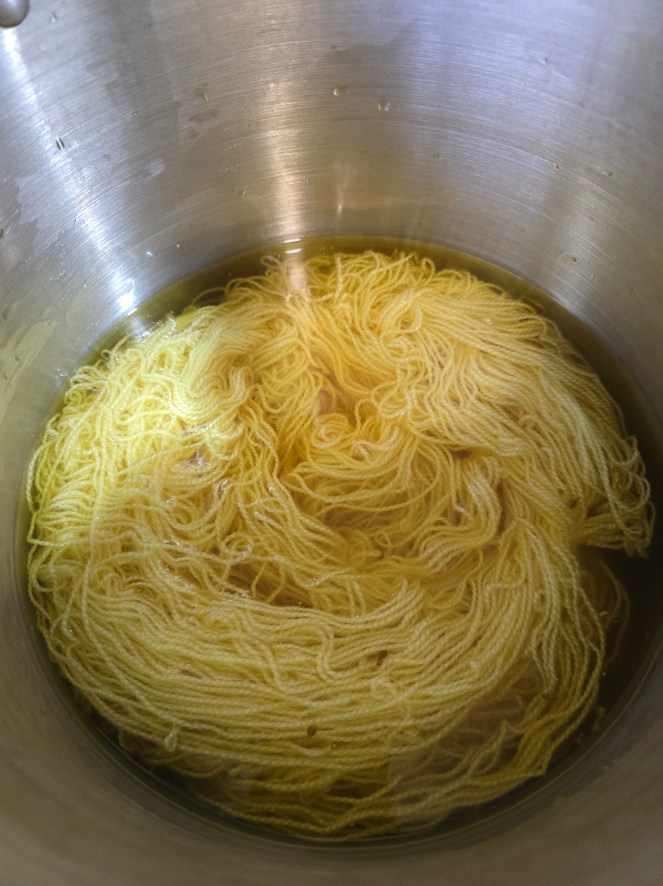
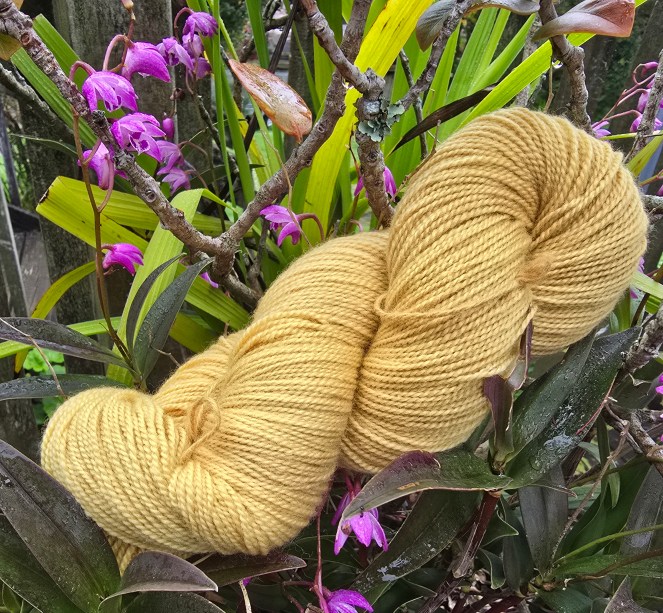
The jar sat on the kitchen bench for 8 days and mould had started to grow on top so I strained the solution and poured it into a dye pot. I added some more water and then 100g of merino yarn. I didn’t find any information about whether to mordant or not so I decided to just go ahead and not bother, thinking that the worst case is that the yarn wouldn’t take up any colour. In the dye pot the colour of the yarn appeared as a light, bright yellow that I quite liked. I simmered the yarn for a while, then removed it and hung the yarn up outside to dry a little while I did some other jobs. Later in the day I washed the yarn in warm water with a little detergent. Not much colour rinsed off during washing but the yarn colour deepened/darkened which was a surprise.
Some yellow yarn and flowers to brighten up another rainy day. The flowers were a gift from a friend to celebrate that I have been awarded the Creative Fibre Mason Charitable Trust scholarship for 2023. The objective of the scholarship is to give a member of Creative Fibre NZ the ability to extend their knowledge and push the boundaries of their capabilities and their design skills by studying overseas with a recognised international practitioner. So in June 2024 I am off to France for a workshop with Stacey Harvey-Brown at The Loom Room France. It’s very exciting and I’m honoured to receive the scholarship.
The yellow corridale wool yarn was solar-dyed with Dyer’s Chamomile flowers. I was not expecting such a bright yellow but it is very cheery. I picked and dried the flowers months ago, and then kept moving the container with them in it around the place until I decided that I really should use them. I used alum as a mordant and left the yarn in the dye for about a week. There weren’t many sunny days in that time but obviously there was enough sunshine to do the trick.
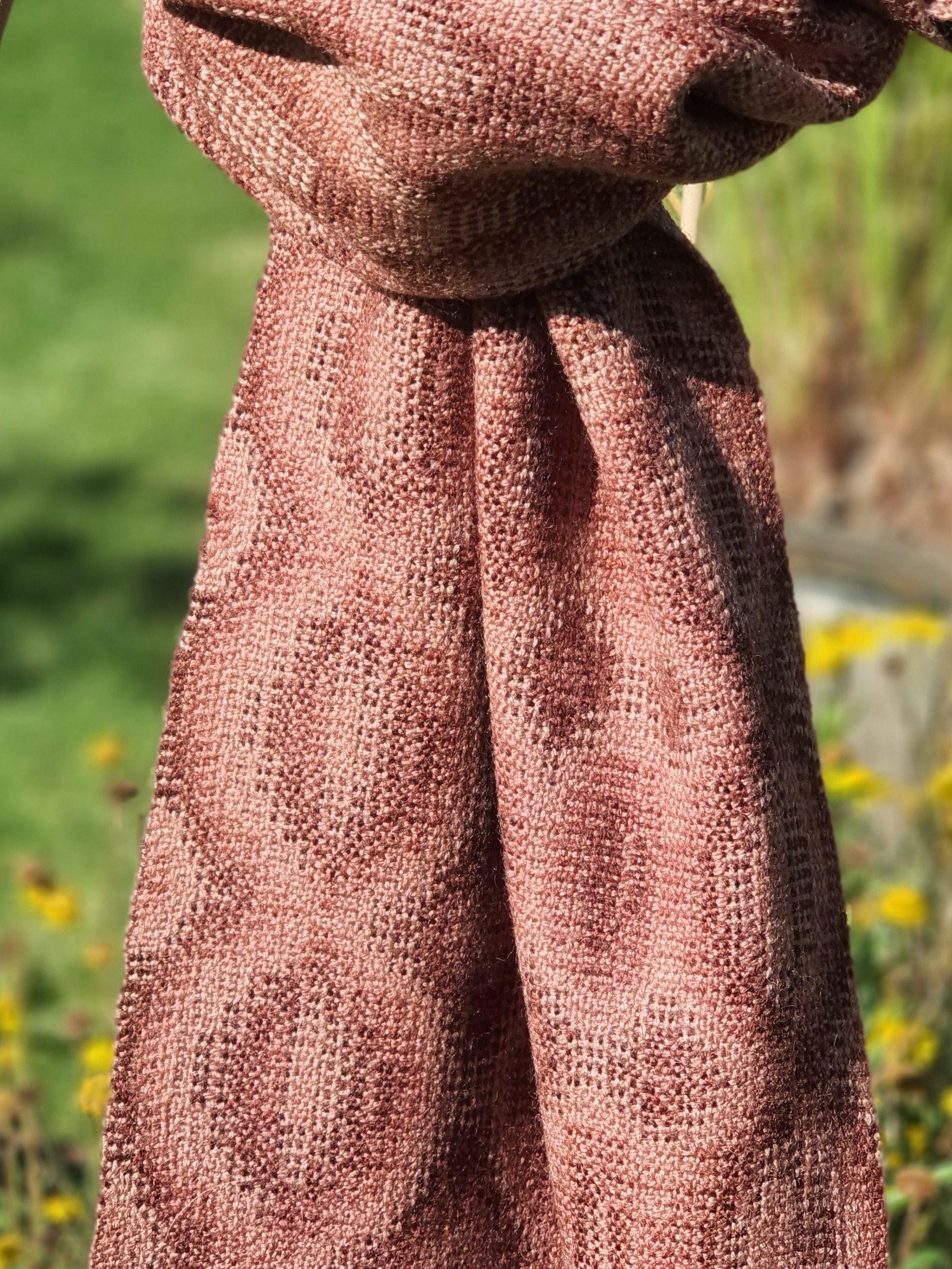
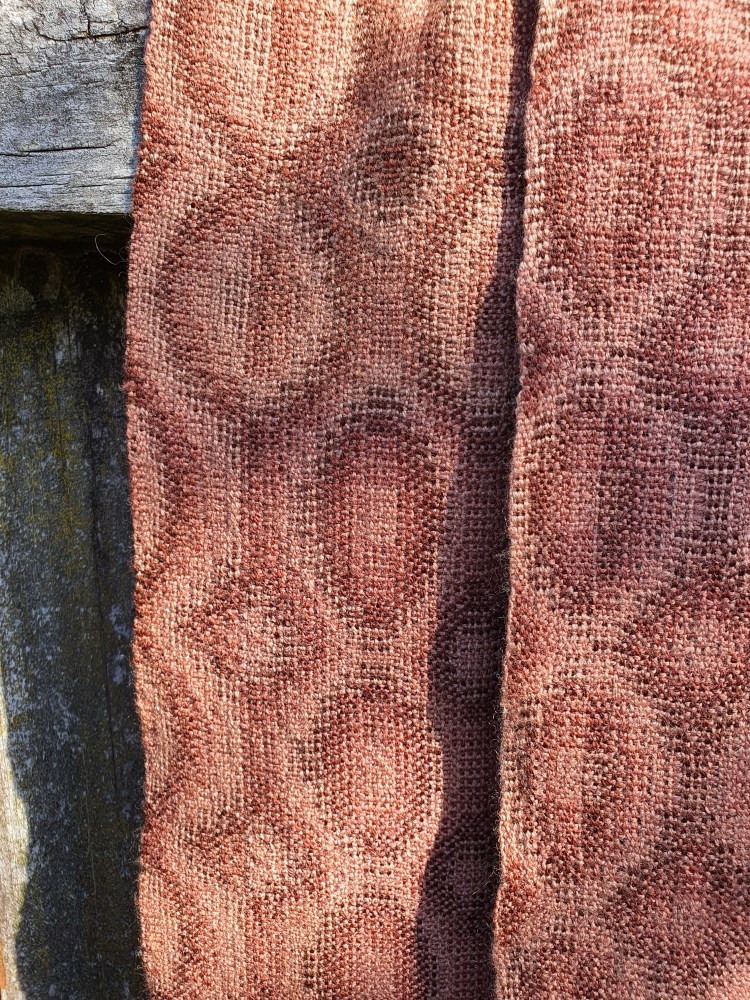
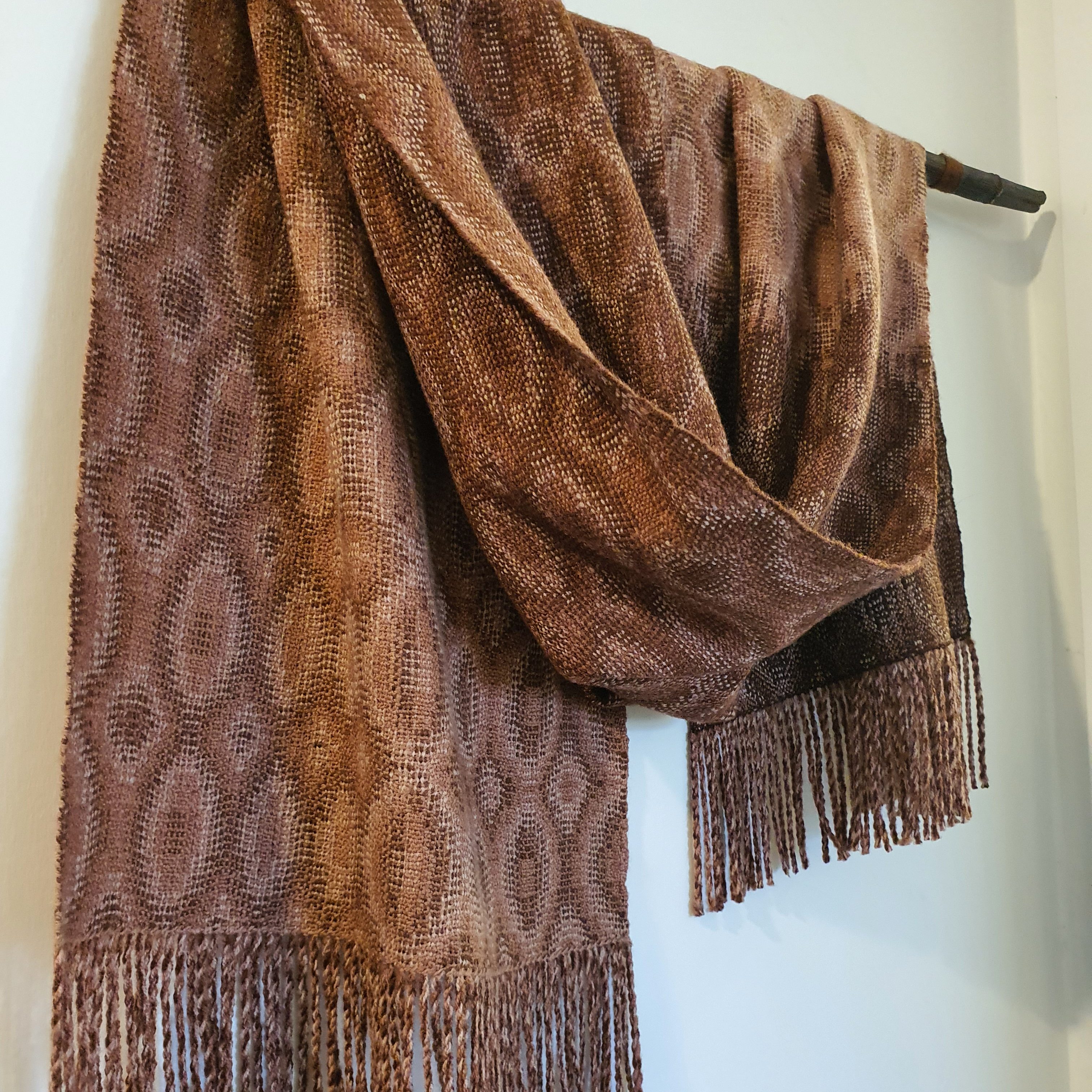
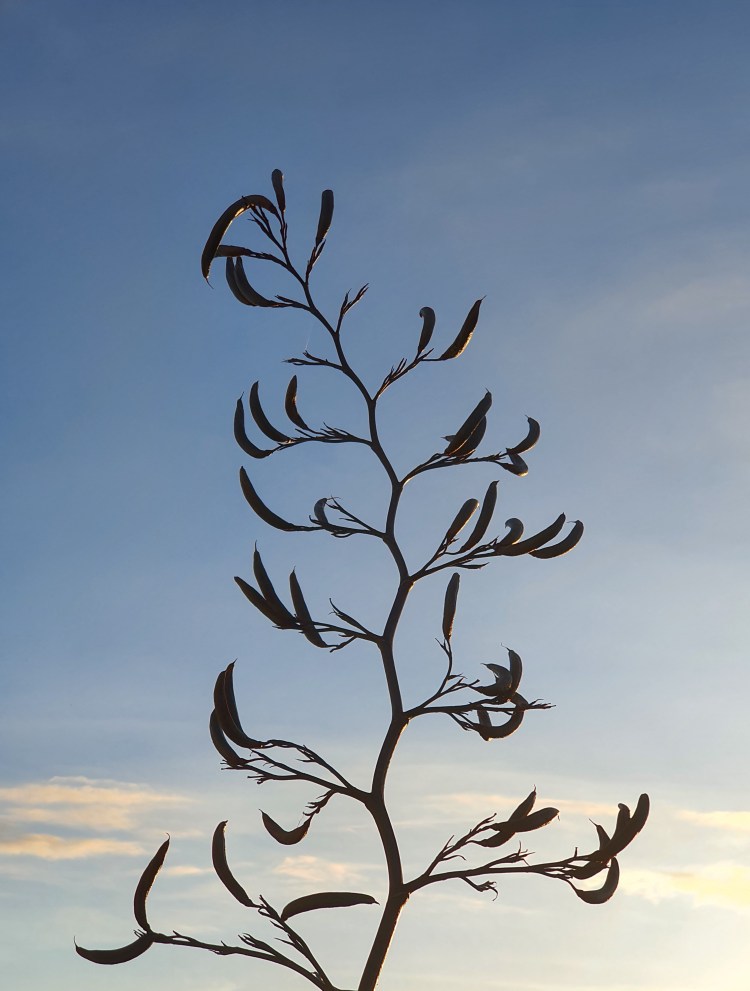
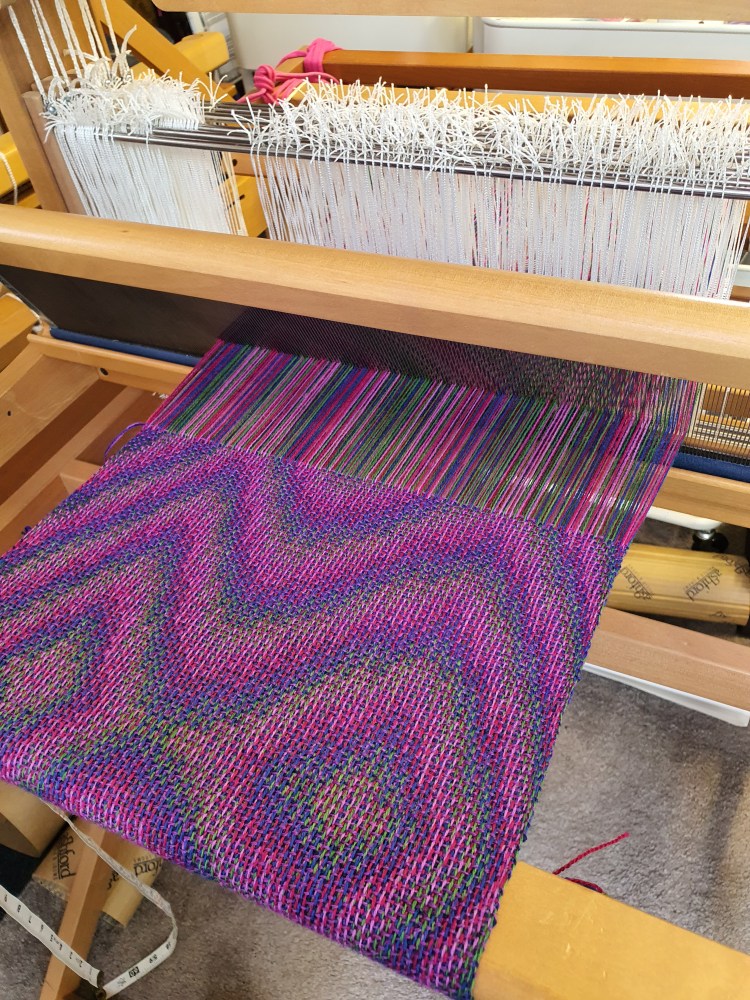
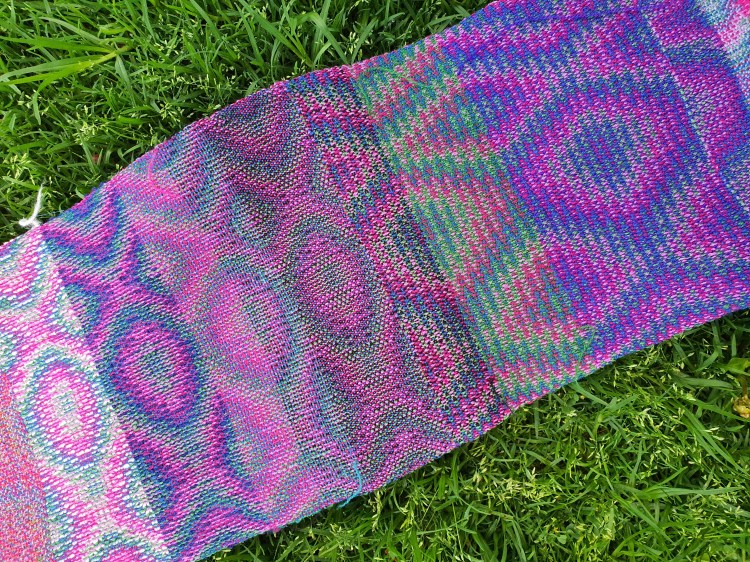
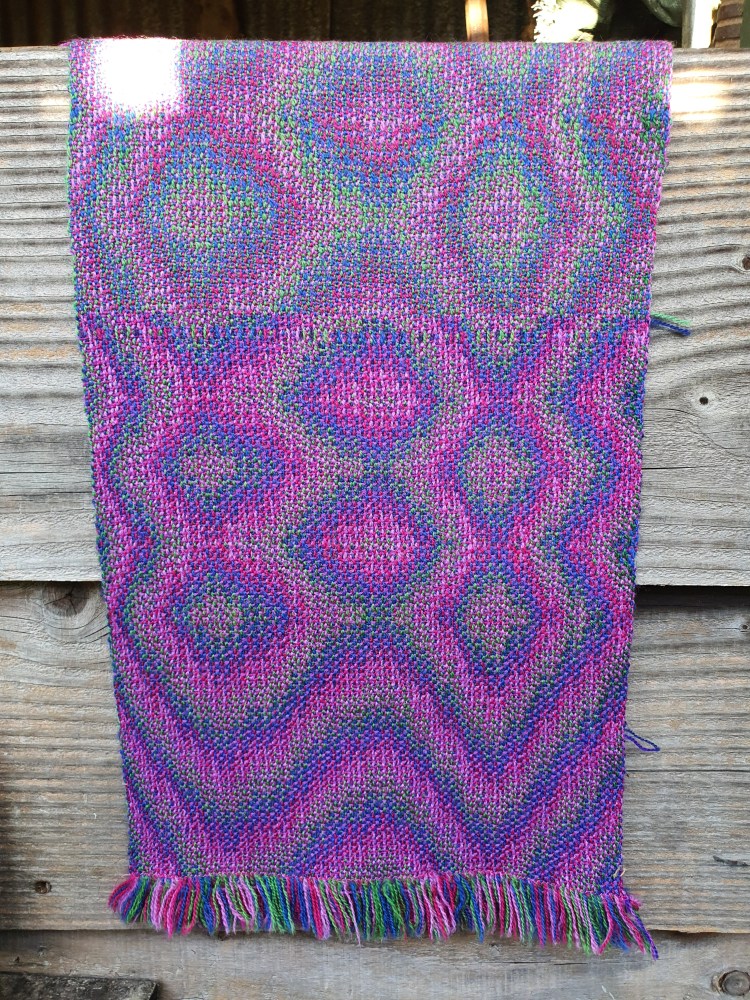
It’s been a busy month or two as I’ve been involved with the organisation of a local art show and I haven’t done much weaving. My main project in February was weaving a couple of pieces using some of the corriedale yarn I had dyed with harakeke seedpods. I drafted a echo weave design, inspired by the curves of the harakeke (NZ flax) flower stalks and seedpods, which I think turned out quite well for my first attempt.
I wove a scarf (above) and a wallhanging (below)
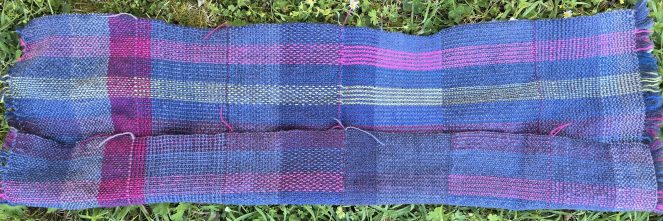
On my table loom at the moment is the Deflected Double Cloth sample blanket from Exploring Woven Fabrics by Janet Phillips, which I hope to complete in the next couple of weeks.
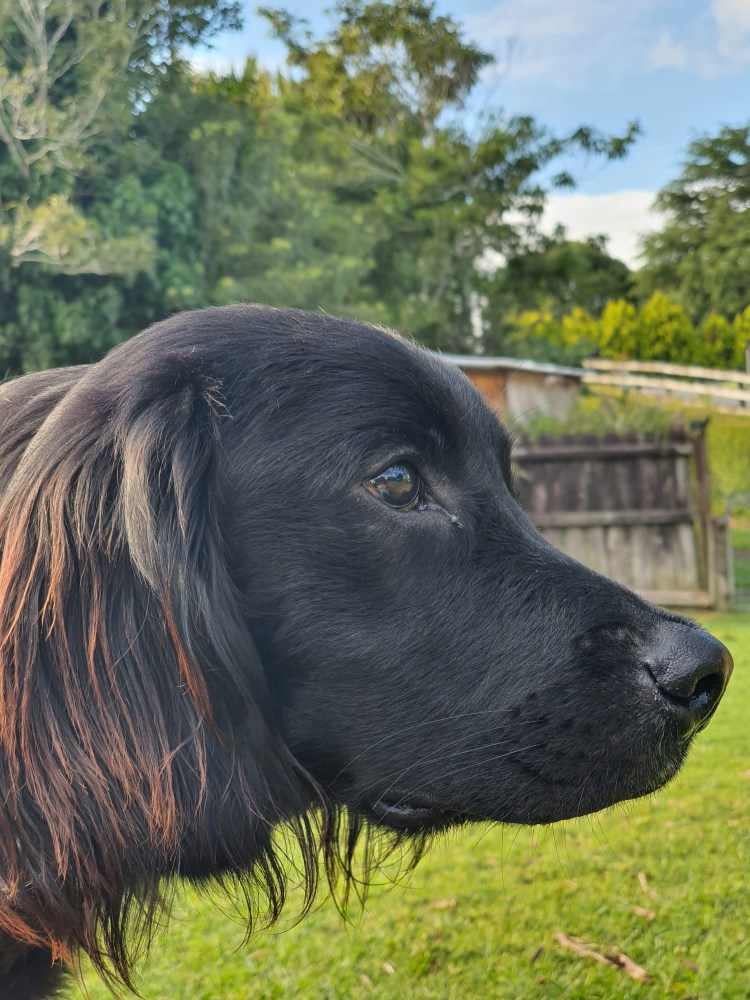
Last but not least, here are a few pictures of Rufus, who is helping us to improve our throwing skills as he demands to play fetch several times a day.
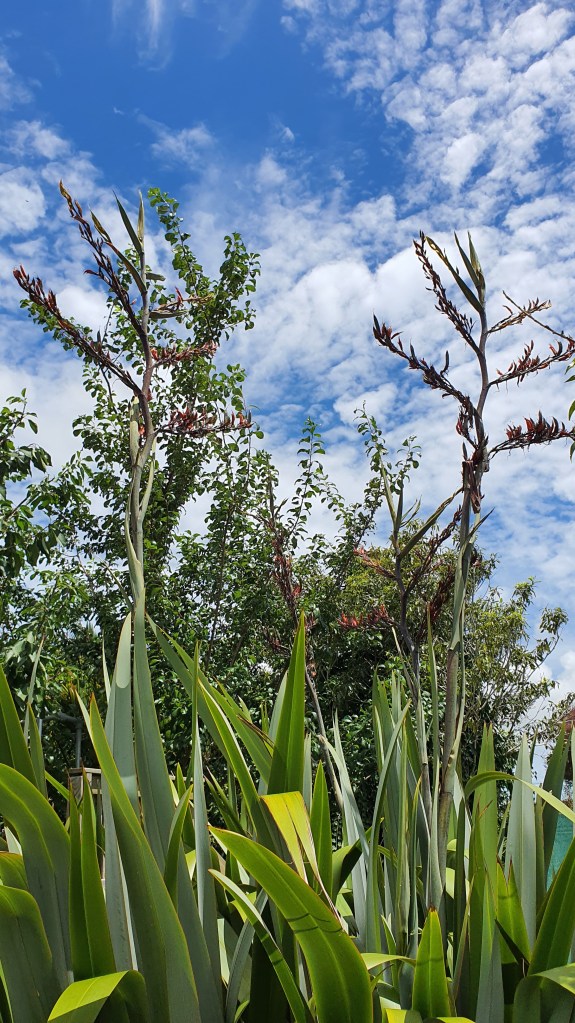
The harakeke (flax | phormium tenax) plants in my garden started sending up flower stalks in December. They look impressive and the birds love the flowers but they do have a tendency to fall over and then my husband moans when he has to mow around them because I won’t let him cut them down as I want the seedpods to grow so I can dye with them. He was quite pleased when a few weeks ago I collected up all the stalks and harvested the seedpods. I have been experimenting with dyeing with harakeke seedpods for a few years after reading a post by Isla Fabu and racing out to collect some some from my garden to try it straight away.
Dyeing with harakeke seedpods is fun and fairly fuss-free, and there is always the anticipation to see what colours you will get. I don’t try to get reproducible/repeatable results with this dye so I don’t weigh the quantity of seedpods or stick to strict timings or temperatures.
The basic method I use is:
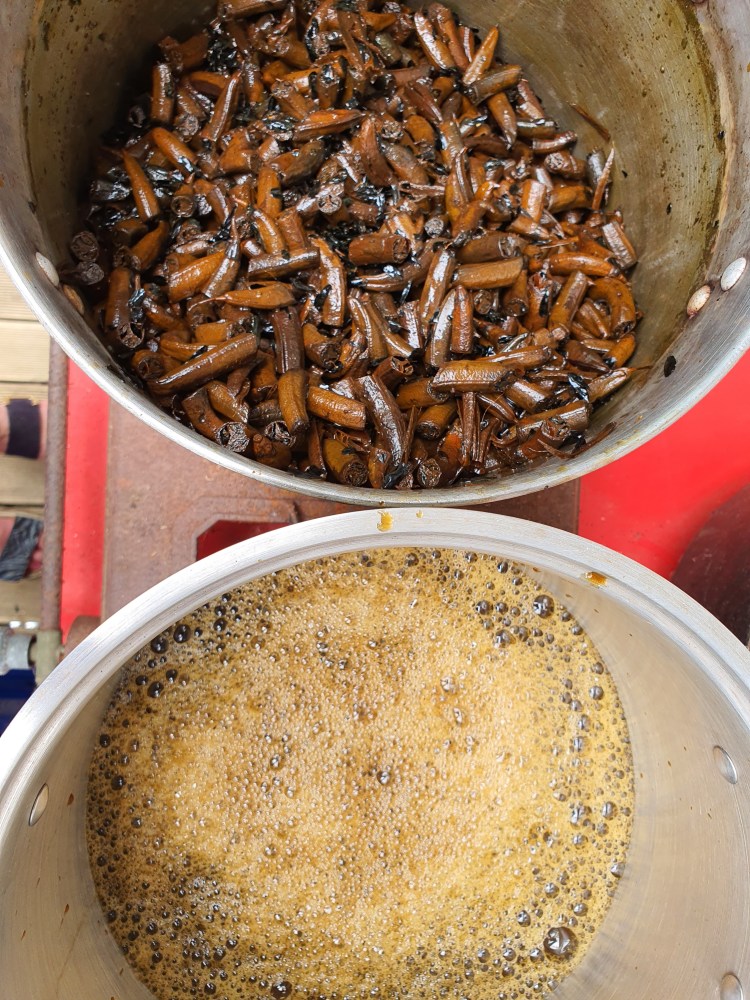
Pick the seedpods. You can use fresh or dried, I have used both in the past. My latest dye batch was using fresh seedpods. Cut the seedpods into 2 or 3 pieces and put them in a pot. Cover them with water and leave them for a couple or so days until the liquid starts to bubble and smell. How long I actually leave the seedpods fermenting depends on when I can get around to heating the dye pot up but I imagine it could get very smelly if you left it too long. I used rainwater in this dye batch because I was working next to the garden water tank but normal drinking water is fine.
Heat the dyepot up until it is simmering, then turn off the heat and leave it overnight or until it is cool. Strain the seedpods and seeds out of the dye. Then it’s time to start dyeing.
Soak the yarn you want to dye with a little detergent for about 30 minutes. You don’t need a mordant. Wring the yarn so it is just damp and add to the dyepot.
Heat the dyepot gently to the boil and then simmer. You can vary how long to simmer for by checking the colour of the yarn and turning off the heat once you’re happy with the colour. I wouldn’t go past an hour and I often turn the heat off after about 15 minutes. If the yarn hasn’t gone a strong colour after simmering for an hour then in my experience it’s probably not going to happen.
Leave the yarn in the dyepot to cool, then remove. I rinse the yarn in warm water and then wash with some laundry detergent and rinse. I use ecostore laundry liquid or similar, depends what’s on special at the supermarket. Wring out the water and then dry out of direct sunlight.
Below are some photos of the dyepot after heating and separating the dye solution from the seeds and seedpods.
Keep using the dyepot for a few days and see what colours you get. My experience is that you can get dark browns at the beginning and then some red-browns and then pale browns. Eventually the dyepot gets quite smelly and it doesn’t give much colour. I have got best colour results with wool rather than other fibres.
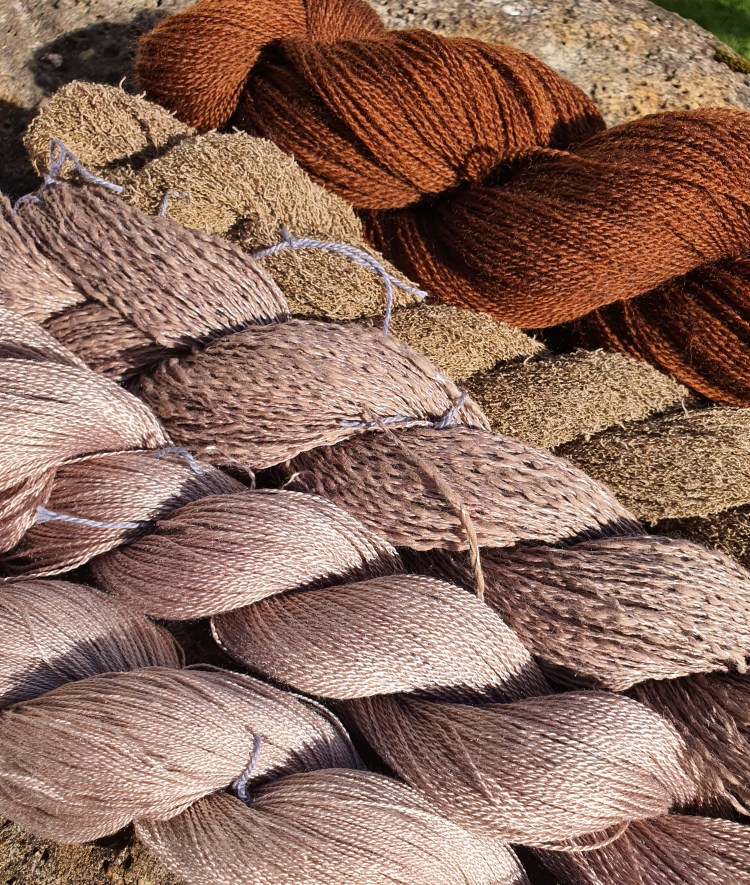
The photo is below is from the first dyeing session using my latest bath of dye. These yarns were all put in the dyepot at the same time and treated the same. You can see the difference you get from different fibres with this dye. From bottom to top the yarns are: rayon, tencel, acrylic knop yarn, “coconut cotton”(not sure what this actually is) and corriedale wool.
After dyeing this first batch of yarns, I carried on dyeing more skeins of corriedale yarn, one after another instead of altogether. The colours of these skeins demonstrate how the dyebath colours change with repeated use. The skeins are left to right, the last to the first dyeing session.
Rufus is 1
In other important news, it is Rufus’ first birthday today. Here he is with his birthday cake which is just his normal food and peanut butter. It only lasted a few seconds, once the candle was taken out.
I had good intentions to post during November but now it’s December and that obviously didn’t happen. Better late than never I suppose, so here’s a quick roundup of what I’ve been up to.
Weaving
I finally hemmed the hand towels that were my first warp on my Mecchia dobby. They are already in daily use, replacing our rather worn out old towels.
I put a warp on my Ashford jack loom to work on the Summer & Winter lesson from Jane Stafford’s School Of Weaving. I enjoyed weaving the tea towels even though I managed to make a few mistakes, mostly due to inattention when weaving the tabby picks.
In the middle of November, I attended a workshop on Echo Weave, led by Agnes Hauptli. The workshop was organised by Creative Fibre Auckland, as part of their Spring Education Event at the Estuary Arts Centre in Orewa. I really enjoyed it even though lots of concentration was required.
Different treadlings on my workshop warp.
Reading
After the workshop I purchased a copy of Weaving with Echo and Iris by Marian Stubenitsky. It’s a pretty expensive book but it has a wealth of information in it and I’m slowly working my way through it.
Dog Tales
Rufus is still growing and still full of energy. Occasionally he does have quiet moments.
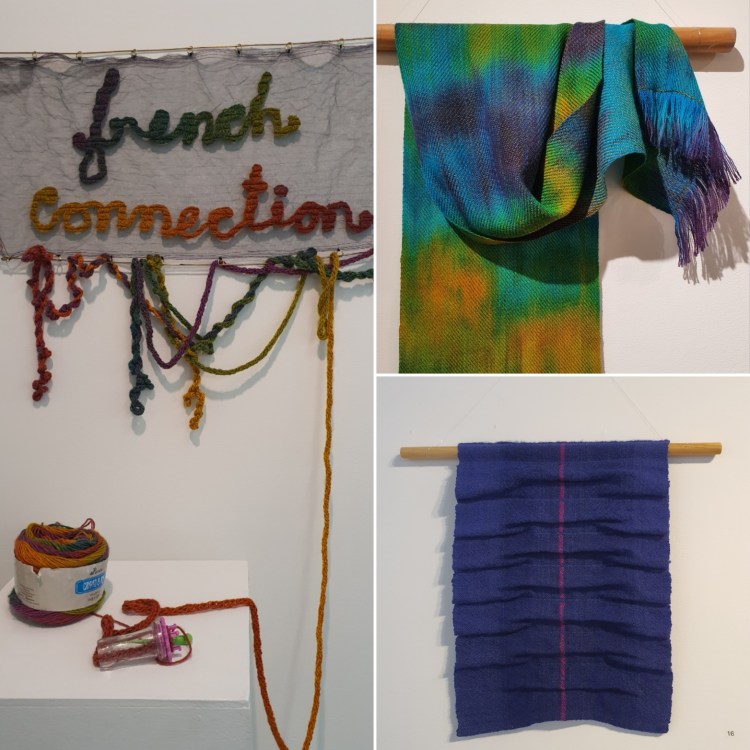
At the beginning of the month I completed two pieces for an exhibition at our local community gallery. The theme of the exhibition is Connections and these two pieces were inspired by a metaphor used in Nordic countries where the red thread can refer to a shared characteristic or core theme that runs through and connects themes, ideas and stories.
“Connections” consists of works by six local Franklin artists including me, we have got to know each other through our shared passion for fibre and textile art. We were offered the exhibition slot at fairly short notice after a cancellation so we had not seen each other’s work until installation day and it was exciting to see how well the pieces all worked together.
The exhibition is on at the Franklin Arts Centre, Community Gallery until 3 October, so if you’re in Pukekohe pop in for a visit.
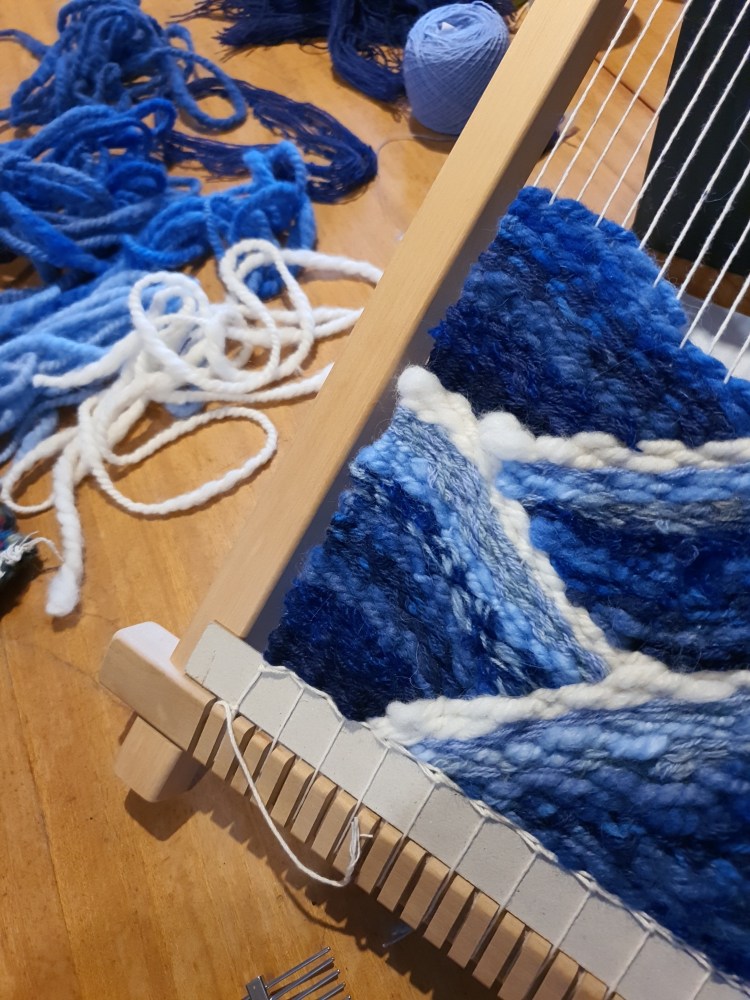
I have also been working on my entry in our Waiuku Spinners & Weavers group challenge which is due this week. Each member was given a bag containing some corriedale, alpaca and angora fibre and one of 4 themes (fire, water, air and earth) with the challenge to make something inspired by the theme using the fibres and whatever else you wanted to add. My theme was water, I spun the fibres, dyed them and have been weaving a piece on a frame loom.
Dog Tales
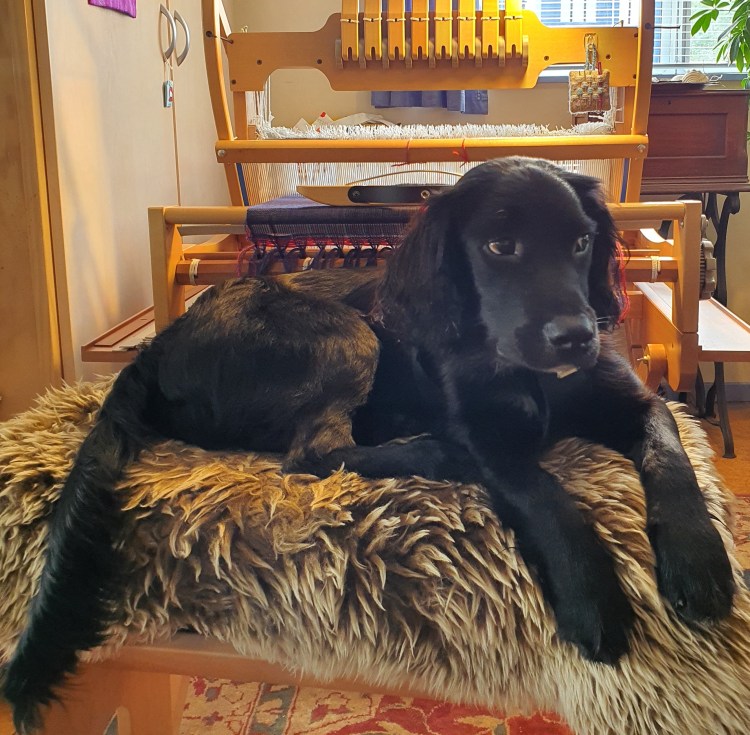
Rufus is not allowed near my weaving very often as he has a tendency to chew on things he shouldn’t (as all puppies do) but I had my table loom set up in the dining room this month and he decided to try out the weaving bench for size.
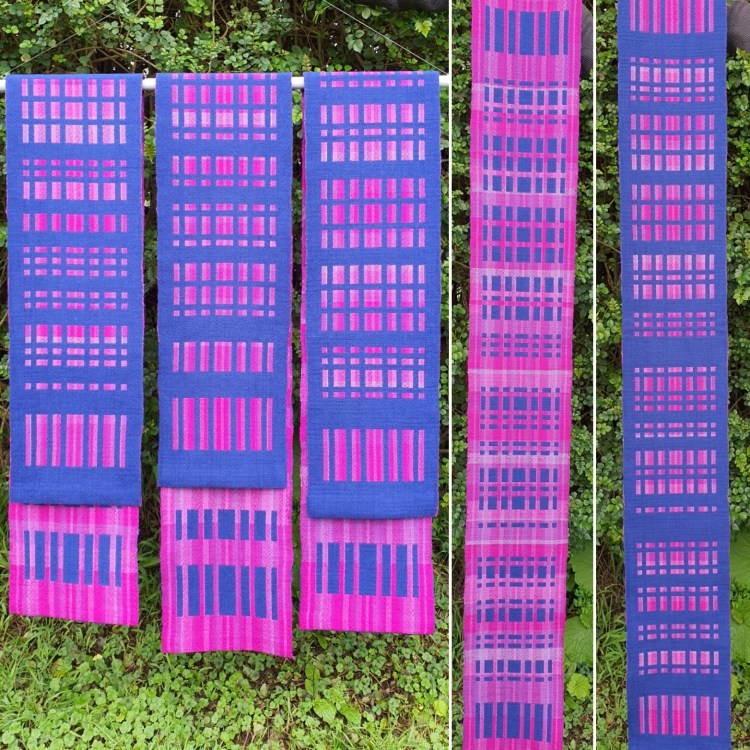
August is racing away, I don’t know how we are already over halfway through the month. The weather has been wet and cold so it’s been good to be inside weaving. First up are some photos of the double weave scarves that I mentioned in my last post.
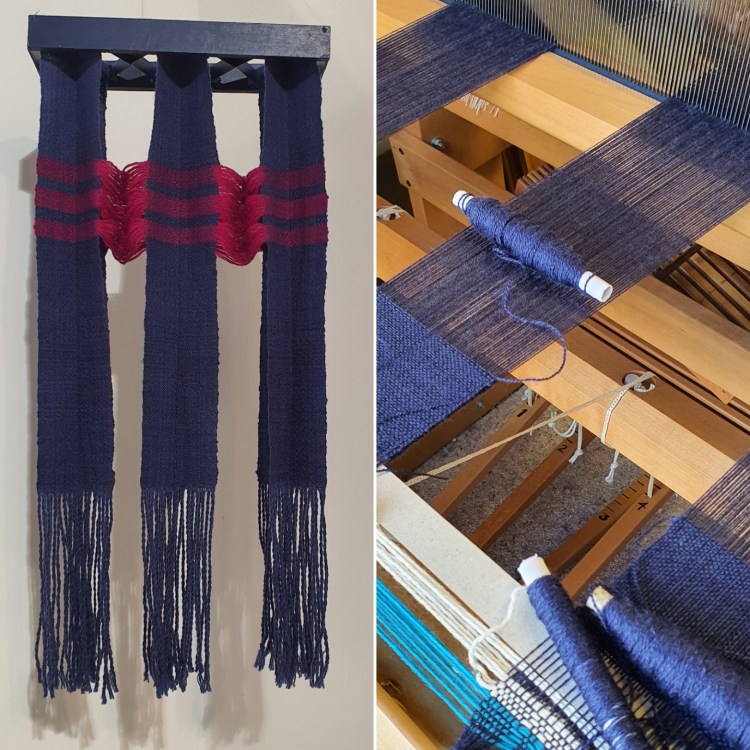
Each scarf has a wintery phrase woven in morse code, from left to right they are: “It’s Cold Outside”, “Wrap Up Warm” and “Looks Like Rain”. The right hand side of the photo shows the full front and back of “Looks Like Rain”. They were on display at “Gathering”, a collection of works by members of the Franklin Arts Festival committee. It was held at the Franklin Arts Centre, Community Gallery from 3-22 August.
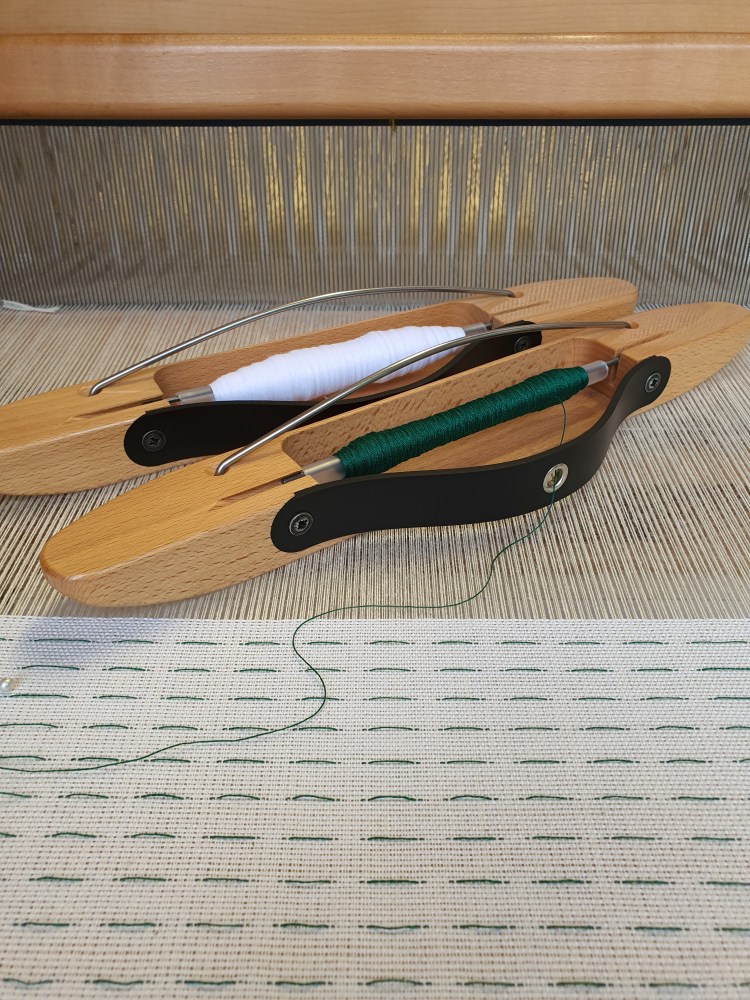
The tea towels are finally off my Mecchia loom and are now waiting for me to hem them.
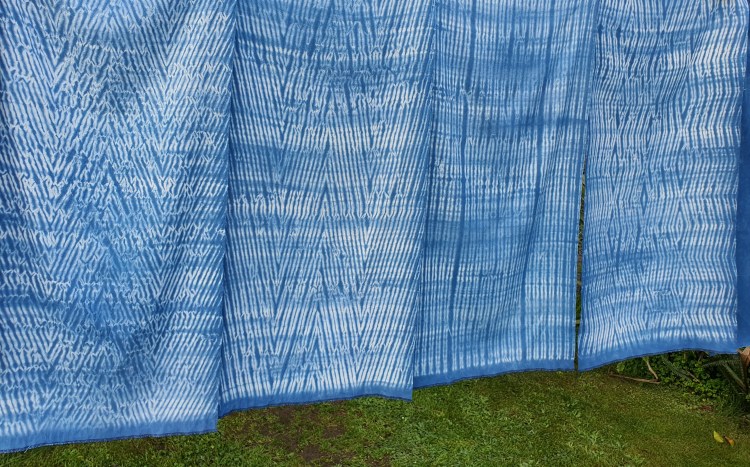
Last week I put a cotton warp on my Ashford jack loom and wove some woven shibori pieces using the techniques from Catharine Ellis’ book “Woven Shibori”. I wove four pieces with a cotton warp and two with a polyester weft. On Saturday my local weaving group had an indigo dyeing workshop and I dyed all the cotton weft pieces and one of the polyester weft pieces. I dyed both polyester weft pieces with Rit Dyemore dye as well and steamed them to set the pleats.
Woven shibori pieces on the loom
Cotton warp and polyester weft, the piece on the left was first dyed with indigo before both were dyed with Rit Dyemore dye.
Cotton warp and weft
Dog Tales
Rufus is now 6 months old and continues to keep us on our toes as everyday he finds something new that he can reach. He loves playing with his balls and running around.
The big news this month is that we have a new member of our whānau. Rufus is a Spangold Retriever, also known as an English Springer Spaniel – Golden Retriever cross. He is 10 weeks old and full of beans when he’s awake.
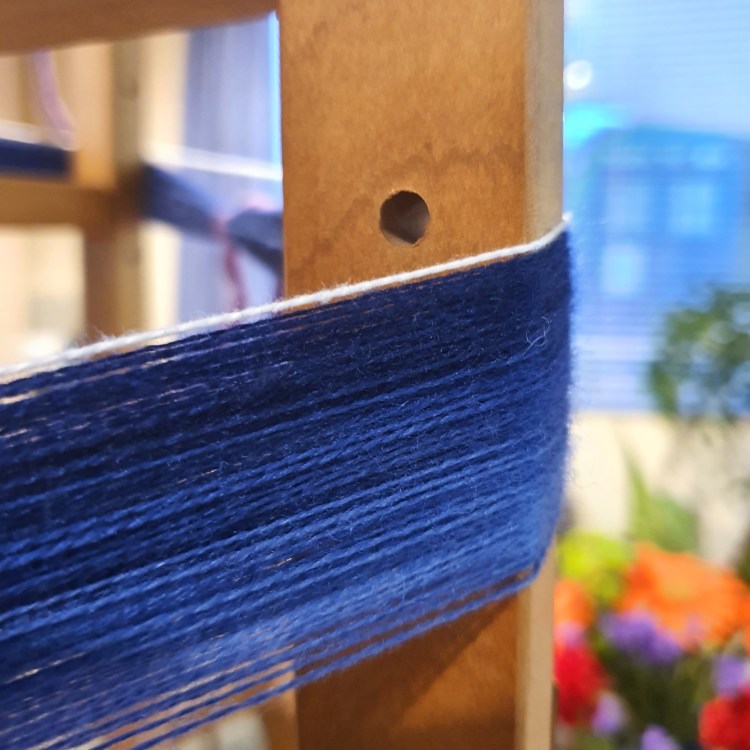
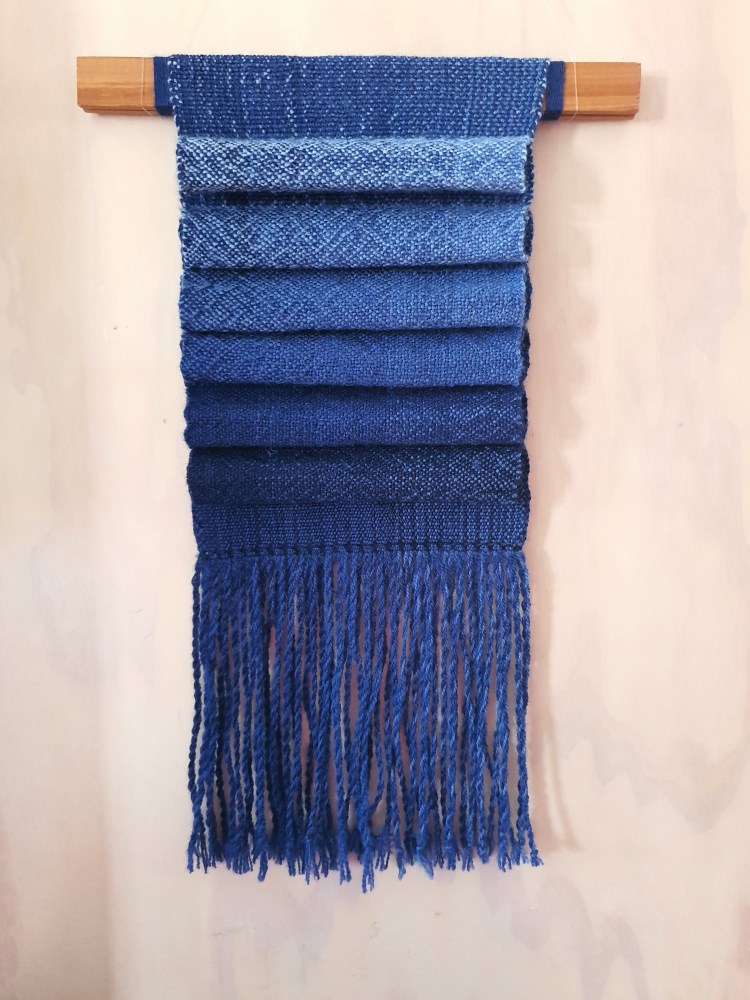
Consequently weaving has taken a bit of a back seat since Rufus’ arrival. Prior to that I did some dyeing for a piece I wanted to weave to enter in a local arts show at Easter. The theme of the show was Light and Shade, and while I initially toyed with weaving something in shades of grey I decided that blues appealed to me more. These skeins are 2-ply corriedale wool dyed with varying concentrations of the same dye.
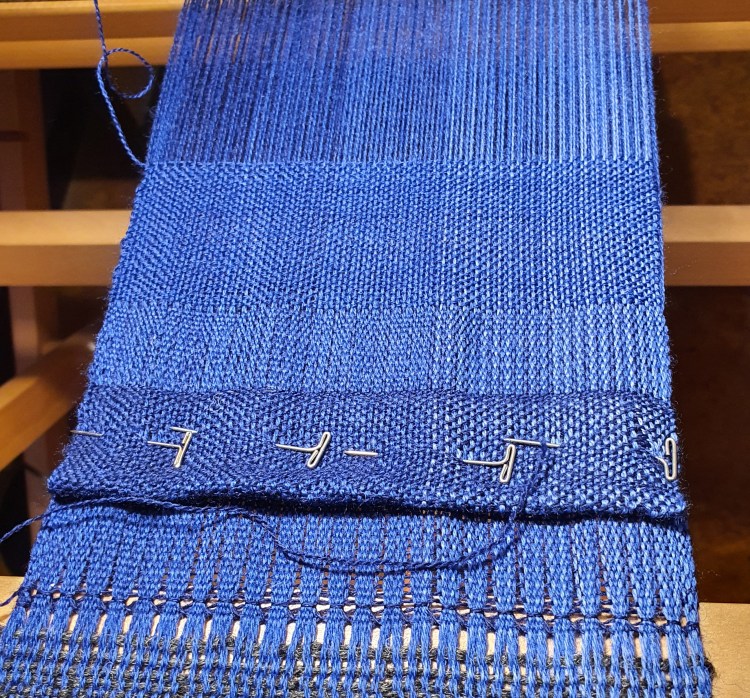
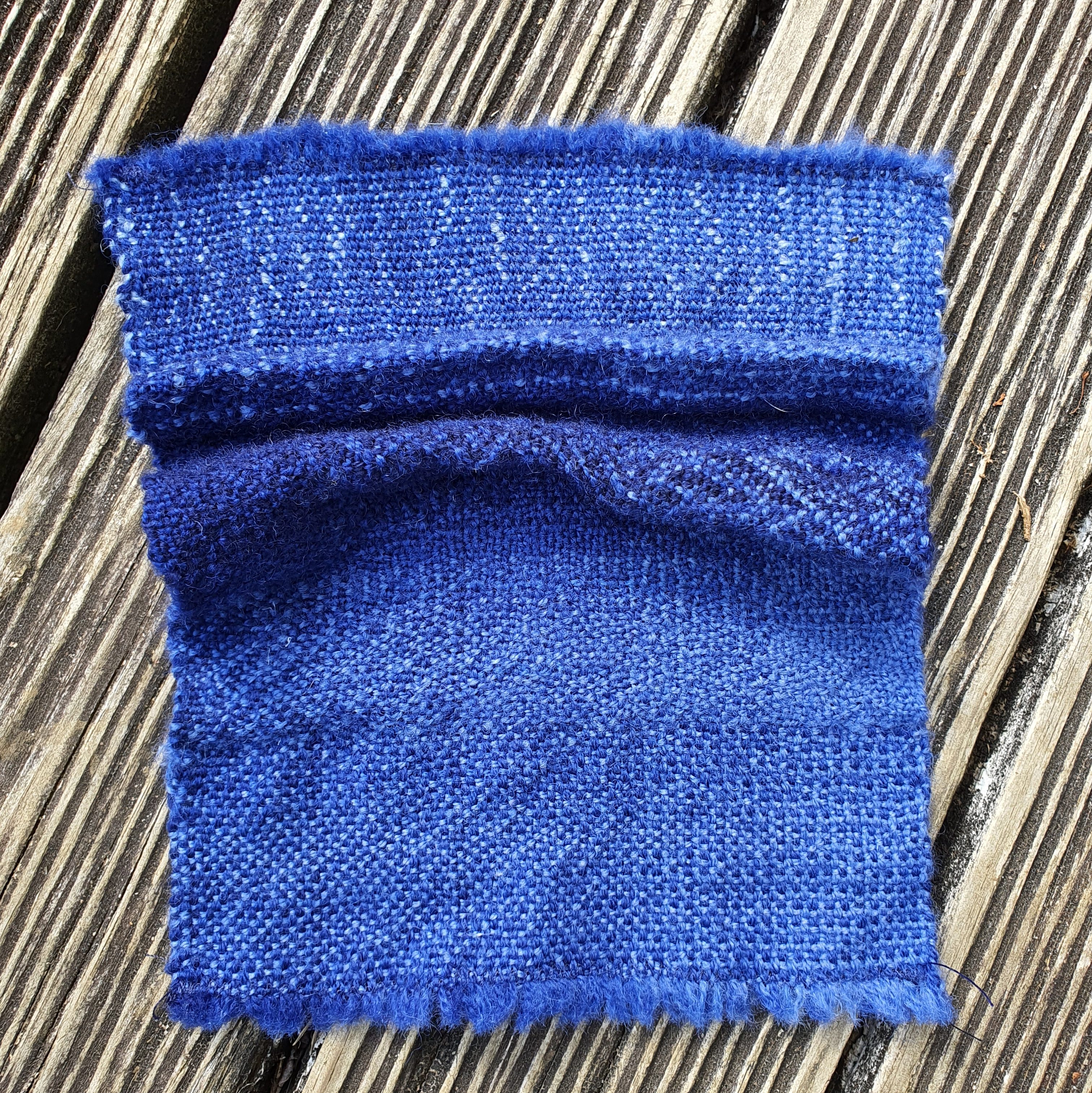
Using the techniques from the 3D double weave samples I wove in February I wound a warp, put it on my loom and started experimenting. You can see my first sample below, I needed to check how it would wash up as my previous samples were woven in cotton.
The finished piece, “The Blues” can be seen below or you can see it for the next 3 weeks at the Pollok Co-op.
I was delighted and surprised to receive an email on Thursday saying I had awarded Second-equal in the show and I’m looking forward to visiting the show this weekend.




























 Kate Alberta Weaving