March is the start of feijoa season, and also time for Easter eggs.
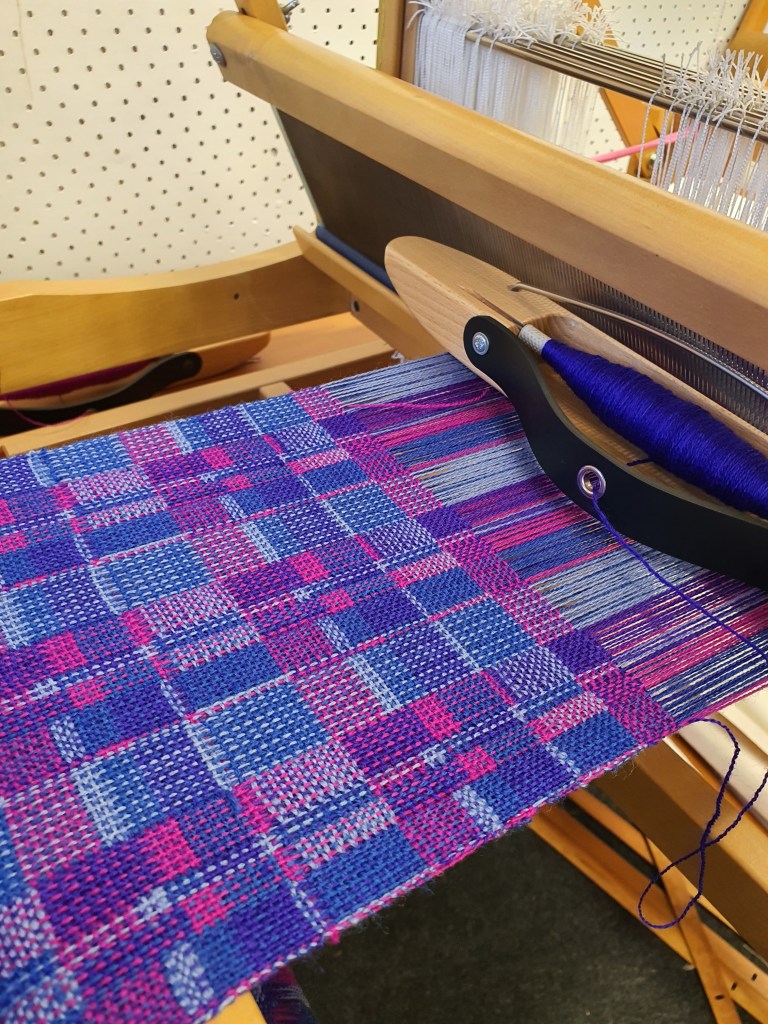
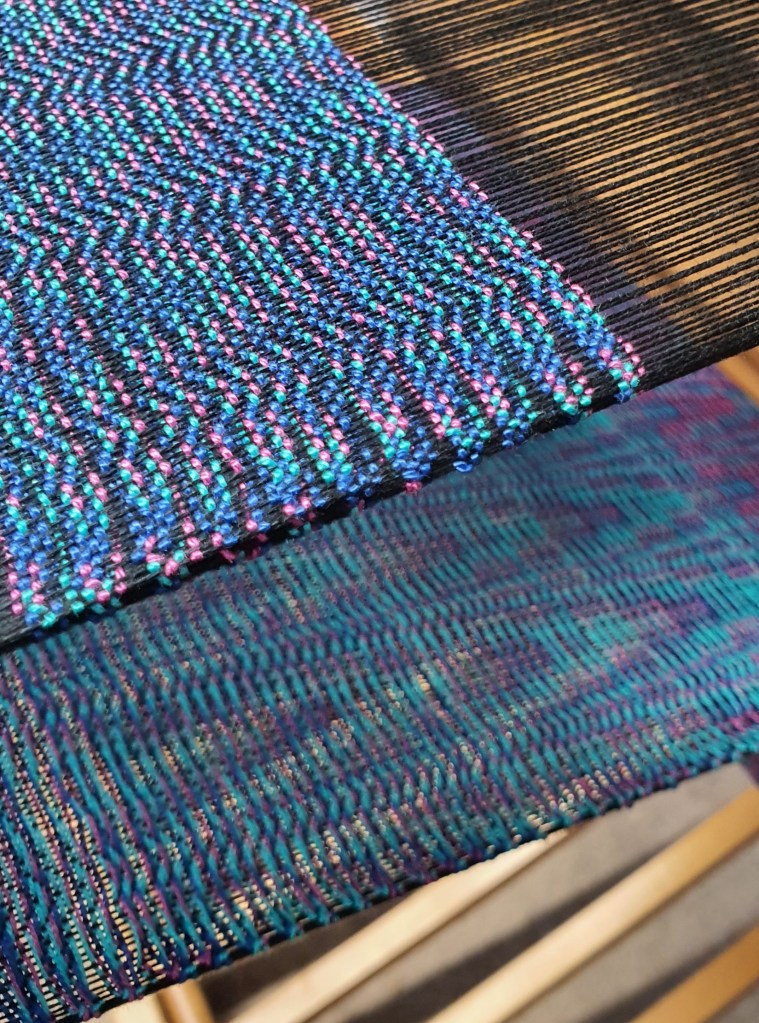
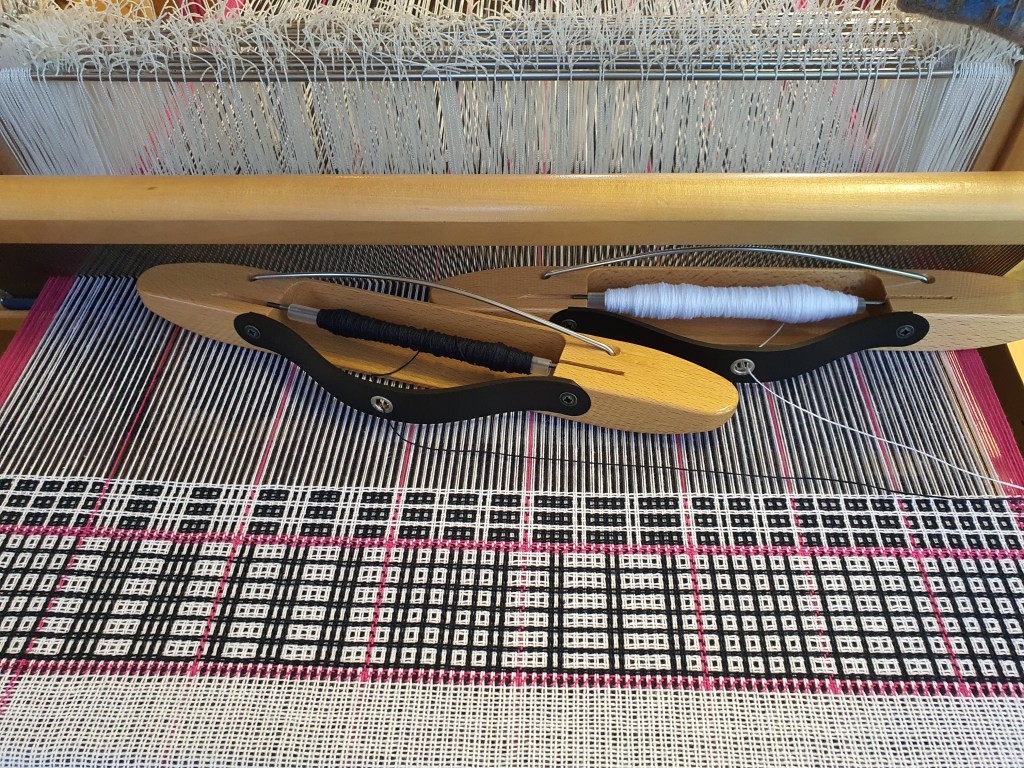
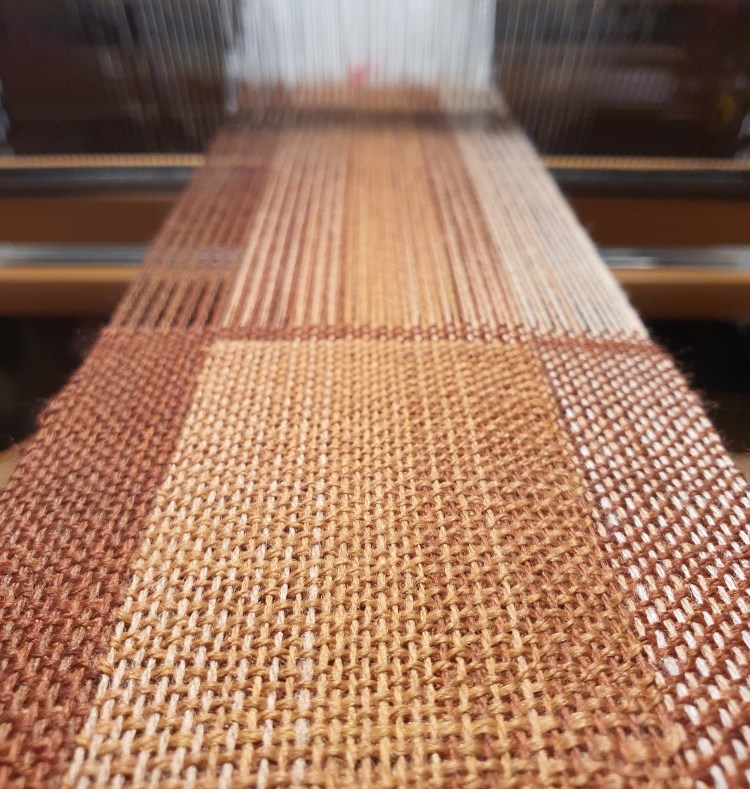
On my table loom I have been weaving a colour with double weave sampler from an article in an old Weavers’ magazine. On my floor loom I have been weaving some pieces using upholstery weave from The Weaving Book by Helene Bress. The piece under the Easter egg basket above, and in the middle photo below used 3 weft colours, and the piece on the right used 4 weft colours.
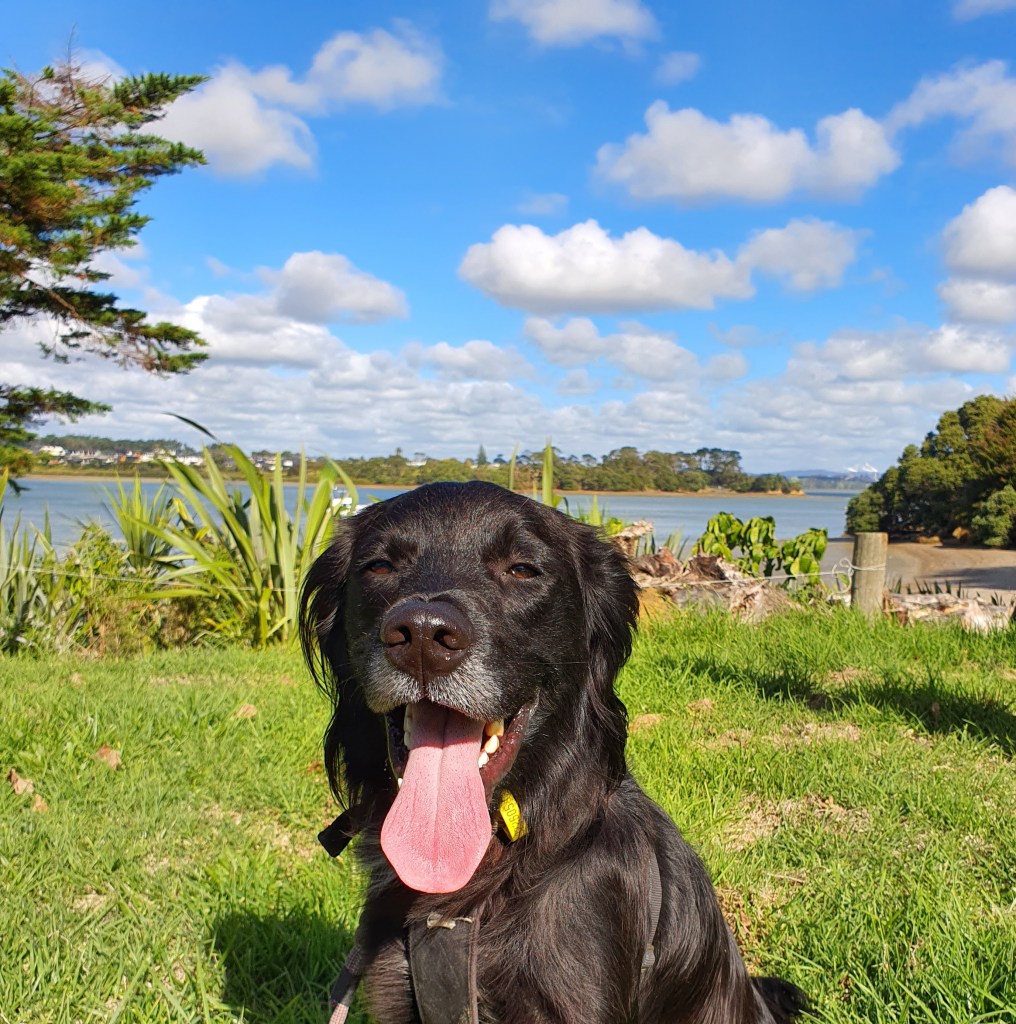
Rufus enjoyed a trip to Te Toro beach, with many things to sniff, though he was rather disappointed that he wasn’t allowed to fully investigate the dead gull he found.
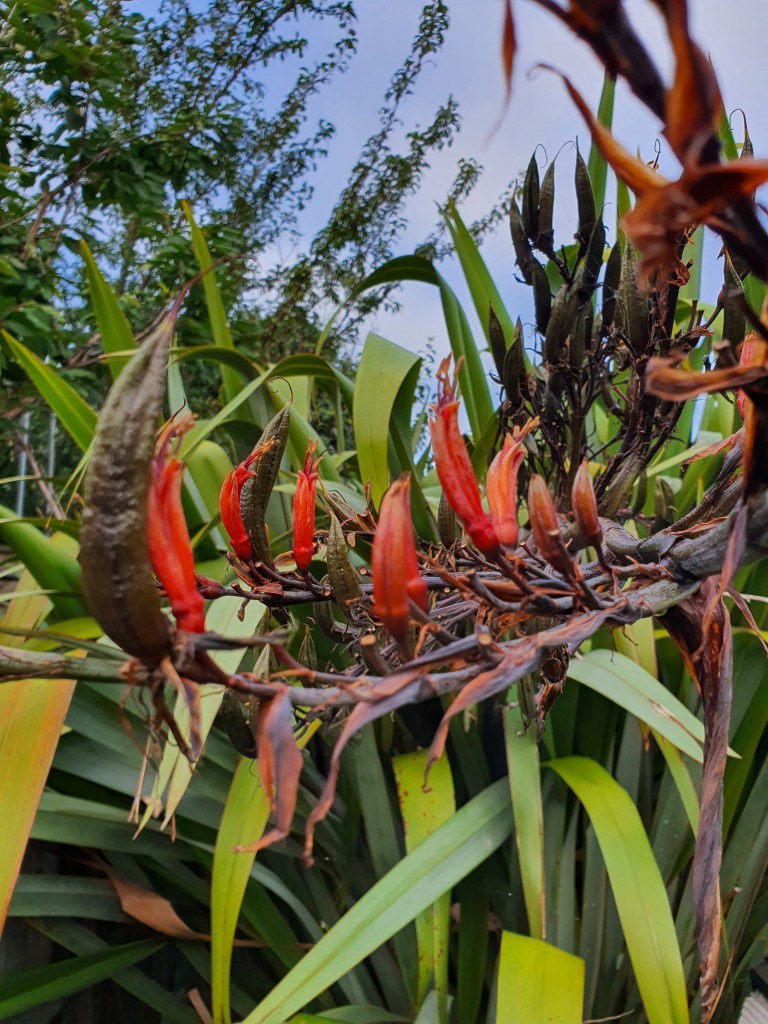
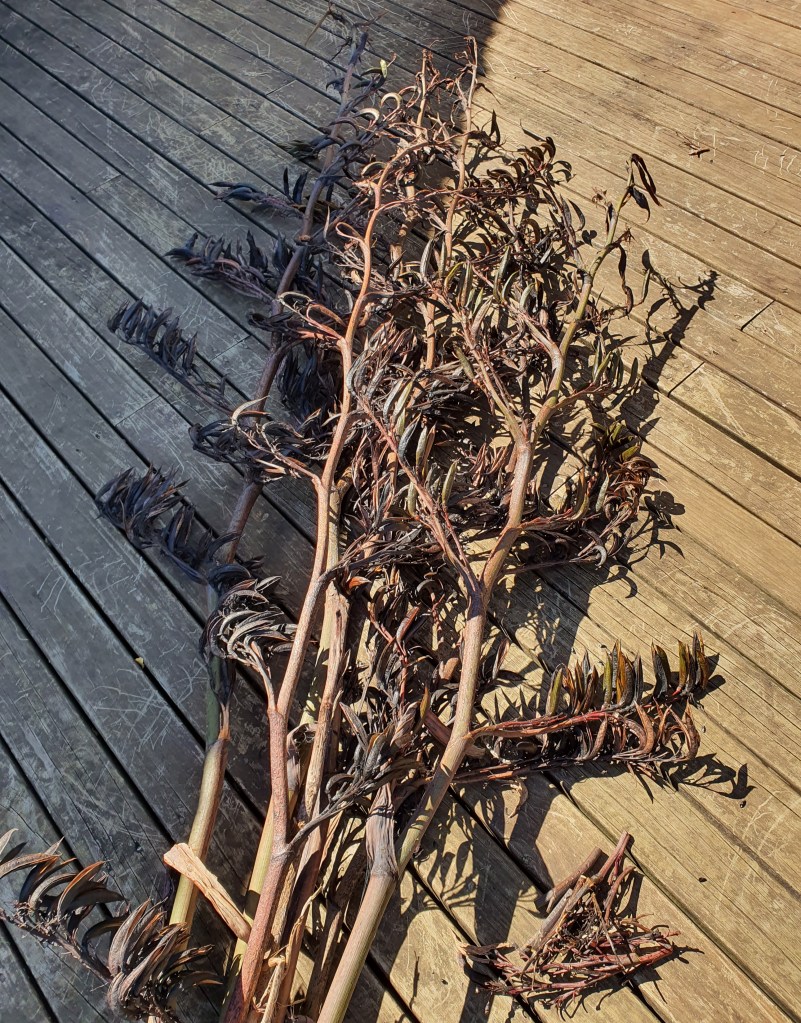
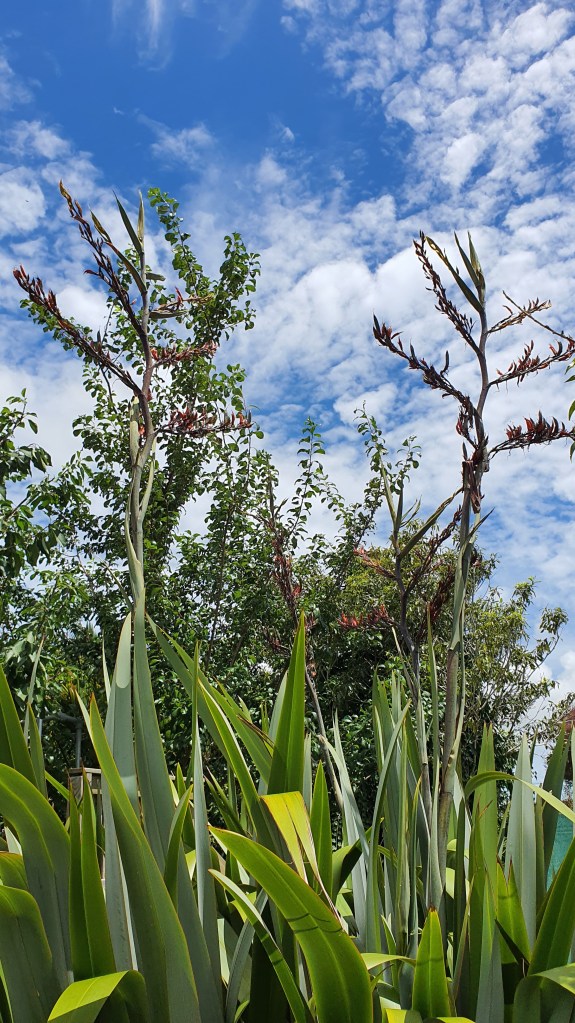
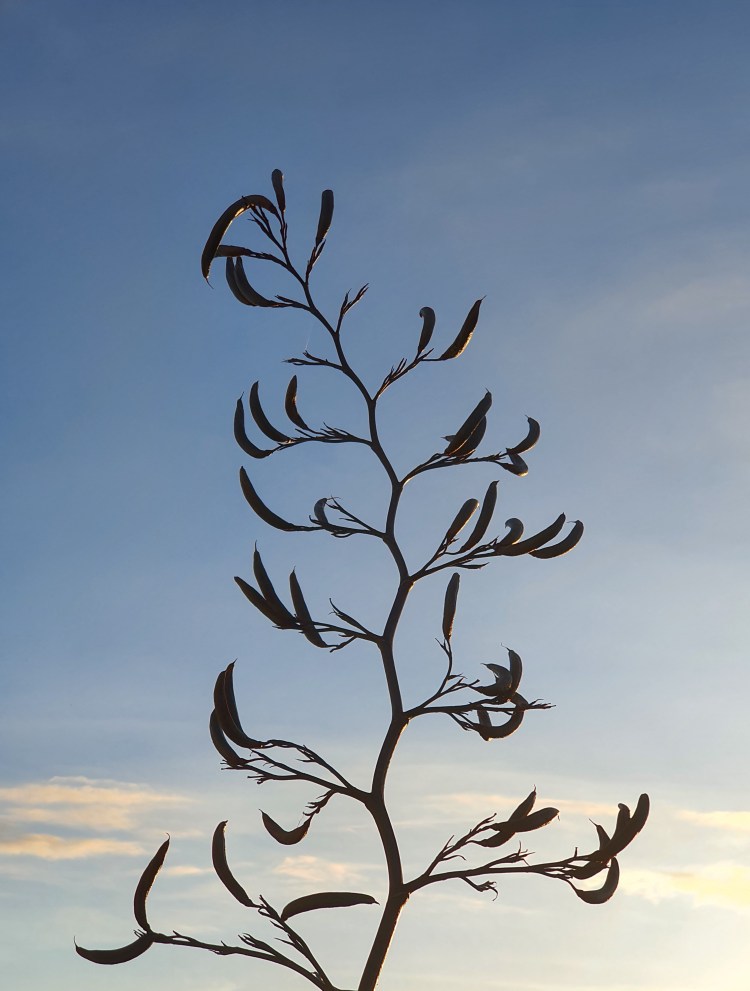
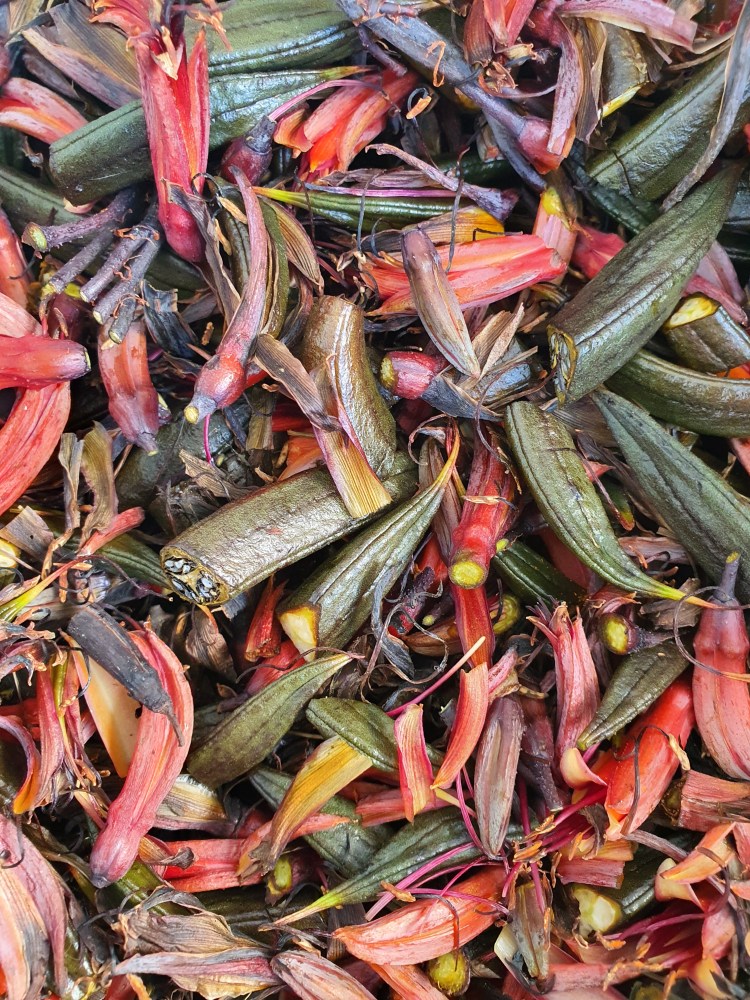
And today, I finally got around to cutting the kōrari (flower stalks) from the harakeke (NZ flax) plants in the garden and harvested the seedpods for a dyebath. The first photo below show the flowers and seedpods last month, the birds love feasting on the flowers. Once the flowers have died off the seedpods fully develop and usually I harvest them when they are still fresh but I left it later this year so most of the seedpods have dried off and split open to distribute their seed.
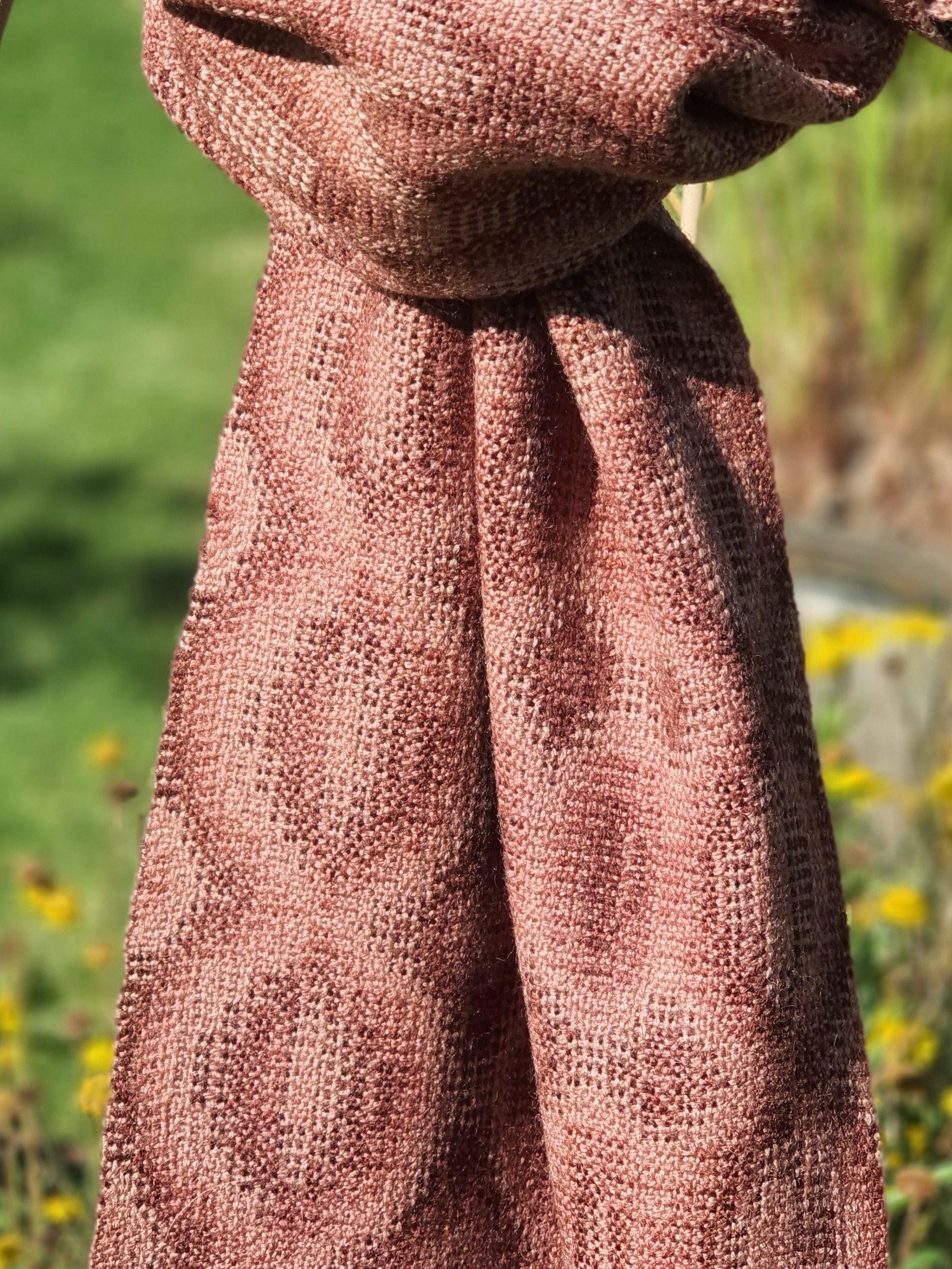
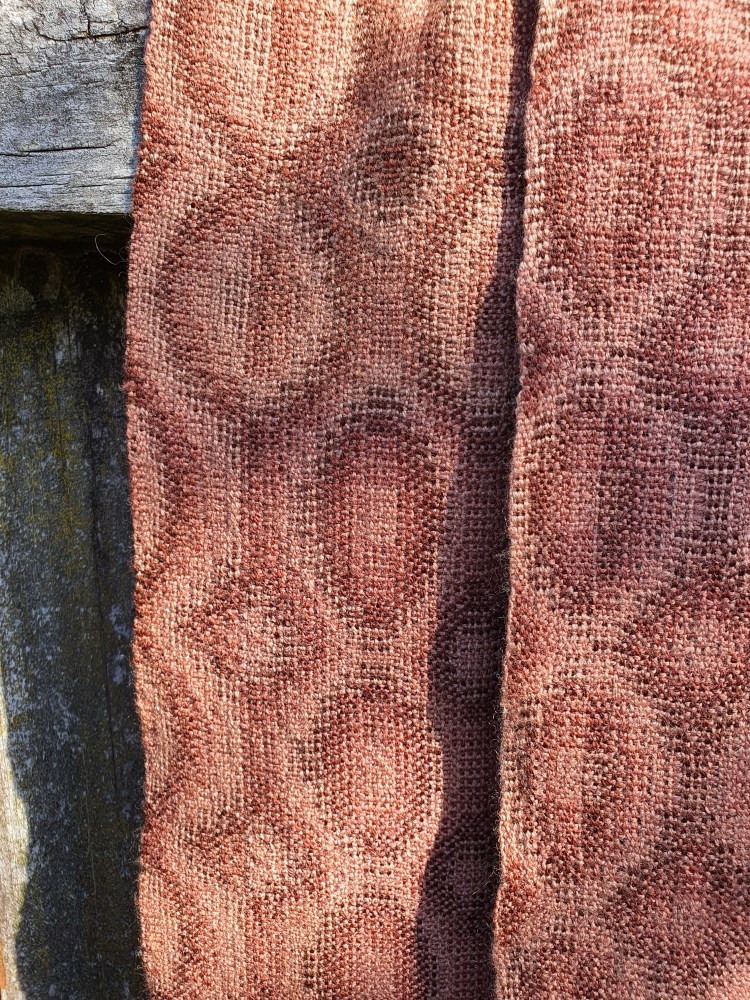
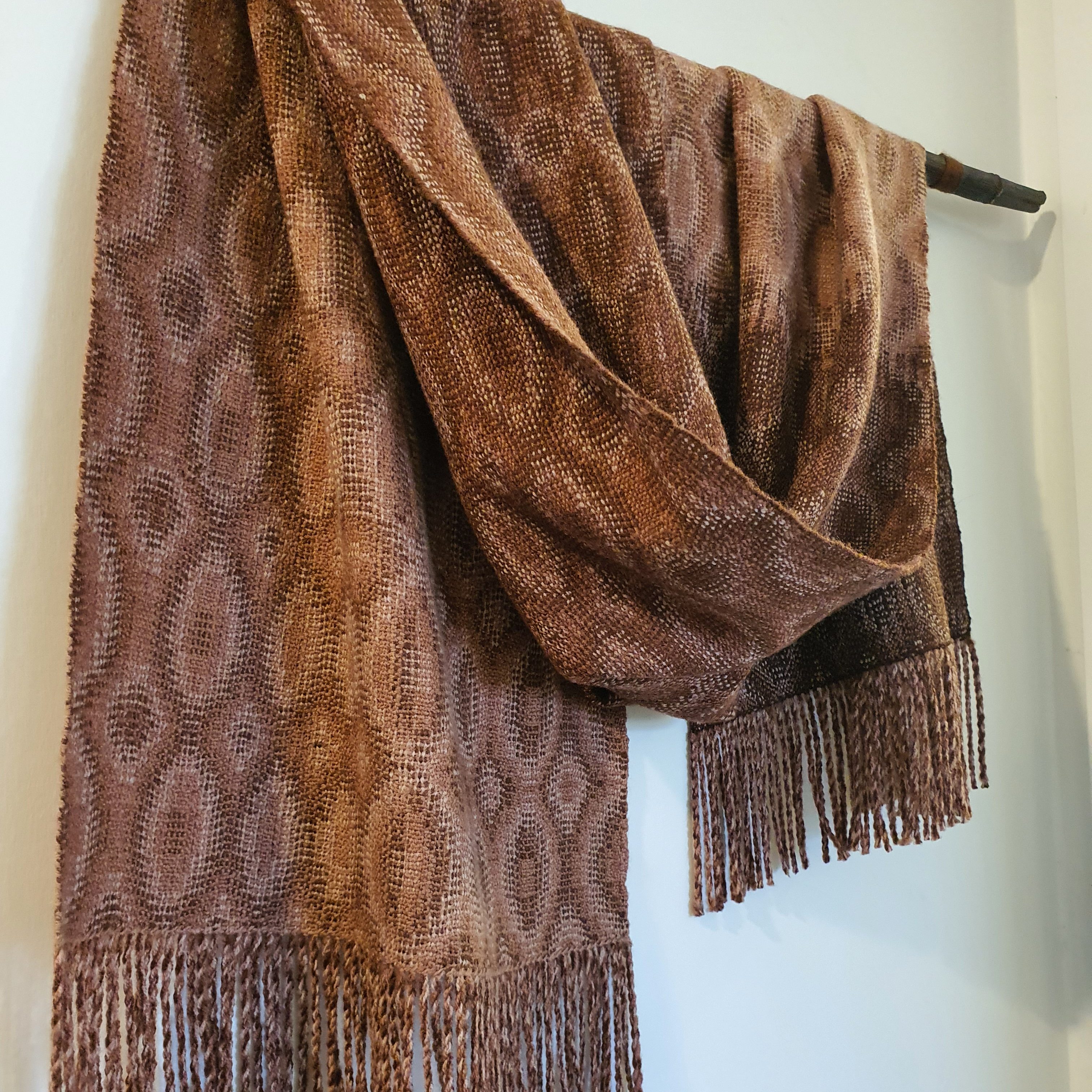
It’s been a busy month or two as I’ve been involved with the organisation of a local art show and I haven’t done much weaving. My main project in February was weaving a couple of pieces using some of the corriedale yarn I had dyed with harakeke seedpods. I drafted a echo weave design, inspired by the curves of the harakeke (NZ flax) flower stalks and seedpods, which I think turned out quite well for my first attempt.
I wove a scarf (above) and a wallhanging (below)
On my table loom at the moment is the Deflected Double Cloth sample blanket from Exploring Woven Fabrics by Janet Phillips, which I hope to complete in the next couple of weeks.
Last but not least, here are a few pictures of Rufus, who is helping us to improve our throwing skills as he demands to play fetch several times a day.
The harakeke (flax | phormium tenax) plants in my garden started sending up flower stalks in December. They look impressive and the birds love the flowers but they do have a tendency to fall over and then my husband moans when he has to mow around them because I won’t let him cut them down as I want the seedpods to grow so I can dye with them. He was quite pleased when a few weeks ago I collected up all the stalks and harvested the seedpods. I have been experimenting with dyeing with harakeke seedpods for a few years after reading a post by Isla Fabu and racing out to collect some some from my garden to try it straight away.
Dyeing with harakeke seedpods is fun and fairly fuss-free, and there is always the anticipation to see what colours you will get. I don’t try to get reproducible/repeatable results with this dye so I don’t weigh the quantity of seedpods or stick to strict timings or temperatures.
The basic method I use is:
Pick the seedpods. You can use fresh or dried, I have used both in the past. My latest dye batch was using fresh seedpods. Cut the seedpods into 2 or 3 pieces and put them in a pot. Cover them with water and leave them for a couple or so days until the liquid starts to bubble and smell. How long I actually leave the seedpods fermenting depends on when I can get around to heating the dye pot up but I imagine it could get very smelly if you left it too long. I used rainwater in this dye batch because I was working next to the garden water tank but normal drinking water is fine.
Heat the dyepot up until it is simmering, then turn off the heat and leave it overnight or until it is cool. Strain the seedpods and seeds out of the dye. Then it’s time to start dyeing.
Soak the yarn you want to dye with a little detergent for about 30 minutes. You don’t need a mordant. Wring the yarn so it is just damp and add to the dyepot.
Heat the dyepot gently to the boil and then simmer. You can vary how long to simmer for by checking the colour of the yarn and turning off the heat once you’re happy with the colour. I wouldn’t go past an hour and I often turn the heat off after about 15 minutes. If the yarn hasn’t gone a strong colour after simmering for an hour then in my experience it’s probably not going to happen.
Leave the yarn in the dyepot to cool, then remove. I rinse the yarn in warm water and then wash with some laundry detergent and rinse. I use ecostore laundry liquid or similar, depends what’s on special at the supermarket. Wring out the water and then dry out of direct sunlight.
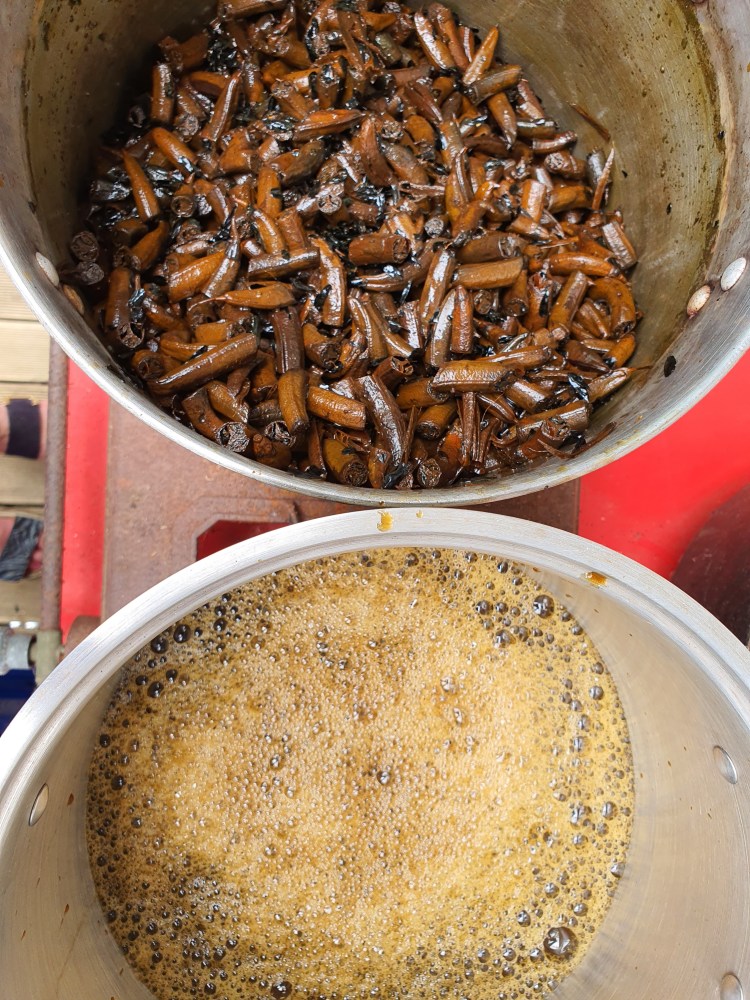
Below are some photos of the dyepot after heating and separating the dye solution from the seeds and seedpods.
Keep using the dyepot for a few days and see what colours you get. My experience is that you can get dark browns at the beginning and then some red-browns and then pale browns. Eventually the dyepot gets quite smelly and it doesn’t give much colour. I have got best colour results with wool rather than other fibres.
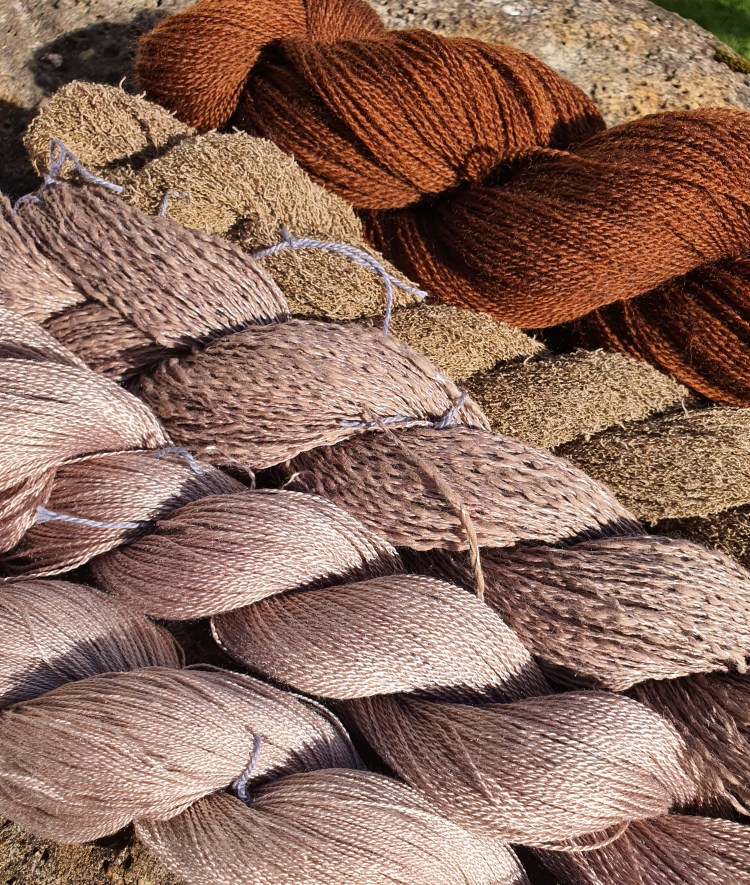
The photo is below is from the first dyeing session using my latest bath of dye. These yarns were all put in the dyepot at the same time and treated the same. You can see the difference you get from different fibres with this dye. From bottom to top the yarns are: rayon, tencel, acrylic knop yarn, “coconut cotton”(not sure what this actually is) and corriedale wool.
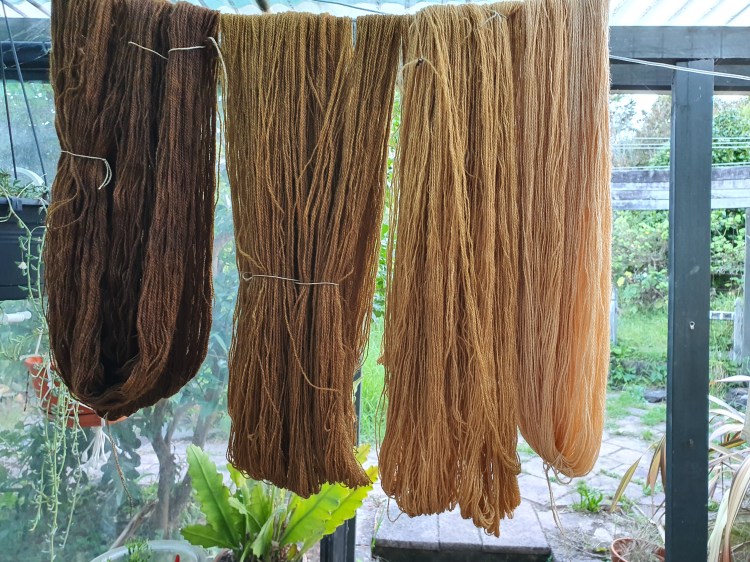
After dyeing this first batch of yarns, I carried on dyeing more skeins of corriedale yarn, one after another instead of altogether. The colours of these skeins demonstrate how the dyebath colours change with repeated use. The skeins are left to right, the last to the first dyeing session.
Rufus is 1
In other important news, it is Rufus’ first birthday today. Here he is with his birthday cake which is just his normal food and peanut butter. It only lasted a few seconds, once the candle was taken out.
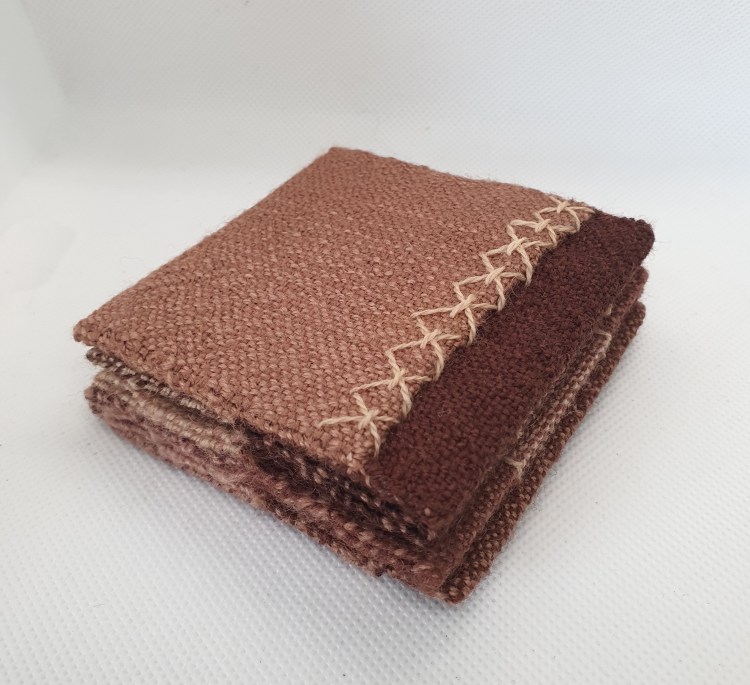
I have finished weaving a couple more of the double weave accordion books, one with four sections and one with six. Handwoven using 2 ply corriedale yarn dyed with harakeke seedpods, the books are fun to play with and rearrange into new shapes.
Rufus
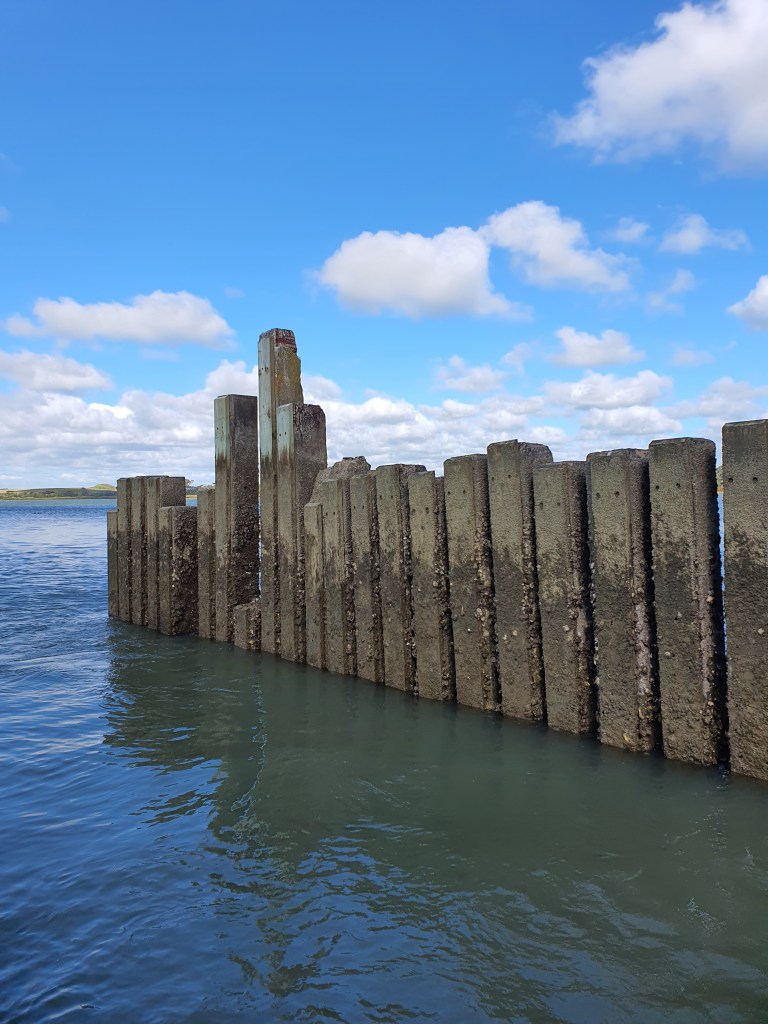
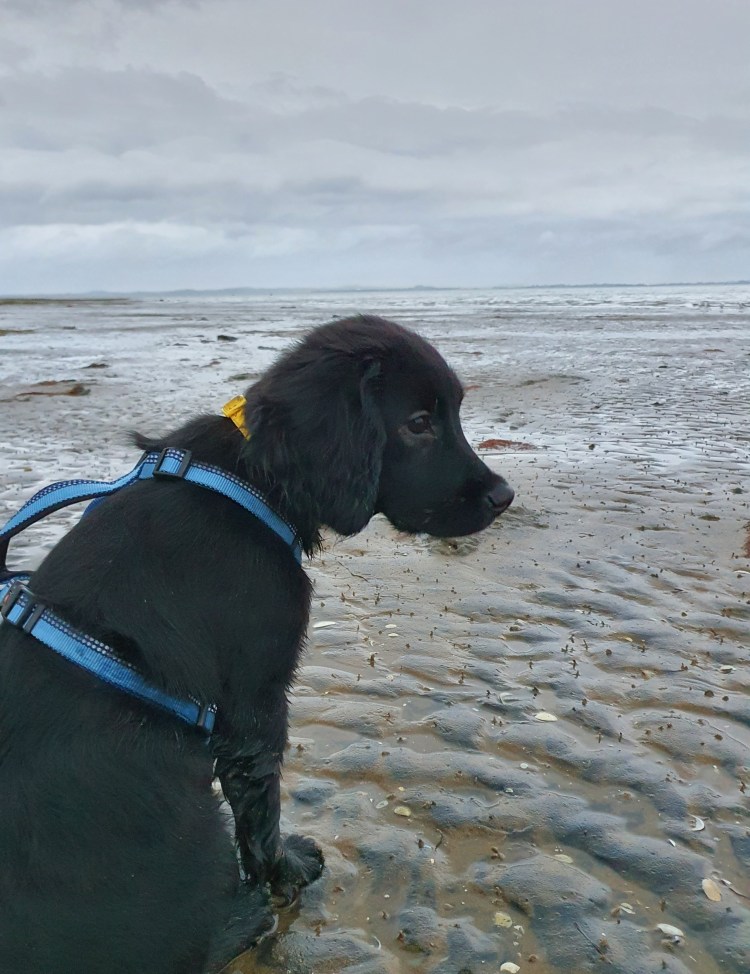
We have gone to the beach at low tide a few times with Rufus while we waited for him to be fully immunised for parvo. This week we are finally able to go walking in public with him which is great and will hopefully help burn off some of his energy.
The tea towels in the last post have been washed but still need to be hemmed. There has been much moving of stuff and rearranging looms in my studio so not much actual weaving. I have finished the double weave projects on my table loom and have a few ideas on what to do differently next time.
I have finished weaving the warp from Season 6 Episode 2 of Jane Stafford’s School of Weaving. I love the colours and patterns and once I get around the hemming them all I’m looking forward to using some of these tea towels in my kitchen.
Weaving continues on the double weave warp on my table loom. The warp and weft is corriedale dyed with harakeke (NZ flax) seed pods.
Reading
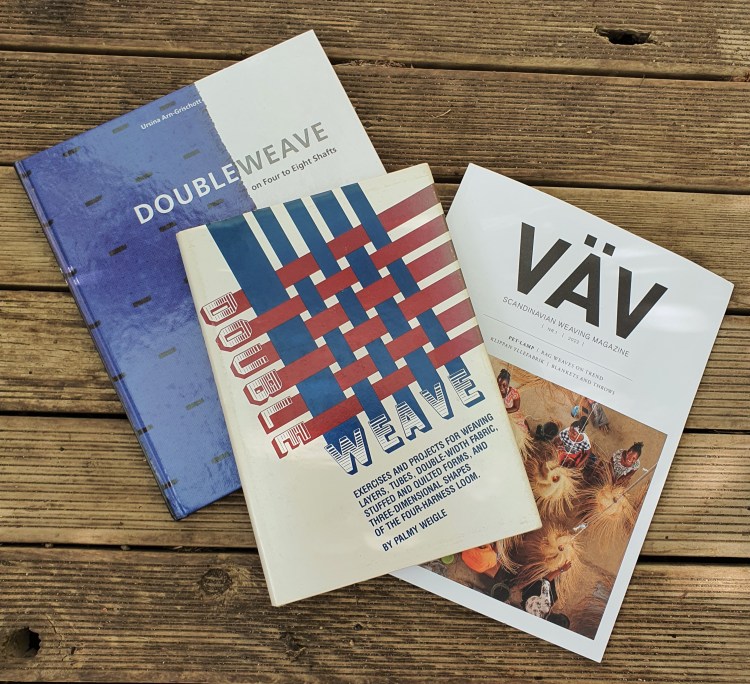
I purchased second hand copies of a couple of books about double weave that were offered for sale in a NZ weavers facebook group: Doubleweave on Four to Eight Shafts by Ursina Arn-Grischott and Double Weave by Palmy Weigle. They both look very interesting and am working my way through them. The latest issue of VÄV magazine arrived, I particularly liked the article “Twisted Colors”. I’m also reading Miss Pinkerton by Mary Roberts Rinehart as part of the Shedunnit book club.
Rufus
Still growing and exploring, he likes playing with the hose but doesn’t enjoy baths quite so much. He had his first puppy preschool class and now we’re working on the takoto/lie down command. He is pretty good at e noho/sit especially when food is involved.
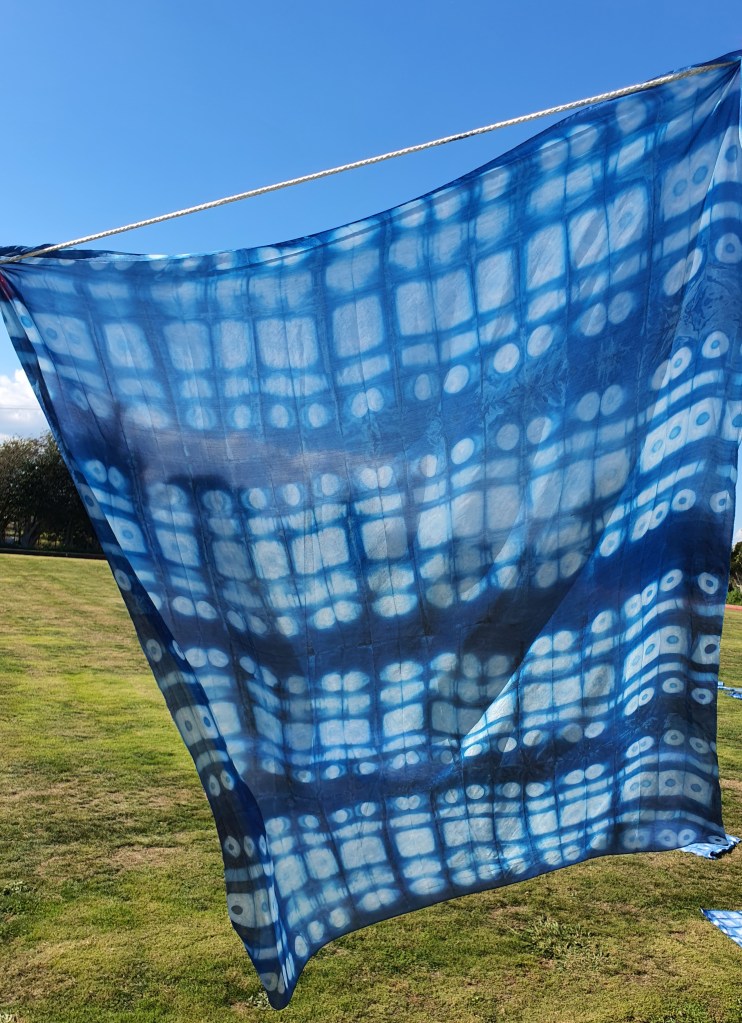
This month I finished weaving a cotton warp that I started weaving in February. I dyed the warp after I had wound and chained it, which produced a tie-dye effect. The weft in the photo was a 20/2 cotton from DEA yarns. Now to decide what to make with it.
I have also been continuing to explore double weave, this time using some of my harakeke-dyed yarns. I wanted to try making an accordion book, inspired by these paper ones by Byopia Press and this woven one by Kaye Sekimachi. Even though I did make a little paper model and thought I had calculated the maths correctly I did get the proportions of this one how I wanted them to be but I’m pleased with it for a first try.
I have several harakeke (phormium tenax / New Zealand flax) bushes in my garden so I was excited to find out a few years ago that you could make a dye from the seed-pods and it is a fairly simple dye to make and use. Obviously the first step is to wait until the flower stalks appear. Then you watch all the birds, especially the tui, come to feed on the flowers. Slowly the flowers disappear and the seedpods appear. The stalks are quite tall and heavy and often fall over.
You can harvest the seed-pods when they still fresh or even when they are looking quite old and dry. I have used them at various stages and you still get colour from them. I cut the seed-pods into 2 or pieces and put them in a dye bath with water and then leave them for a couple of days (or longer if I get busy) until the dye bath is starting to bubble. The dye solution does smell but I do my dyeing outside and I think it is an OK smell.
Freshly cut seed-pods and a few flowers
The dye bath after a couple of days
Originally I would leave the seed-pods loose in the water but recently I realised it would be a lot easier if I actually put them all in an old pillowcase, instead of picking out bits out of my yarn afterwards. Once I’m ready to dye, I soak the skeins of wool in some warm water with a squirt of detergent, then place them in the dye bath and gently heat it. You don’t need to mordant the yarn but you can if you want, I haven’t noticed any difference in depth of colour between mordanted and un-mordanted yarn but I also haven’t carried out any rigorous investigation. As the dye bath increases in temperature the colour obtained darkens, you can see this in the photo below on the right. The skeins of yarn were taken out at different stages of heating the dye bath, the darkest was left in the dye bath after it came to the boil.
In the dye bath
Skeins before washing
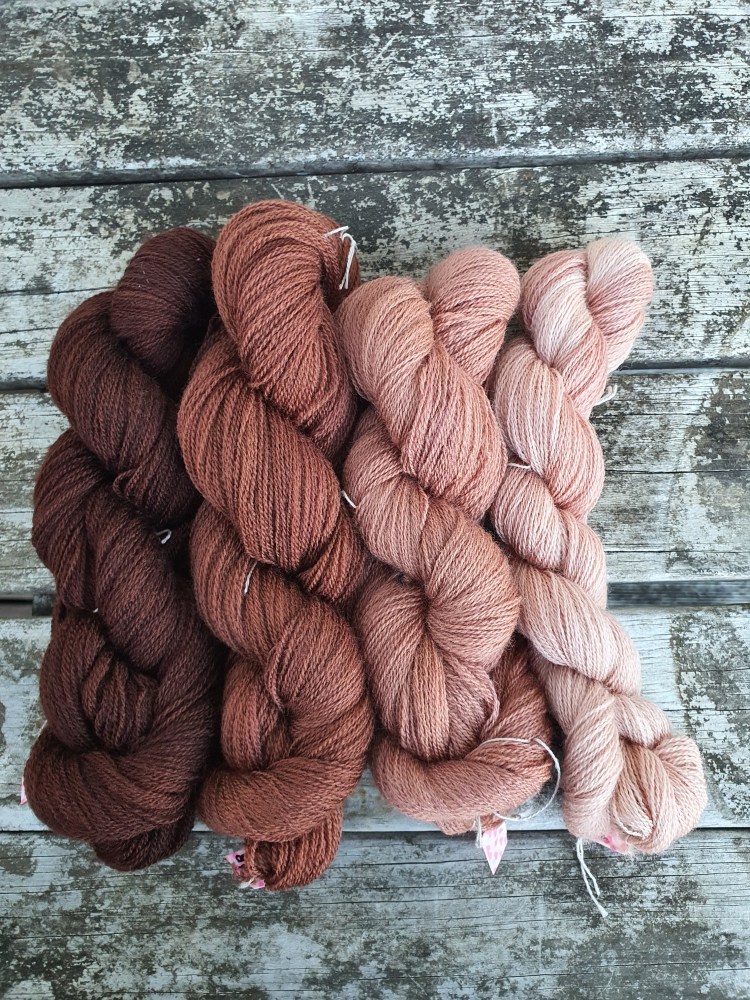
Once I’ve finished dyeing the skeins, I leave them to dry overnight before washing them in hot water with laundry detergent and then rinse until the water is clear. The dye bath can be used a few times but the colours seem to change as well as the depth. In warm weather the dye bath can grow mold but I just take scrape that off. The photo at the top of this post shows all the colours I obtained from one dye bath heated three times. Below you can see the results from each individual heating. All of these skeins are corriedale wool.
First use of dye bath
Second heating of dye bath
Final reheat
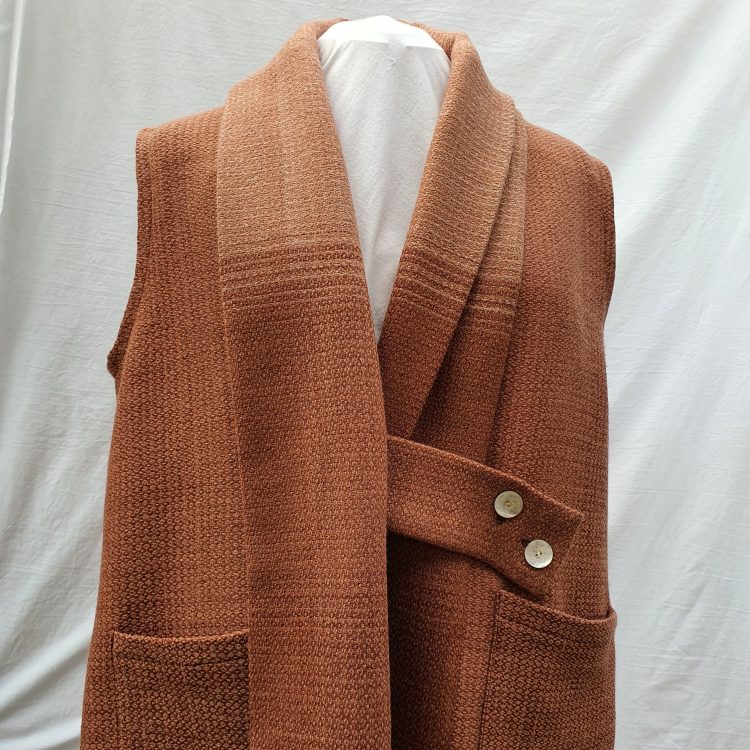
If you have access to some harakeke seed pods I recommend giving dyeing with them a go. You can dye other materials, not just wool, I have tried silk and cotton. Finally here’s photo of a vest I made from fabric woven with wool dyed with harakeke seed pods.

























 Kate Alberta Weaving